Moving forward, respectfully, at Newfield Central School
What suggestions do you have to create a more welcoming, inclusive, safe school culture or environment for all students?
This question is at the center of an ongoing discussion that began over a year ago at Newfield Central School. Recent events prompted me to check in with Superintendent Eric Hartz about the effort to make our schools more inclusive. It turns out a lot has been happening behind the scenes, though he acknowledged that change is hard and progress is slow.
The district’s Anti-Racist, Equity and Inclusion (AEI) group has been meeting regularly over the past year to begin moving forward in the areas of curriculum and instruction, student empowerment and family and community engagement. Many faculty and staff members have attended conferences and training in anti-racism and cultural responsiveness, and staff development days have been devoted to these topics.
Sunny Miller, director of professional development, has worked tirelessly collecting resources for teachers to use in the classroom and for their own education. The district has joined with five others in the TST BOCES area to collaborate on issues surrounding diversity, equity and inclusion (DEI) (tstboces.org/domain/42).
“Newfield is a small, rural school that has not addressed this in the past the way it should be addressed,” Hartz said. “There has not been a consistent message coming through the whole district. I know some of this is uncomfortable for people, but we are going to move ourselves forward. Twenty years ago, we were 2% Black and Brown students. Now, we’re at 20%. That’s a huge shift here in Newfield, and we need to make sure we recognize and embrace that.”
When social worker Jamie McCaffrey and Middle School Guidance Counselor Colleen Markle, leaders of the AEI group, proposed that Newfield participate in the national Black Lives Matter at Schools Week of Action at the beginning of February, Hartz agreed wholeheartedly.
“We started very small this year,” McCaffrey said. “We put out a document to district staff and parents. We gave teachers resources that they could use in the classroom. Some chose to, and some did not; it was totally up to them.”
There were also age-appropriate activities offered at lunchtime in all three schools. For example, elementary students could draw a picture to illustrate “what diversity looks like” or “what it means when we say everyone should feel safe and loved.”
“Some of the kids at lunchtime were just adorable,” McCaffrey said. “I heard more people asking me how they could get a BLM shirt than any negative comments. There was one little Black girl, a student who didn’t want to be photographed at all at the beginning of the year. She asked me to take her picture, with her drawing, to be posted on the school website. There was a sense of, ‘Here I am and I want to be seen.’ It was a powerful experience.”
Still, there was some backlash and a few phone calls, as anticipated.
“People have difficulty separating the Black Lives Matter movement that has been politicized from Black Lives Matter at School,” Hartz said. “Those three words are difficult for some people because of the political movement. In this day and age, kids need to be aware of what’s going on. It’s part of education. Nobody is forcing anyone to believe something. What we are saying is, ‘Be mindful. Be respectful.’”
Despite the school’s efforts, students are still experiencing bias and harassment in school and out. A group of middle and high school students recently staged a protest, in part to vent their frustration at the perceived lack of change. What started as a silent sit-in to protest racial inequity turned into an opportunity for any student who was feeling marginalized and unsupported to share their stories.
“We expected a silent protest, but then, kids started talking,” Markle said. “There was a lot of stuff about racism, sexism, body shaming, homophobia. There were about 100 students there, and really, they were very respectful of each other, validating and supportive. There were moments of silence. There was applause.”
Although the testimonials were difficult to hear, the protest did bring about some positive results. Hartz and Principal Patrick Mahunik followed up with students and families individually to debrief and offer support. Mahunik has since established open forum hours in the library on Monday afternoons for students or staff members to meet with him about any concerns they may have.
An additional student representative has been added to the district’s policy committee. And Markle has stepped up implementation of her Student Empowerment group, inviting self-identified student leaders to work actively toward solutions to their most pressing issues.
“We’re shifting from being a staff committee to being a student-led committee,” Markle said. “We’re telling our student leaders that we want to support them in finding solutions to what they see as the largest issues. It might be to rewrite the dress code or to develop a standard procedure for handling incidents of bias.”
This brings me back to my initial question: What suggestions do you have to create a more welcoming, inclusive, safe school culture or environment for all students?
That is one of the 10 questions put forth by the Family and Community Engagement subcommittee (FACE) to gather input from parents and the community. Unfortunately, since the launch of this online survey in December, it has garnered only 10 responses. Please take a minute to share your response at tinyurl.com/y847epsx.
Put another way, how can we widen the circle to embrace the growing diversity in our community? It is clear from recent posts in the Newfield Facebook group that people have strong feelings on this topic. If nothing else, BLM has succeeded in bringing this discussion to Newfield and thousands of other small towns across the country. Although some of the comments on the community page are hurtful and intolerant, informed and constructive discussion is also happening.
If you want to learn more, you might consider watching the movies curated by Sunny Miller as part of the Black History Film Series (tinyurl.com/yb2ps848), listening to podcasts such as “Leading Equity” by Dr. Sheldon Eakins or expanding your horizons by reading books by authors of color available at the Newfield Public Library.
For those who are interested in delving deeper, a lot of resources are available. I recently participated in a six-week course on anti-racism offered by my church. This nondenominational course may be offered again soon and involves group discussion as well as readings and videos. If you are interested, please contact me via the email below for more details.
Newfield Notes appears every Wednesday in Tompkins Weekly. Send story ideas to editorial@vizellamedia.com.
Related Articles
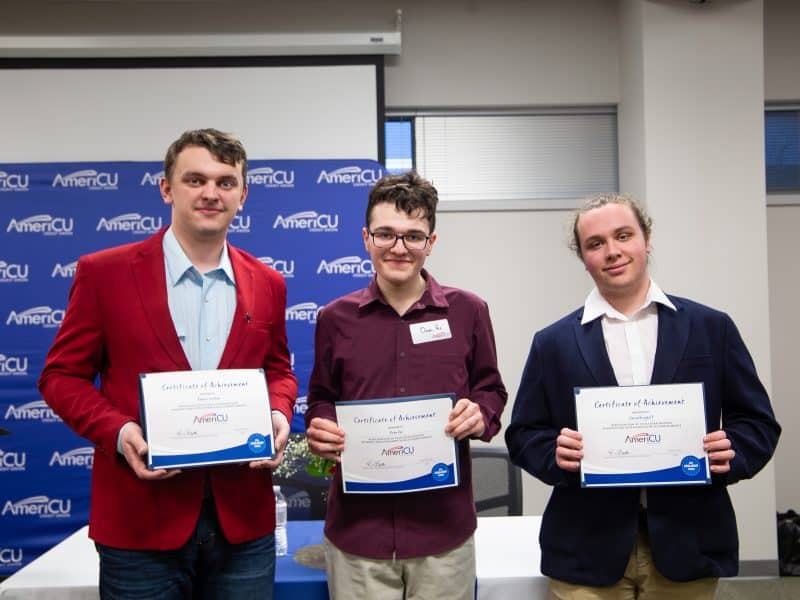
AmeriCU proudly connects students with annual scholarship opportunity
AmeriCU scholarship program awards $1,000 to students pursuing college or vocational education. Applications are open through March 15.
Trumansburg schools consider regionalization as TST BOCES plan advances
Trumansburg school regionalization remains undecided as TST BOCES outlines goals for shared services and student learning.