
Myers’ descendants became well-known singers
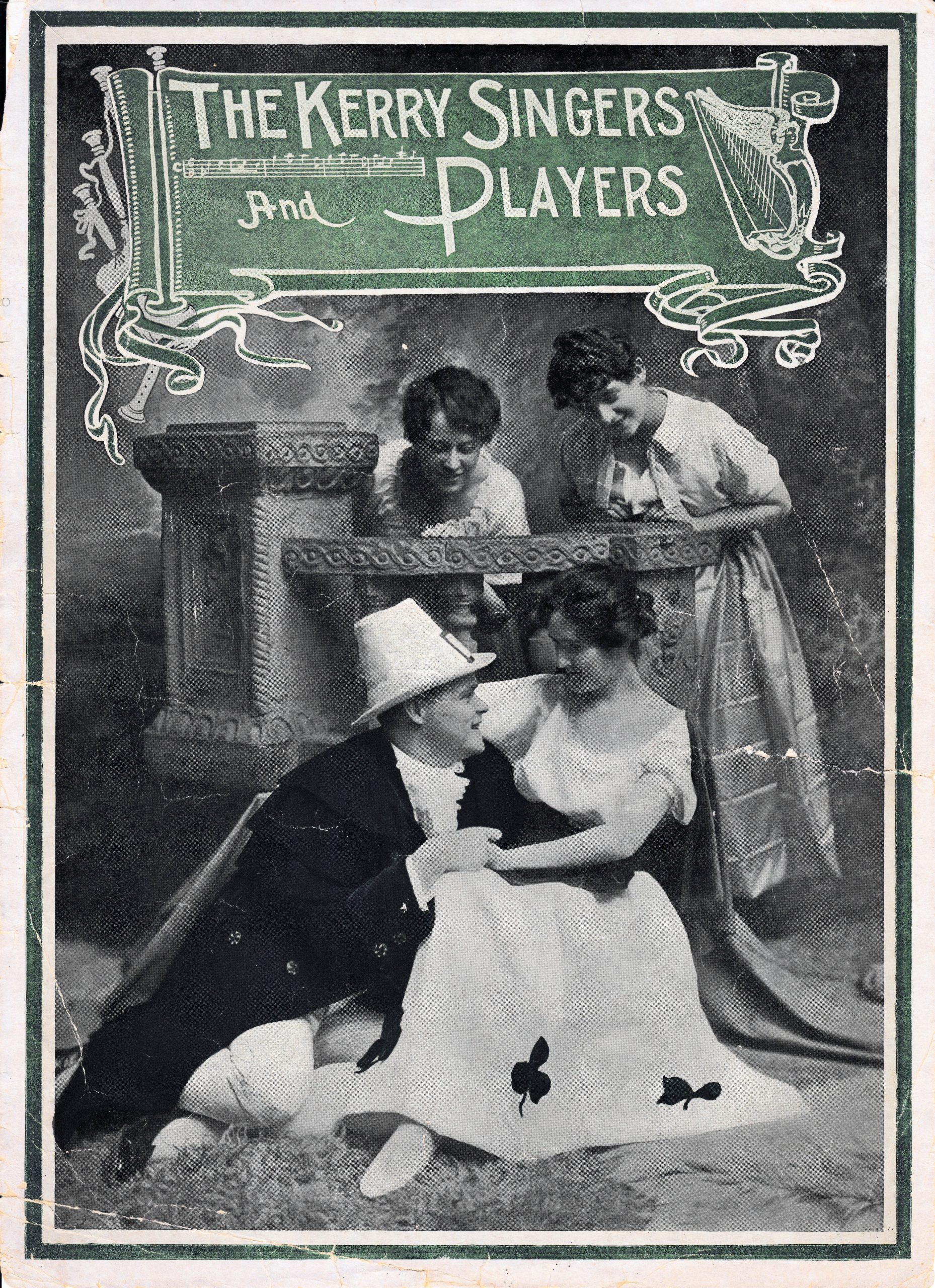
Arthur and Alice Myers were descendants of Andrew Myers, Jr. They were very good musicians.
Before Arthur became well known, he was a member of a group of performers called “The Kerry Singers and Players.” He performed under his own name, playing, as the name suggests, Irish melodies. The Kerry Singers performed from approximately 1915-1920.
Through study, coaching and practice — and good marketing — Arthur became an accomplished Irish tenor. He sang in the United States, Canada and Europe under the stage name Emmett O’Mara, which sounds much more Irish than Arthur Myers.
Over time, a following grew. His longest-running gig was with the U.S.S. Leviathan Orchestra.
The U.S.S. Leviathan was a luxury cruise ship that traveled frequently between the U.S. and Europe.
“The Leviathan was one of the largest and most popularly recognizable ships on the Atlantic in the 1920s,” according to the National Museum of American History in Washington, D.C.
Arthur, billed as the “Silver-Toned Tenor,” was one of the ship’s headliners during that time.
The Leviathan was a German-built vessel, originally christened Vaterland, but when World War I broke out, it was seized by the U.S. and converted to a naval troop ship and renamed Leviathan by President Woodrow Wilson.
After World War I, the Leviathan was reconditioned as a luxury liner and operated by the newly formed United States Lines. The entertainers were part of the crew and worked under contract to the Lines.
When she was not under sail, the Leviathan’s orchestra and Emmet O’Mara were sent out on tour with Vaudeville venues and other engagements as a way to increase business and improve the eroding finances of the Leviathan and the U.S. Lines.
It is rumored that during Vaudeville performances in New York City, Arthur roomed with Cary Grant.
“He wasn’t so famous then. He was just getting his start,” Arthur is reported to have told his bartender and friend in Cassadaga, Florida, more than once in the 1960s.
Three of Arthur’s recordings from the 1920s exist as part of the Discography of American Historical Recordings project at the University of California in Santa Barbara. The titles are: “Sonny Boy,” “The Wearing of the Green” and “Eileen Alanna.”
Unfortunately, no online recordings exist, but the music of the U.S.S. Leviathan orchestra inspired a musical resurgence through the band, The New Leviathan Oriental Fox Trot Orchestra, formed in 1972, which is still performing an active schedule today but without an Irish tenor.
Arthur died in 1972 in Cassadaga, Florida, and left many friends behind.
In brief:
The Bridges of Lansing
Lansing Town Supervisor Ed LaVigne provided an update on bridge construction in town.
No new construction is planned for the “Red Bridge” on Salmon Creek Road. It will remain one lane as renovated.
A two-lane bridge would have cost much more than the $400,000 project cost, and construction would have been delayed indefinitely, according to LaVigne.
Construction began on the Ludlowville bridge on July 28, with completion scheduled for Dec. 15. The new bridge will have a 4-foot safety lane on each side.
Construction on the Route 34B bridge is scheduled to begin Nov. 20. Demolition of the old bridge will take place near the end of February 2021 with the new bridge scheduled to be in place sometime in the summer.
Finally, traffic on the Lockerby Hill Road bridge will remain one-way while state and local officials evaluate current wear on the structure.
Related Articles

5 things to do in Tompkins County this weekend
Plan your visit and discover what’s happening this weekend.
TCPL to host listening session at GIAC as library prepares new strategic plan
TCPL strategic plan draft for 2026+ will be discussed at a community listening session Nov. 19 at GIAC. Share your input to help shape the library’s future.

Community spirit, timeless traditions for this year’s Dryden Holiday Celebration
The Dryden Holiday Celebration brings Santa visits, hayrides, crafts and a tree lighting on Dec. 6.