National Home Care, Hospice Month starts next week
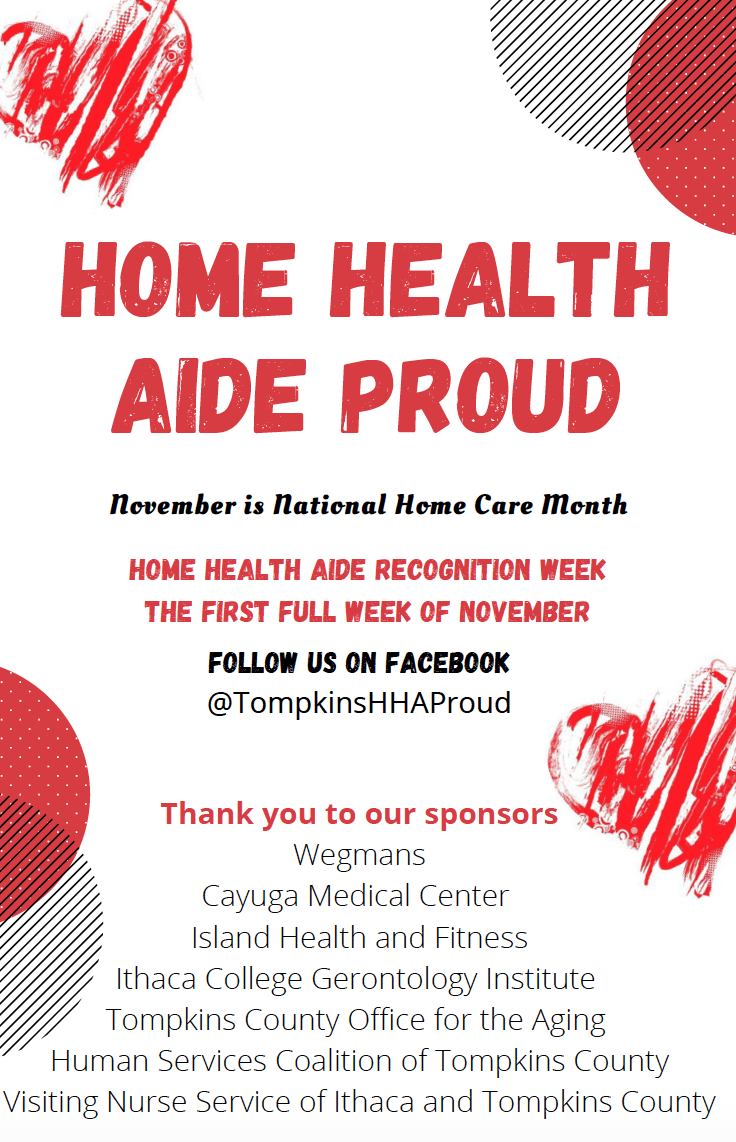
November is National Home Care and Hospice Month, and local organizations like the Human Services Coalition (HSC) of Tompkins County and the Visiting Nurse Service (VNS) of Ithaca and Tompkins County are planning a series of events and programs to celebrate all the home care workers in the county.
Home care is health or supportive care provided by a professional in a person’s home, and it serves young and old alike — everyone from children with illnesses and disabilities to senior citizens. This is in contrast to other care methods like group and nursing homes.
Sue Ellen Stuart, executive director of VNS, and Bev Chin, current member of HSC’s Long Term Care Committee and former program director of HSC’s Health Planning Council, both attested to the importance of home care.
“Personally, home care is very important to me because that’s where people do better,” Stuart said. “They want to be home, especially when they’re sick. They recover better, and they just do better overall. And I want to give people a choice — that they are able to be at home rather than to a higher level of care. So, the goal is to keep them at home as long as possible and give them a quality of life.”
Chin added that COVID-19 has shined a light on that importance.
“The pandemic has certainly had many more people thinking about where they want to be,” she said. “And so, I think that’s why home care is really necessary. It supports people post-discharge when they come out of the hospital. It is really there for people of all ages. So, there are children with chronic needs that use home care on a regular basis to help them just stay in the community.”
While the pandemic has brought some much-needed attention to this type of care, it’s also created significant challenges for the industry. Stuart said that there is already a shortage of nurses and home health aides in the region and across the country, and COVID-19 has worsened that shortage, making workers sick and unable to provide care.
The pandemic has also taken its toll on the clients that need or already have home care.
“Some consumers are afraid to have people come into their homes as well,” Chin said. “Maybe there are clients who did with a little less because they’re afraid of people coming into their homes and maybe their health has declined or their well-being has declined because they haven’t had the assistance that they needed on a regular basis.”
As for why the shortage exists in the first place, Stuart said that depends on the type of care being provided. The shortage of home health aides can most likely be attributed to the pay scale and the nature of the work.
“The average, I think, for our community, home care workers are making $15 or $16 an hour, something like that,” Stuart said. “It’s not minimum wage, but it’s not far above that. But then, there are other jobs that pay very similar, and people don’t have to have a car to get to the different places to work. And they can go one place and have an eight-hour shift, where [as] we send them into different people’s homes for a couple of hours. So, I think the pay scale and the dynamics that go along with home care have an impact on home health aides.”
On top of that, demand for home health services is rising as more Baby Boomers hit 65 and older.
Because the work of home care workers often goes unrecognized, Stuart and Chin, along with their colleagues, are working to change that, with many efforts planned for next month to show their appreciation.
“The first full week of the month is dedicated to honoring home health aides,” Stuart said. “We’re trying to really highlight that in Tompkins County. And what we’re trying to do is to tell the home health aides how valuable the work is that they’re doing, the contribution that they’re making is very valuable, and to say thank you. So, one of the things we’re trying to do is recognize what they’re doing. What we hope is more people would want to do the work because they understand how valuable it is and that they’re really appreciated.”
One of the events planned for next month is a presentation by Johnnie Kallas, Ph.D. candidate at Cornell University’s School of Industrial Labor Relations, at the next quarterly meeting of the Long Term Care Committee on Nov. 5 from noon to 1:15 p.m. via Zoom (t.ly/RF4x).
“They are actually working on a research study and examination of the challenges in rural home care delivery,” Chin said. “So, he’s going to talk a little bit about some of their research.”
There will be a series of recognition efforts from Nov. 7 through 15, dubbed Home Care Aide Appreciation Week by the Tompkins County Legislature.
“Because of COVID, we’re not having a community event, which we’ve done in the past,” Stuart said. “So, what we’ve chosen to do is put together gift bags that we’re going to be putting lots of goodies in to give to the home health aides to say thank you instead. … There’s posters on all the buses that TCAT has put together to tell the home health aides thank you. And there’ll be other posters that we’re making that will be throughout the community.”
In addition to these efforts, Stuart and Chin encourage residents to participate in the Tompkins County Office for the Aging’s annual public hearing, being held virtually this year Oct. 28 at 2 p.m. It will stream on the county’s YouTube channel, t.ly/uThl. Chin and Stuart said residents can attend to learn and talk about issues affecting older adults, including home care.
As for what lies ahead after next month, Chin and Stuart said there is still much work to be done to give home health care the recognition it deserves. First, Stuart said that VNS and other county organizations are working to get Tompkins County recognized as an age-friendly community by the state, and “providing services for people to be able to stay at home is a critical component of that.”
Also, Stuart said that more collaboration within community agencies will help to better serve residents’ needs and that there needs to be more focus on issues like food insecurity.
“We’re all working and touching the same people in a community, and then, if we all work together, we can strengthen the services that are provided for patients in the community,” she said. “So, I think that there’s a couple of things. There’s more collaboration between community agencies, which will strengthen what we can offer, and we’re taking into consideration the social determinants of health and how food insecurity or health literacy all comes into play and impacts how healthy they can be and how long they can age in place.”
For more information about HSC, visit its website at hsctc.org. To learn more about VNS, visit its website at vnsithaca.org.
Related Articles
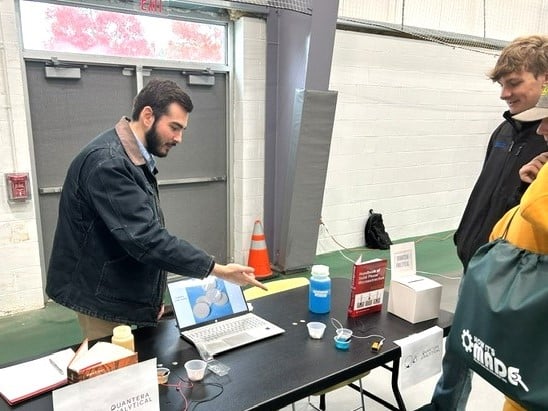
Quantera’s new tech promises faster, safer chemical testing
Quantera Analytical is developing faster, safer chemical testing technology in Ithaca with roots at Cornell University.

“A Silent Force”: Gail Belokur brings creative leadership to the United Way
Gail Belokur, a Hometown Hero, brings compassionate and creative leadership to the United Way of Tompkins County.