
Newfield author shines light on women in local history
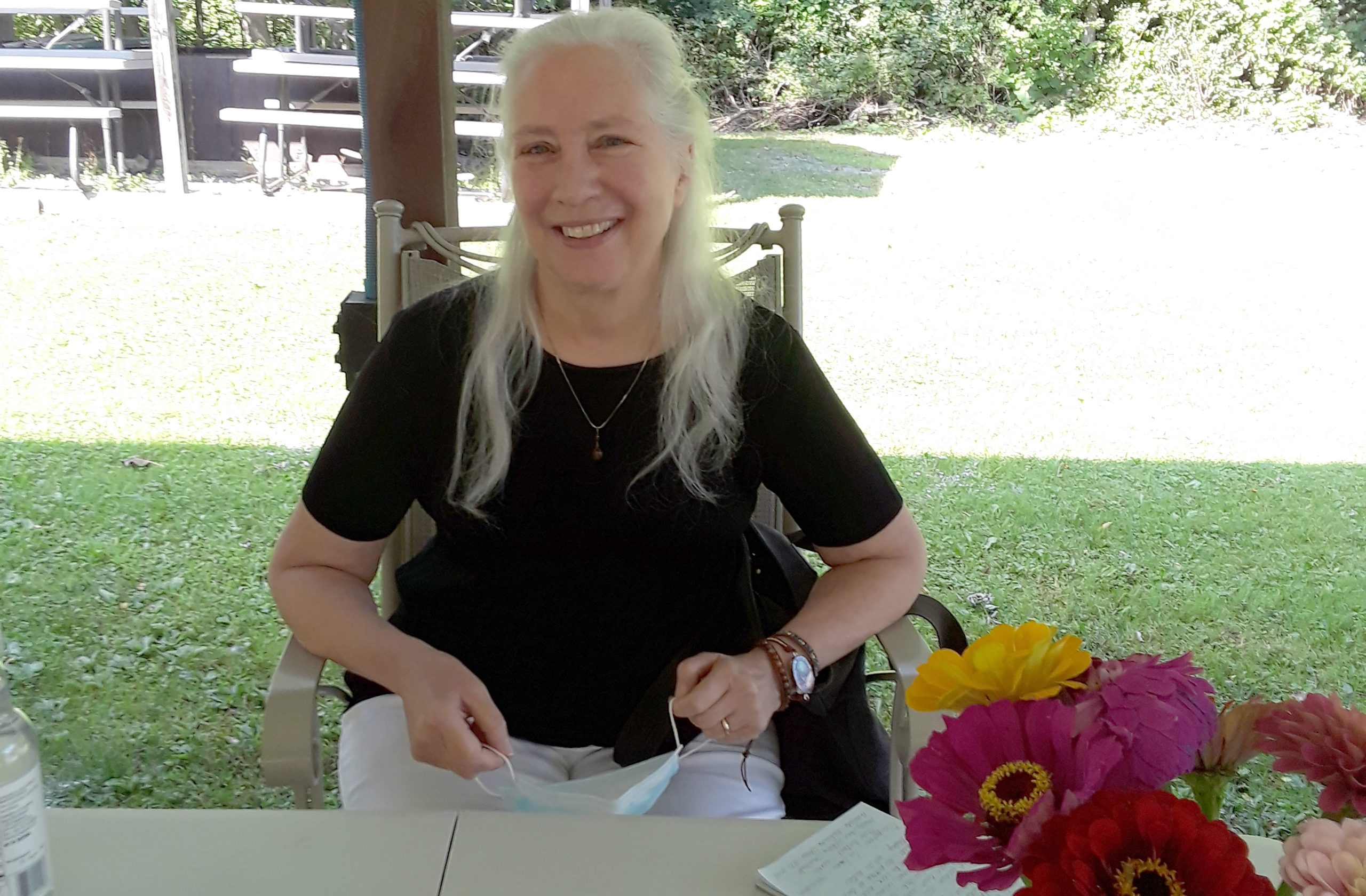
Rosemary Rowland describes her seven years spent as Newfield’s deputy town historian and managing its archives as being “steeped in local history.” But it wasn’t until she stepped away from those posts that she felt free to research and investigate her personal interests.
“We all know about Captain Gregg and the covered bridge — that kind of history,” she said, referring to a Newfield resident who was at Gettysburg and the town’s well-known landmark. “Women were absent.”
And the spaces women occupied weren’t always included in the record. Rowland wanted to present a local history that cast women connected to the town of Newfield and their stories as the main characters rather than relegating them to supporting roles.
“I just didn’t want them to be forgotten,” she said. “I had the ability and inclination to dig deep. I love doing that. I’m just nosy, I guess.”
Rowland’s debut book, “Women as bright as stars: The 19th century women of Newfield, New York” is her effort to add women’s voices to the historical record.
“I felt like they wanted to be found,” she said.
Initially, she didn’t expect to find much.
“It started out as a pamphlet,” she said, referring to the modest expectation she held for her comb through the records.
Two full years of research and several years writing and rewriting part time culminated in a 200-plus-page book rich with vignettes and footnotes. She refers to it as “a scrapbook of women’s lives.” Interestingly, it was through the records of men’s activities and lives that she learned about these women.
“I found women that did things I was amazed at,” she said. “I wanted their names to be known.”
While she supplies several pages of footnotes citing her sources, Rowland’s goal was not to produce a scholarly history.
As she notes in the preface, local citizens and communities play a key role in writing their own history. And it also requires acknowledging communities that came before.
On the book’s cover are photographs of unidentified women Rowland encountered throughout her research. Organized around 12 themed chapters, Rowland’s book offers glimpses into the many aspects of women’s lives both in the public and private spheres.
The subtitle “19th century women of Newfield, New York” is meant to acknowledge that the women featured in her book were not necessarily from Newfield, nor were they all white women. As she explained, some were “people who spent their lives here, some who came and left or some who were just passing through.”
Rowland herself is a New Jersey native who has called Newfield home for the past 30 years. Her research took her outside of the community to other local historical societies within New York state and across the country.
“People were willing to share information,” she said. “No one said ‘no.’”
The aforementioned Captain Gregg’s story can be read off the historical marker in the Newfield Village Cemetery.
However, the history Rowland was seeking led her to the Ulysses S. Grant Presidential Library in Mississippi to read a letter written by widow Mary Rittenhouse to the president requesting her late husband’s pension.
The Newfield woman, who was facing poverty after the death of her husband, a Civil War veteran, received a response from Grant, who granted her request.
The Yale University Library became a source of information for Rowland as she researched local businesswoman Nellie Ryding, one of the few women photographers in New York state at the turn of the century.
Some of Ryding’s work can be found in the Julia Driver Collection at the university. Ryding was only a teenager when she began working as a photographer, and her work quickly gained a following and allowed her a level of financial independence other women did not experience.
Scouring the sources, sometimes it was “a little, tiny sentence that opened the story,” Rowland said.
It took her a year to track down the story of Inez Mood, alias Agnes Dratt, who was arrested for violating the Comstock Laws. These federal acts made it a crime to use the U.S. Postal Service to send anything considered “obscene,” which by Victorian-era standards included information about birth control. It was a line in a Newfield Tribune newspaper article that turned the story.
And sometimes women’s stories remained shuttered. Rowland expressed the sensitive nature of researching and sharing histories of families who may still live locally and of “not wanting to upset or embarrass people.”
Offering a different perspective from the official narrative can be a challenge.
“I was nervous about putting this out there, tapping into history and adding to it things that are not always good or just realistic,” she said. “This is not a book that idolizes it.”
Rather, it encompasses stories from the exceptional to the mundane.
“Butter was a big deal,” she said. “There were recipes for both meals and medicines.”
Still, Rowland wanted to illuminate the stories of women and include those who had been on the margins of society.
Rowland acknowledges there is no one 19th century female experience. Rather, the voices of single women, abused women, businesswomen, women raising disabled children and women touched by mental illness are given space in her book.
“Some issues are alive and well today,” she said.
One story she shares is a local woman’s escape from the Willard Asylum for the Chronic Insane, founded in 1869. (New York state would close the facility in 1995 for economic reasons, which was then known as the Willard Psychiatric Center.)
Another narrative she revisits is that of Minnie Churchill, a Newfield woman murdered by her husband. Rowland’s research suggests that perhaps Churchill was also a victim of the double standards surrounding morality. While her husband was found guilty and sentenced, at the time, some felt that Minnie’s alleged actions of infidelity should have factored into the case.
Newfield experienced its own flavor of 19th century social reform movements that were happening throughout the country. Rowland highlights women’s roles in social justice efforts like suffrage, abolitionism and raising funds for community institutions like the local library and churches.
“Newfield had the third largest women’s political equality group in Tompkins County run by women to educate themselves on issues so they would be prepared for when they got the vote,” she said.
Staying true to the women she wrote about, Rowland worked to find a women-owned publishing and graphic design company to help her produce and publish her work.
“I hope it’s interesting and that it inspires others,” she said. “I loved all of them. They could be your friends today, just living in a different time.”
Interested readers can purchase Rowland’s book “Women as bright as stars” through the History Center in Ithaca or by contacting her at fnrland@gmail.com
In Brief:
Music
The Newfield Music Series at Mill Park continues on Wednesday, Aug. 12 with JP and the Easytigers and on Aug. 26 with Whistlin’ Dyl. The shows start at 6 p.m., and attendance will be capped at 50 people. The concert will also be streamed on its Facebook page. If coming to the park, please wear a mask and sit with people from your household.
Library events
Doug’s Fish Fry will be at Eddydale on Monday, Aug. 24 from 11 a.m. until 6 p.m. All proceeds benefit the Newfield Public Library.
Related Articles
Street Beat: What are you looking forward to in the new year?
We asked five random people. Here’s what they had to say.
5 things to do in Tompkins County this weekend
Plan your visit and discover what’s happening this weekend.