
Newfield suspends eligibility requirements for extracurriculars
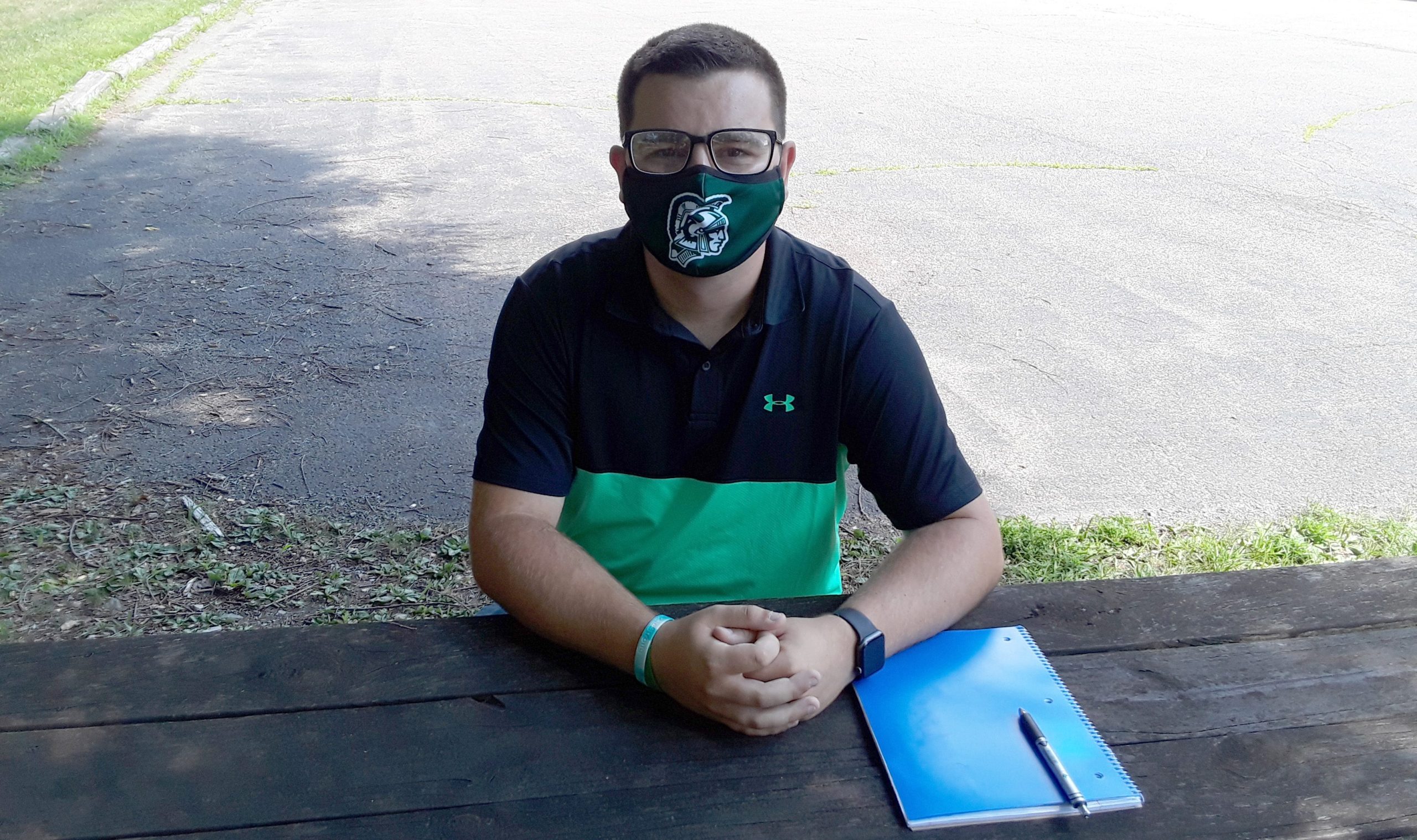
At its March 4 meeting, Newfield’s Board of Education passed a motion to allow students to participate in sports and other extracurricular activities regardless of their eligibility through June 30.
Patrick Mahunik, principal of Newfield’s middle and high school, told the Board he was partly motivated by concern for students’ mental health, as the district continues to get more reports of mental health issues among students.
Mahunik said the increased number of reports is, in a way, a good thing, since it shows that students and those close to them are willing to seek out trusted adults for help with mental health.
“The more we can keep our kids on campus, the more they can continue to report to us and we’re going to know what is going on,” he said.
Mahunik said the previous extracurricular policy put up roadblocks to getting students on campus and made it harder for fully remote students to participate in extracurriculars. In addition, it was difficult to enforce eligibility policies and for fully remote students to get teacher signatures for their required forms.
“We did try to create a Google Form,” Mahunik said. “It just became too much of a task. We couldn’t come up with a form that works for the students [and] the teachers.”
Mahunik said that, under the new requirements, students will still be expected to keep up with their classes, and coaches and other officials will be responsible for intervening if students don’t meet their academic obligations. Interventions can range from supervising extracurricular participants as they do their schoolwork to taking away their game time.
“Every athlete that participates is a student-athlete,” Mahunik said. “Every athlete that participates in the drama is a student actor. Every crew member is a student crew member. The student comes first.”
Board member Christina Ward, along with the majority of the Board, voted in favor of the motion.
“Students who are failing or falling behind need more positive connection with the school, not less,” Ward said.
Board President Jennifer Pawlewicz was the only member who voted against the motion. She raised concerns about relaxing eligibility standards, saying that doing so might result in student-athletes’ performance in school declining.
Pawlewicz said she is all in favor of sports and other extracurricular activities and is aware of students’ struggles with mental health during the pandemic, but she nevertheless has reservations about suspending eligibility.
“I struggle with taking away that motivating factor for some students to really put in the effort,” Pawlewicz said.
Mahunik told Pawlewicz that he understands her concerns but added that the coaches can hold the players accountable by denying game time if necessary. He said with games being streamed, the public can make sure the coaches keep their promises to bench players who are not keeping up with school.
“I don’t want to give a free ride,” Mahunik said. “I want them still to be accountable. It’s just the accountability’s going to look a little different.”
Mahunik said the suspension will only last two seasons, both of which are shortened, and will only change how eligibility rules are enforced, not the rules themselves.
“I’m not looking to change anything going forward, forever and ever,” Mahunik said. “Just get us through this year and let’s get back to normal.”
Technology classes benefit students, district
Joel Blizzard, teacher at Newfield Middle School, gave the Board a presentation about the technology classes he teaches and the benefits they can have for the district and its students. For example, he said his class is requesting volleyball poles, and the district can save money by handling the project in-house.
According to Blizzard, student choice is at the center of the class. Students are encouraged to choose between about a dozen options for projects or propose ideas of their own, and his students are enthusiastic about the class.
“I tell them that success in this class is based on their discovering curiosity,” Blizzard said. “Being interested is the first step to that. So, if they’re actively interested in their project, they become a lot more curious about what they’re doing, and then, when they go to use the tools to shape things or to code a microcontroller, they’re solving these real-world projects and they’re turning materials into something hopefully useful and impactful for the community.”
Blizzard said that when the students graduate, they will enter a job market that is very different from the present. He hopes his class will help them acquire the skills necessary to get ahead of the curve and benefit Newfield’s economy.
“We know now from COVID that a solid business could even be run with a strong internet connection, a few tools and a good idea,” Blizzard said. “So, we’re going to try to encourage their independence in that way.”
Internet skills are a significant part of Blizzard’s class. He teaches students how to phrase search queries and requires students to document their work in e-portfolios on Google sites. At the end of the semester, students will review one another’s websites.
Ward praised Blizzard on the class, especially considering it is Blizzard’s first time teaching a technology-focused class.
“We got really lucky with you,” Ward said. “All of that looks awesome, and a lot of the projects that you’re having the students do that are for right now, for what we need, it just seems so tangible and something they can really work with and inspiring.”
Interim Superintendent Eric Hartz described Blizzard’s presentation as the first “virtual share” by a teacher, a remote version of a previous routine in which teachers shared information about their classes with the Board. Hartz thanked Blizzard and said he hopes to hear more teachers talk about their classes at Board meetings.
Related Articles

Meinig Fieldhouse built to protect iconic red-tailed hawks
The Meinig Fieldhouse hawks project shows how Cornell protected Big Red and other red-tailed hawks during construction.

TC3 reaches transfer agreement with Hobart and William Smith Colleges
TC3 transfer agreement guarantees acceptance and scholarships for graduates entering bachelor’s degree programs at Hobart and William Smith Colleges.
AmeriCU proudly connects students with annual scholarship opportunity
AmeriCU scholarship program awards $1,000 to students pursuing college or vocational education. Applications are open through March 15.