
NYSEG: Addressing shortfalls and customer complaints
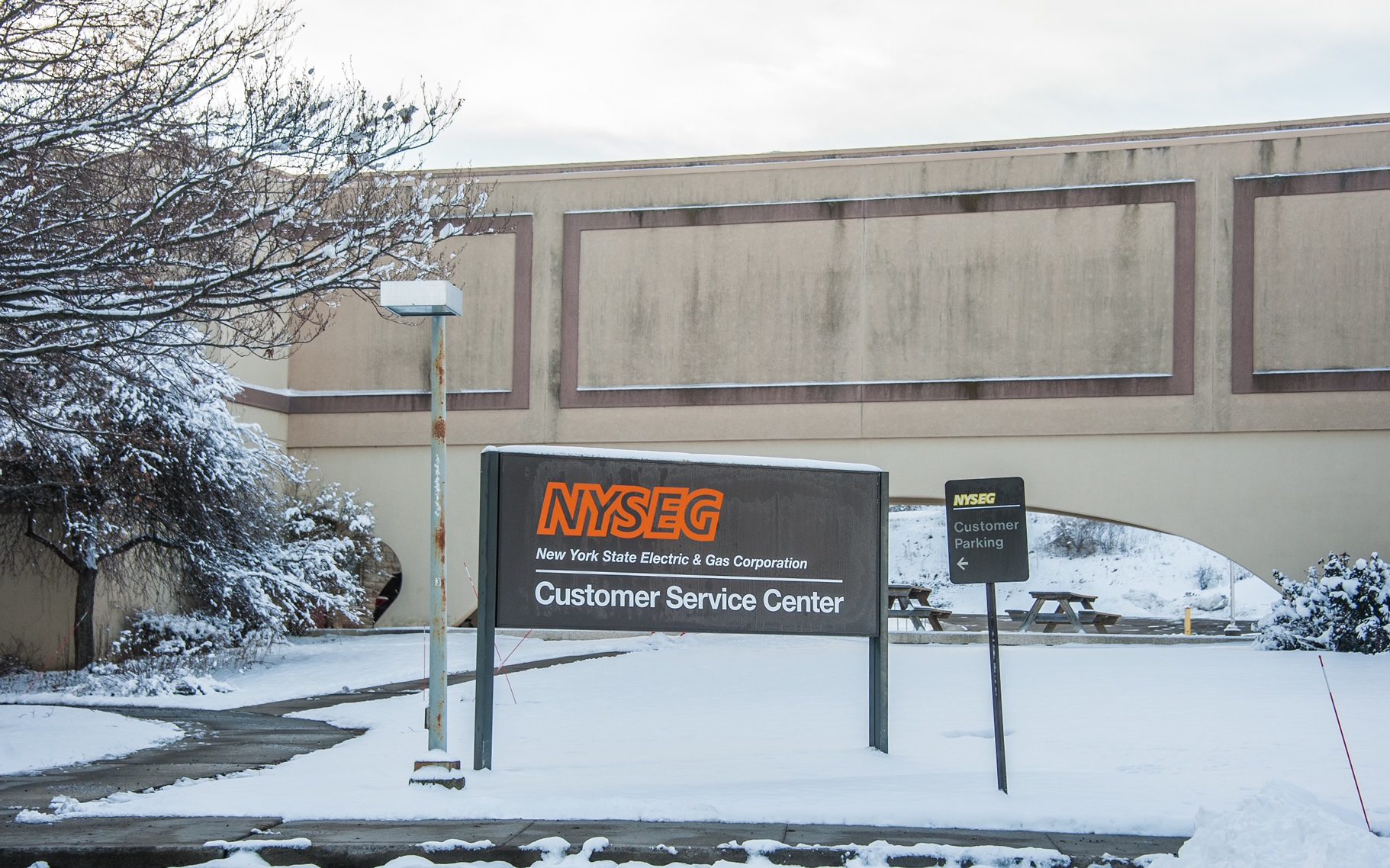
Throughout the COVID-19 pandemic and well into 2023, New York State Electric and Gas (NYSEG) customers have had a wide variety of billing problems and some have faced challenges when it comes to making payments.
NYSEG has not been blind to both ongoing problems and are actively taking steps to address and correct customer issues and complaints. However, many Tompkins County locals have felt that not enough has been done to address their ongoing problems with NYSEG.
In this article, the customer complaints and challenges will be outlined, followed by NYSEG’s response.
Customer experiences: missing bills
Due to the unresolved issues with her billing, Rebecca chose to identify by her first name only.
Rebecca has lived in the same house for three years and shared that her utility bills are, on average, $300 to $400 a month in the winter. She said the highest monthly bill she can remember receiving was around $850.
Her billing issues began in November of 2022 when she noticed she had not received a bill. The lack of an electric and gas bill continued until February 2023.
“I was receiving monthly statements via eBill. You know I love the earth! Well, all of a sudden, I didn’t receive anything for November, then December, then January,” Rebecca said. “I reached out via email because the phone line is nearly impossible to get a hold of someone. By the end of January, I checked my account and it says I owe $1,869 and some change.”
Rebecca contacted NYSEG again and asked for a breakdown of her charges for each month. The first response they sent showed her eBills listed as one, large charge. She contacted the utility again requesting a fully itemized list of the charges on her account.
On the NYSEG app, Rebecca was charged $1,004.98 as of March 2. The itemized bill she received in the mail, also dated March 2, listed a total energy charge of $370 for gas and electric usage.
“Then I get a letter I’m the mail saying they’ve tried to reach out to me several times, which was not true. No one called me,” Rebecca said. “So I called the number on the paper they sent and it went to a claims line. I left a message and have yet to hear from someone.”
Rebecca said she called the claims department around February 23 in an attempt to address the ongoing problems on her account.
When there are billing issues such as this one, NYSEG gives customers extended pay periods equivalent to the length of the problem. For Rebecca, this means she has a couple of months to pay back the previously uncharged bills.
Marc Reed, another local customer, is enrolled in budget billing and automatic payments (autopay). Reed said he recently noticed that his account was not being billed at all. That was until Reed received a bill for more than $700 due in March.
“When I called to find out what was happening, the representative told me that every time they went to check my meter and it didn’t match their estimate, that they would cancel my bill,” Reed said. “I told the representative that this made no sense and completely defeated the purpose of budget billing. She maintained that it wasn’t a flaw in the system, and everything was working as it should and if I canceled budget billing this month, I would owe an additional $170.”
The $170 is the end of the year difference Reed would have to pay to balance his account. Everyone enrolled in budget billing receives their difference bill at the end of each year, unless the billing plan is canceled sooner.
Reed did cancel auto pay and is now paying the bill in increments. He said this whole process was odd and feels as though this experience, if shared by others, makes budget billing seem obsolete.
Other experiences
Another local resident, Jyl Dowd, was not missing bills, but experienced autopay discrepancies that, to her, did not make sense.
“The funky thing, besides the steep increase, is that even though I have autopay, they will skip a payment, double up payments, etcetera, as you can see,” Dowd said, as she shared with Tompkins Weekly the comparison chart shown on her utility bill. “My sister is a local bookkeeper and she says her clients with autopay are having the same issues, but even getting late notices.”
Additionally, Dowd was charged three times in February: on Feb. 5, Feb. 9 and Feb. 18. The average price Dowd was charged is $1,331 per payment.
Dowd said it is odd that the website and NYSEG app reflects a fully paid bill, but the amount due does not match the amount withdrawn from Dowd’s bank account. The amounts that are automatically withdrawn for the three February bills is only a fraction of the monthly charges.
The individuals who shared their stories with Tompkins Weekly said they are all making back payments while they work out their billing problems with NYSEG.
Many people throughout Tompkins County have reported similar experiences via social media and through online and in-person public forums hosted by the Public Service Commission.
The chief complaints, such as the experiences shared here, have been a period of no bills that result in large, unexpected charges and customer service wait times of up to two hours.
The investigation
The New York State Public Service Commission, known as PSC launched an investigation into NYSEG’s billing issues. The investigation is related to a September 2022 change to the companies’ customer information and billing system. NYSEG’s sister company, Rochester Gas and Electric (RG&E), is also under investigation.
Currently, there is no new information to share about the investigation. At its launch in September 2022, NYSEG and RG&E said in a press release that they would fully cooperate with the investigation.
“NYSEG and RG&E received notice of the Department of Public Service investigation this afternoon. While NYSEG and RG&E have not been immune from the effects of COVID on our utility, such as a severe staffing shortage, we understand the impacts some of our customers have faced with their bills. In fact, we have already made significant progress in reducing customer issues by hiring new billing specialists and streamlining our billing processes. But make no mistake, along with providing safe, reliable service to more than 1,290,000 customers and responding to and restoring service following historic storms, addressing billing issues continues to be a top priority, and we are committed to ensuring customer bills are sent out timely and accurately. We will fully cooperate with the Department’s investigation,” NYSEG and RG&E said.
NYSEG’s response
For those who have already started to make back payments, but still have over charges due to billing errors, payments are expected to continue. NYSEG said that customers have as much time as their billing case lasts to catch up on payments.
When Tompkins Weekly asked NYSEG if there were credits or repayments for customers who paid more than they needed due to billing errors, they said there are repayment assistance programs available for those struggling to make payments. This did not answer our question.
“We have announced a variety of programs and measures to assist customers with their bills this winter, in addition to our regular budget billing, Smart Solutions, Energy Affordability Program, and rebate programs, which are all detailed on our website. We also had late payment charge suspension this winter and announced bill credits for customers who got behind during the pandemic, as well as HEAP assistance for those who qualify,” NYSEG said in an email to Tompkins Weekly.
However, NYSEG’s website does include information about rebate checks. Rebates are mailed directly to a customer’s service address and cannot be applied as a bill credit.
In Rebecca’s situation, she is unsure if her repayments are expected to match the itemized bill or the online charges. She said she is paying only the bills she knows to be correct and is trying to work with NYSEG on rectifying the other charges.
NYSEG said they are taking the necessary steps to address ongoing cases and to better serve their general customer body. There are various ways they said they are doing this.
One of their solutions is more customer service staff to help manage the high volume of calls. This information was shared in a Feb. 8 press release.
“Forty-five new customer service representatives will begin training soon,” according to the announcement. “NYSEG has already hired more than 120 customer service representatives, with over 100 more positions to be filled this year, resulting in reduced wait times for customers contacting the Company.”
On Feb. 20, another press release was shared, which notified customers the more customer service representatives were added to NYSEG’s staff.
“NYSEG and RG&E have graduated their first class of customer care representatives to include virtual workers, the next step in the Companies’ plan to reduce call center wait times when customers contact them for help with billing and other issues,” the release said.
NYSEG’s New York communications lead, Shelby Cohen, said the length of training programs vary by specific duties. Customer service representatives are trained for six weeks and meter readers are trained for two weeks.
The company is also working to install smart meters for all residents and business consumers— a move aimed at reducing the number of usage estimates, onsite visits and customer performed meter reads. A rollout of smart meters has already begun in Ithaca and in other parts in Tompkins County.
“Customers in our Energy Smart Community pilot in the Ithaca division will also receive a new smart meter as we build our new communications network,” Cohen said. “Some large businesses, such as mandatory hourly pricing customers, will keep their existing meters with remote reading currently in place.”
Smart meters are a valuable tool for both consumers and NYSEG as they help the company pinpoint and respond to outages more quickly. Cohen said it also allows faster access to customers’ electricity service when they need it.
“Energy Manager, an online tool that works with the smart meter, will also connect customers with their energy use and offer customized recommendations to save energy. Customers will have access to detailed energy use down to the hour to better understand how they are using energy in their home or business,” according to information on the NYSEG website.
All of this energy data, available to both NYSEG and the customer, with the addition of more customer service representatives, will hopefully greatly reduce the billing errors New Yorker’s have been experiencing for the past year.
“[Smart meters are] an initiative that will reduce billing issues by significantly reducing estimates,” NYSEG said in a press release.
In addition to addressing staff shortages and billing issues, NYSEG also shared how they intend to fix the long wait times for service upgrades and construction projects.
In the Feb. 20 release, they claimed “the time to job completion has shortened to four to five weeks on average as compared to four to five months, as a result of the companies’ collaborative efforts with residential and commercial builders.”
The company said these efforts combined will greatly reduce future problems with customer service wait times and billing errors. Customers we spoke to said they hope this is true.
For people still experiencing billing errors, you can call the customer service phone at 800-572-1111, Monday through Friday from 7 a.m. to 7 p.m. Walk in hours are also available in their Ithaca office at 1387 Dryden Road, Monday and Thursday, 9 a.m. – 3 p.m.
To file a claim with NYSEG, visit https://www.nyseg.com/support/contactus/submit-claim.
If NYSEG’s response is not satisfactory or remains unresolved for long periods of time, you can file a complaint with NYDPS at https://dps.ny.gov/file-complaint.
Related Articles
Cayuga Medical Center nurses’ vote for unionization approaches
The Cayuga Medical Center nurses union vote approaches as nurses cite workplace concerns, leadership changes, and national labor issues.

Holiday traditions bring community cheer
Tompkins County holiday traditions light up homes, farms, and schools with festive cheer and community spirit.