On the Hunt: A few thoughts on wild game cooking
By Cosmo Genova
Tompkins Weekly
If there is anything positive to be gleaned from the end of the hunting seasons, it is hopefully the fact that your freezer is stocked with game and fish to carry you through the rest of the year.
But please, for the love of all that is good in this world, learn how to cook it.
I suspect that more sins have been committed against wild game than nearly any other food category. It’s not just about bad technique or mishandling, but the unimaginative handful of recipes that are beaten to death and rarely strayed from. I once talked to a lady who’s family turned their four whole deer into nothing but hot dogs. You can call me a snob if you want – and you may be justified – but they sure are missing out.
Treat it Right
There’s no big secret to better wild game. It comes down to good technique and mastery of the basics. Proper searing is the first and most important step for the majority of cuts. Make sure the meat is relatively dry to the touch, and brown on all sides in a hot pan or grill to seal in the juices.
The biggest mistakes people make are not using a hot enough pan/grill and overcrowding. Instead of individually cooking small steaks or medallions, cook your backstrap and other fine cuts in large chunks, and slice it against the grain after resting. This will ensure a better crust, juicier inside, and more consistent doneness. Roasted or braised meat will cook better with a proper sear as well.
The worst thing you can do to a choice cut is overcook it. Venison loins, steaks, ducks breasts, and the like should be served on the rare side. Larger cuts like shanks, rump, blade, and neck roasts should generally be cooked until they begin to fall apart.
Crock pots, cast iron pans, and Dutch ovens go hand in hand with wild game. A gas or charcoal grill and a smoker are nice to have as well. I’ll often prep ribs or larger cuts in the crock pot while I’m at work, and incorporate them into a finished dish when I get home.
Appreciate it
Too many people want their venison to be beef or their turkey to be chicken. While they can often be prepared similarly, learn to appreciate the meat for what it is. Wild game flavors and textures are unique, and most “gameyness” and toughness can be attributed to poor butchering and improper technique.
Save overpowering sauces and spices for the older, tougher, and stronger flavored animals. Brines are great for tough or “gamey” meat because they not only tenderize but also help to leach out blood which can hold off-flavors.
Compliments
The culinary possibilities of game are endless, but a few complimentary flavors I like are juniper, rosemary, cumin, cinnamon, clove, and nutmeg; fruits like apples, pears, and dried cherries; garlic, citrus, etc.
Wild game is generally pretty lean, so liberal use of oils and fats will go a long way.
Variations of ethnic and cultural cuisines also pair beautifully with game, often because they were shaped by it. Venison Osso Bucco, duck curry, turkey schnitzel, Sriracha squirrel “wings,” and wild game Pho, are a few of my favorites.
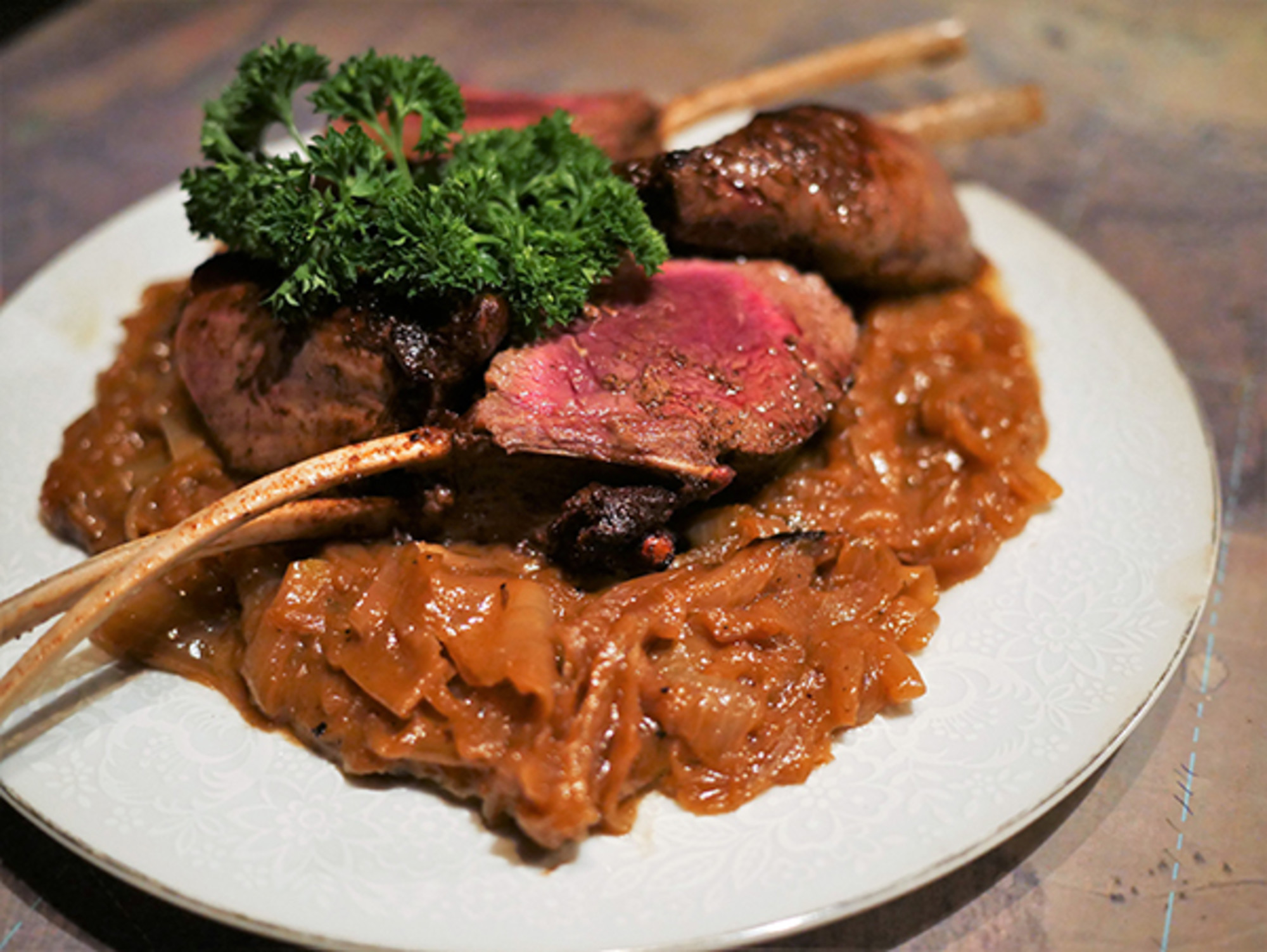
Wild game prepared with classical French technique can be a truly gourmet experience. Venison liver country pate’ with a crusty bread, whole grain mustard, and homemade veggie pickles has become a staple of my hunting season. At hunting camp this year, a friend and I made a frenched venison rack that was simply out of this world.
Waste not Want not
Butchering your own game is an important part of the process, and will lead to more creativity and less waste. There are so many how-to videos on youtube, there’s really no excuse not to. Keep your deer in relatively large primal cuts, as you can always break it down later. Don’t overlook things like shanks, ribs, neck roasts, and blade roasts that would otherwise go in the grinder, and even organ meats like heart, liver, and my personal favorite – tongue (yes, really). Scraps can be turned into ground, stew, etc.
If you aren’t making game stock, you need to start.
Basic Game Stock
Bones of 1 deer (minus spine and head), 1 wild turkey, 3+ ducks or 2 geese
5 carrots
3 onions
1 head celery
1 head fennel (optional)
Optional – Roast bones in the oven until brown, deglaze with wine or water.
-Add all bones and veggies to stock pot.
-Cover with cold water and bring to a boil.
-Lower heat and reduce by roughly 50 percent.
-Periodically skim off any colored foam or oily fat.
-Strain stock and let cool in the fridge overnight.
-Skim off and discard any white fat that has hardened on top.
You can now freeze your stock or use it right away. Plastic quart-sized yogurt/takeout containers are a great reusable vessel for freezing.
Related Articles

Affordable housing hiding in plain sight
Tompkins County Housing tackles affordability with MHCs. Explore solutions for 298 vacant pads in 2025!