
Once uprooted, Ithaca Community Gardens is ready for summer
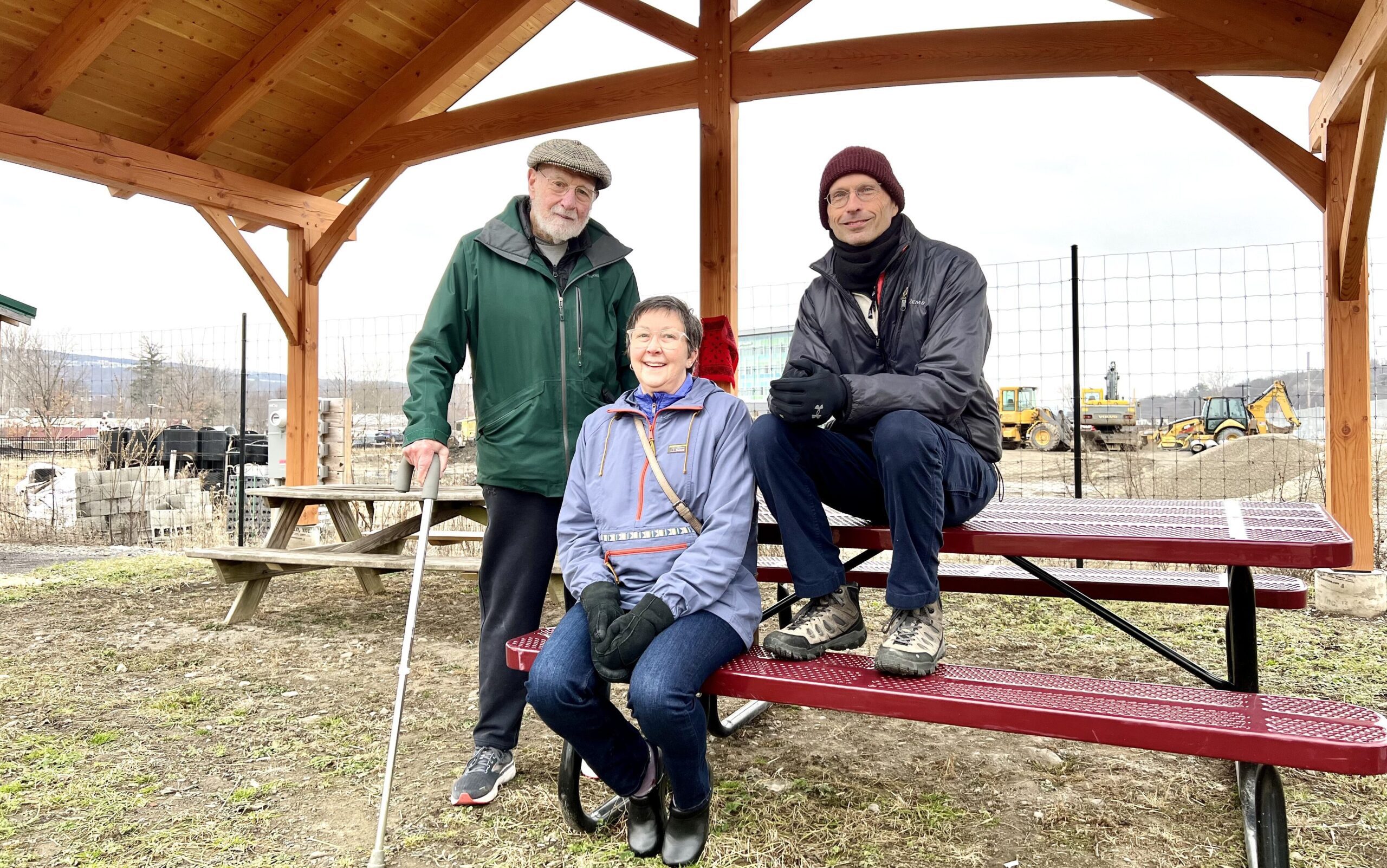
After being moved due to construction and suffering a loss in membership, Ithaca Community Gardens is ready to hit the ground running in summer 2024 with a new pavilion, formal entry gates, a new irrigation system, and paving for universally accessible areas where raised beds will be built to meet ADA standards.
located between Aldi and Greenstar just west of Route 13 on Carpenter Circle, in recent years the gardens were reconfigured to make way for the new Cayuga Park medical building and other construction on adjacent land. The development is still ongoing but does not directly affect the gardens currently. Much of the development happened around the time the pandemic started, and it caused the garden to sustain a serious decrease in membership.

Managing Editor
The board members said they also received feedback that all of the heavy construction equipment in the vicinity made it a less peaceful environment in which to garden.
“A lot of people just kind of faded away,” said Laurie Worrall, president of the Ithaca Community Gardens Board of Directors. “We’re committed to filling all of our plots, and it would be nice to see more diversity.”
But the gardens persevered and now has a new, 30-year lease with the City of Ithaca that allows for a possible 20-year renewal. They also established themselves as a new tax exempt 501(c)3 organization.
Currently there are about 130 lots, and about half of them are full.
The total fee for membership and use of a plot for the year is $65 for a full plot, which is about 280 square feet, and $45 for a half plot. One can become a member/supporter of the Gardens without a plot for $20.
Each member is required to put in a minimum of eight hours of work in the garden outside of their own plot.
Next year, the board of directors said, the gardens are ready to get back on track and bring in new members.
In the meantime, plots that are not claimed will be kept fertile and ready for planting, as the board plans to plant crop cover, such as rye or buckwheat, over the unused space.
The community garden provides tools, compost and wood chips. While the old gardens had only a few water spigots, the new infrastructure includes many more places to fill watering cans or connect a hose, making it easier for people with limited physical abilities to water their crops.
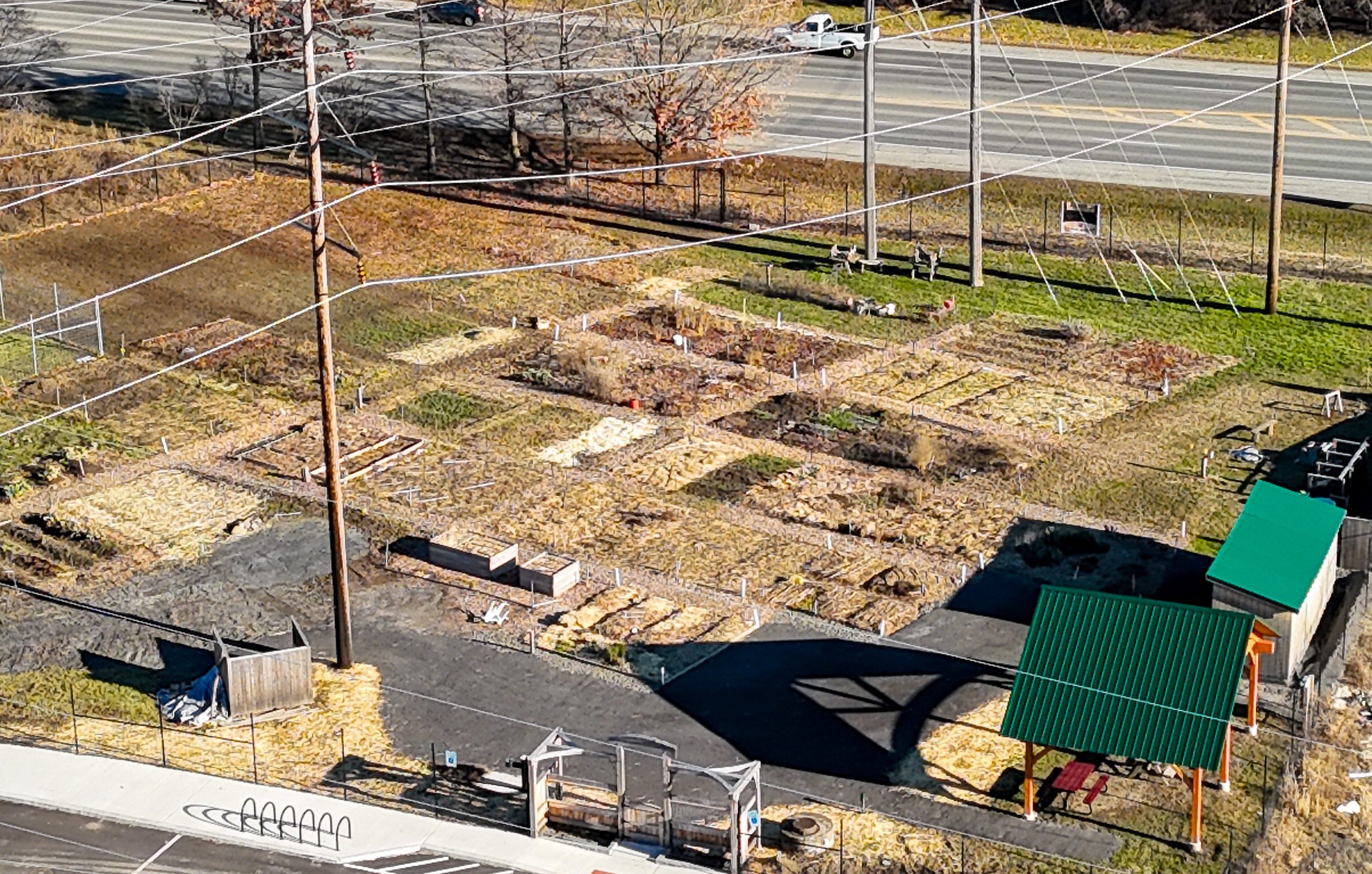
in the background. Photo by Joe Scaglione
“Another one of our goals is to finish our infrastructure so it meets everybody’s needs,” added Peter Fry, vice president of the Ithaca Community Gardens Board of Directors. “And I think we’ll get there this year. There might be some things to be done, but I think we’ll have a very functional garden. We do at this point, but we still have some things to do.”
There are plans to build many more raised beds of various heights to suit a diverse range of needs.
The Ithaca Community Garden Board of Directors is a nine-person board but currently has only seven members. The board members are looking to add people who would be interested in working on public relations or taking a leadership role in the gardens’ donation efforts. Anyone who has carpentry skills or is a small engine mechanic: the community gardens is your place to shine this summer.
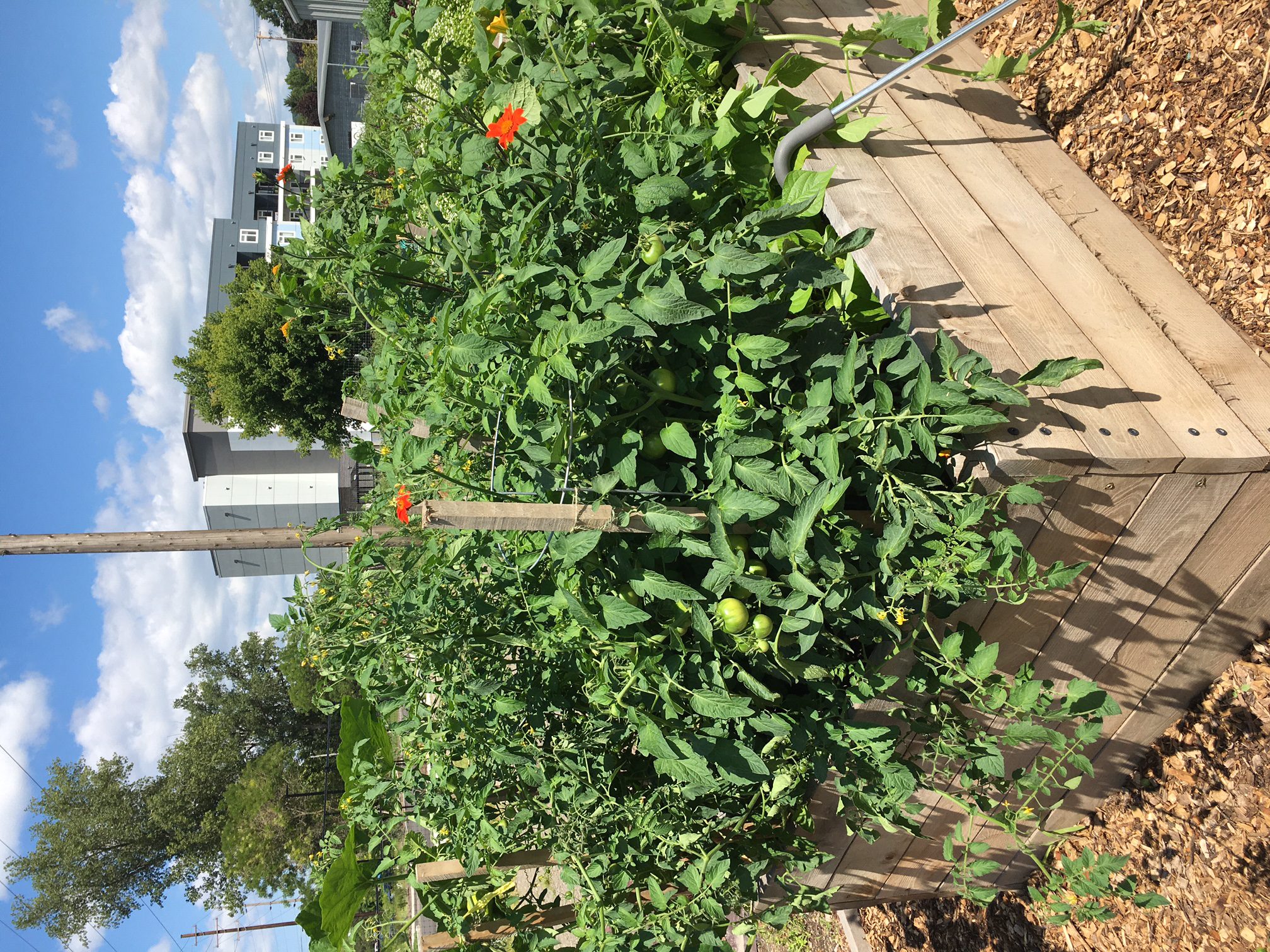
“We have plenty of places where people can fit in and be productive and helpful,” Fry said.
Each year the community gardens donate hundreds of pounds of produce to the Friendship Donations Network, which collects fresh food that would otherwise be thrown away and delivers it to local food banks.
For Joel Abrams, having a plot in the garden is a year-round hobby.
“Being a member of a community garden is not just from April to October, because I have found this is my first year in the garden, and I’ve met people I would never have been able to meet before without this common interest,” said Abrams, a member of the board of directors.
“The student population is growing,” said Worrall. “They like to come on the weekends and do their thing.”
“And families who bring their kids,” said Fry. “I love to see the kids learning and enjoying and having that become part of their lives.”
Abrams added that, much to his surprise, he has spent the winter months following his first summer as a gardener perusing seed catalogs and making plans for improving his next crop.
In the community garden one can’t help but discuss the task at hand, with fellow gardeners trading advice while pulling weeds, Fry said.
“There’s always something new to learn, and a new approach,” he said, “even if you’ve spent your whole lifetime gardening.”
CORRECTION: This article has been edited from its original version to correct an error regarding the membership fee amount for the gardens and a lack of clarity around the location of the gardens. Tompkins Weekly regrets the errors.
Author

Related Articles
Cayuga Medical Center nurses to rally, alleging anti-union tactics by hospital management
CMC nurses plan a rally, alleging unsafe staffing and illegal anti-union tactics as the hospital highlights recent patient-safety gains.

Design details unveiled for new Center of Government
Design details for the Tompkins County government building in downtown Ithaca are now public, with a county survey open for feedback.

Holiday traditions bring community cheer
Tompkins County holiday traditions light up homes, farms, and schools with festive cheer and community spirit.