
Photographer captures ‘Spirit of Tompkins’
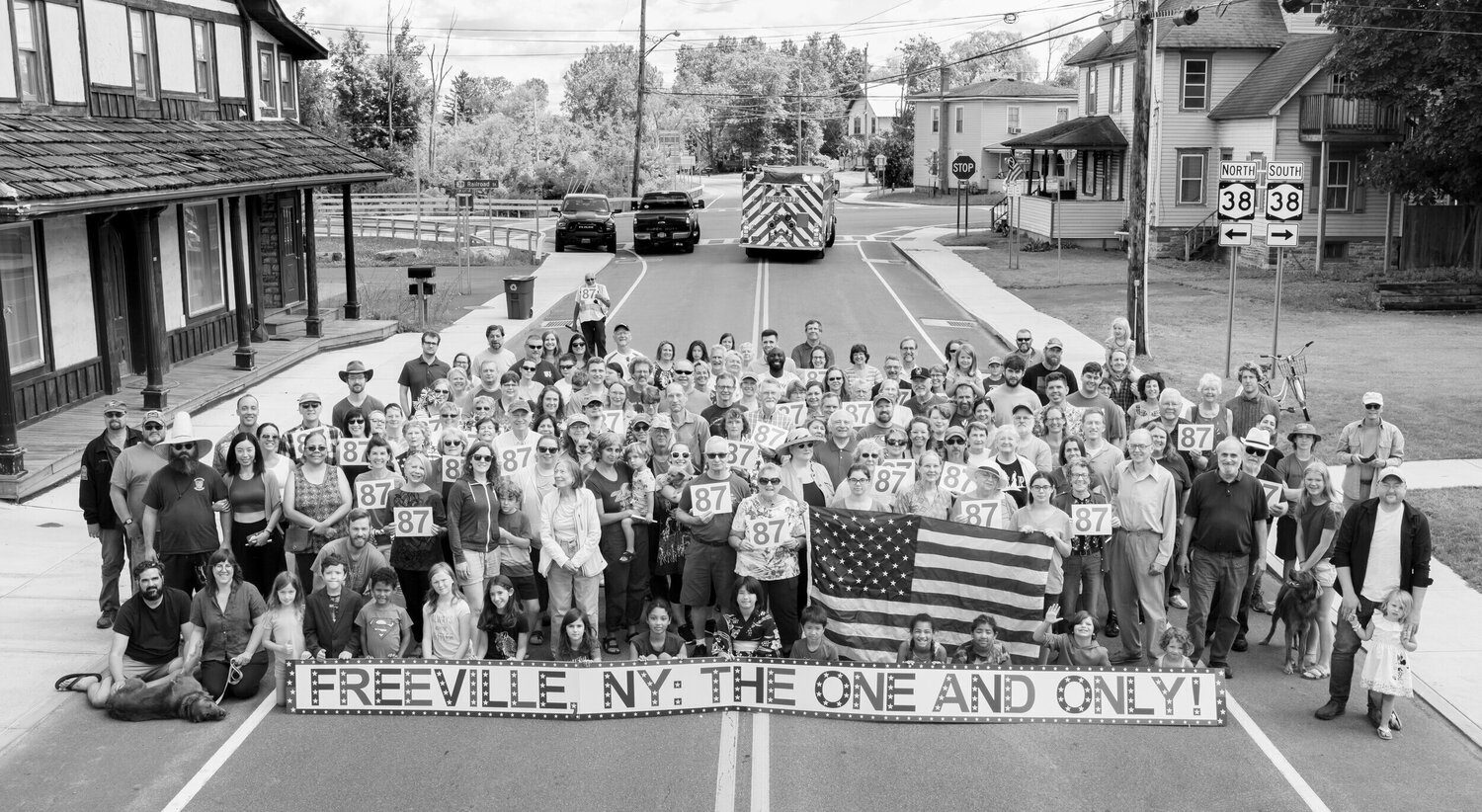
When Robyn Wishna took a photo of residents of Freeville for the village’s centennial in 1987 for the Ithaca Journal, she never thought that decades later she would again take a group photo of residents of the village, and this time the residents who were present in 1987 would hold up signs that said “87” in honor of the original photo.
Dozens upon dozens of stories like this live on the “Spirit of Tompkins” website, spiritoftompkins.org, where visitors can find images of their neighbors artfully captured by local photographer Wishna. Not only does the website include about 130 photographs, but many of them are accompanied by written statements about the chosen settings, told in the subjects’ own words. There are also videos of project participants explaining their choice of backdrop.

Managing editor
Now, in addition to the online experience, “Spirit of Tompkins” is available in book form. The soft-cover book will be available on the website for somewhere between $12 and $13; the project’s leaders had yet to land on an exact price but said that would be determined by March 15, when the book will officially be on sale on the website.
Town of Ithaca Supervisor Rod Howe said that in 2020 he started thinking about ways to celebrate the town’s bicentennial, which was coming up the following year. Because he was familiar with Wishna’s “We Are Ithaca” project, he wondered if a similar project could do for Tompkins County what “We Are Ithaca” did for the city.
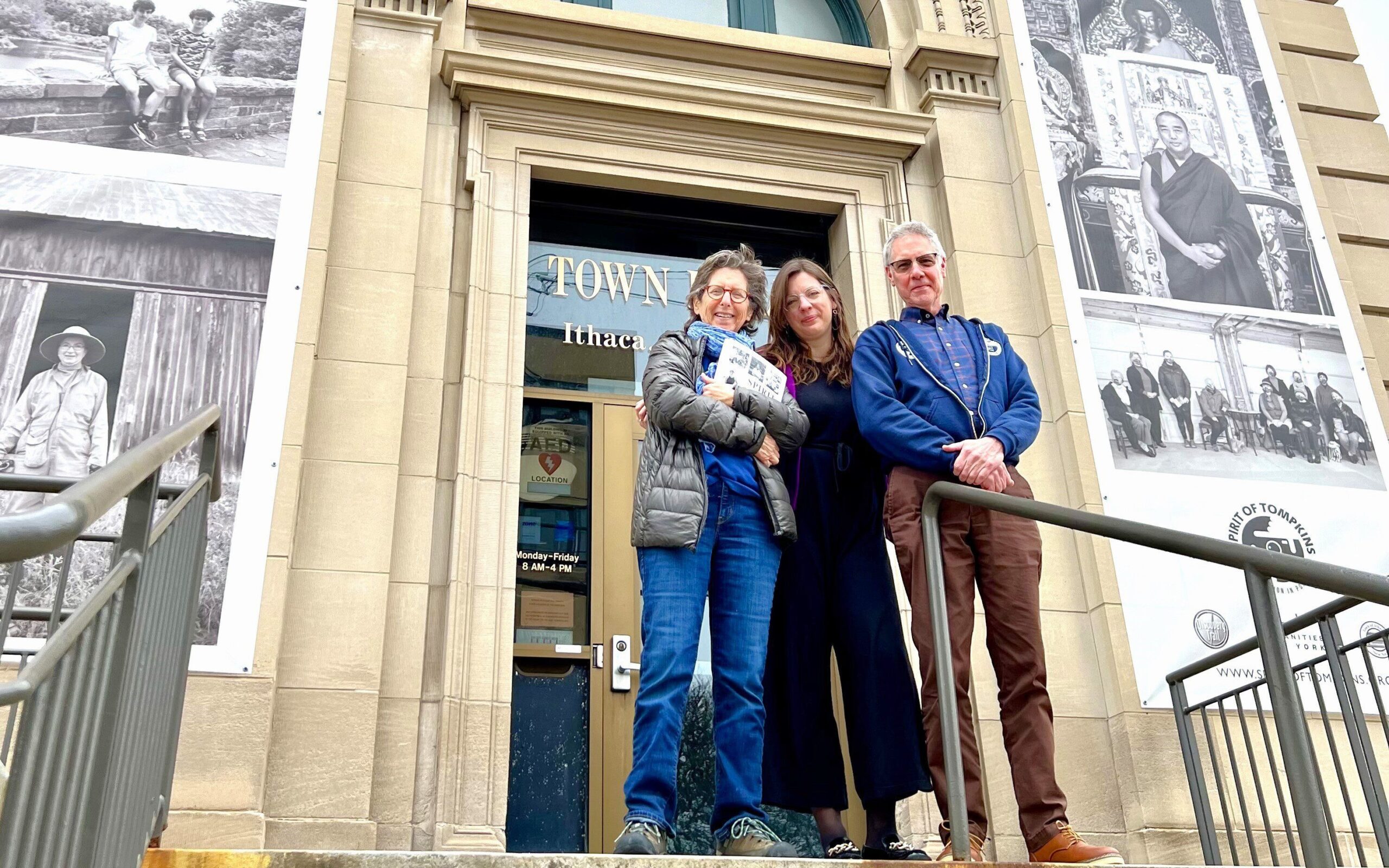
He reached out to Beth Pallace, who at the time was executive director of the Discovery Trail, and with her help the three-person team went to work promoting the project and raising money for it.
“It branched out to all of the towns and villages in the county,” said Howe, who joined Wishna and Pallace in an Ithaca Town Hall conference room recently to speak about the project. Surrounded by large cardboard cutouts of some of the book’s black-and-white photos, they each explained what the project meant to them.
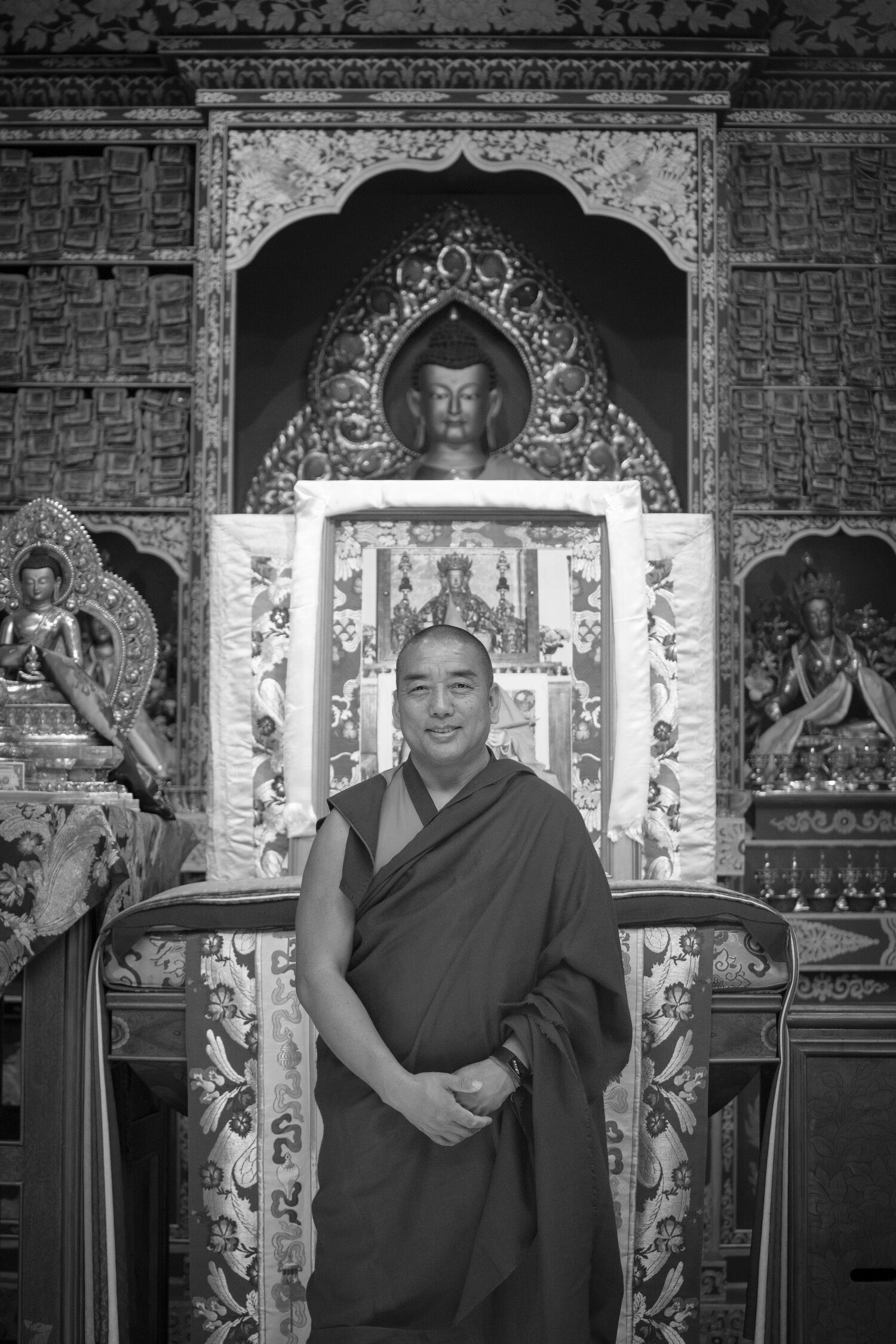
Howe pointed to a photo of Venerable Tenzin Choesang at the Namgyal Monastery, which was positioned next to members of the Teeter family on their farm.
“I love the barn in the background,” Howe said, “then a picture of the monastery. I love that juxtaposition right there.”
“I’ve always been a fan of place — thinking about our relationship with the environment,” he added. “It could be a room, a monument, a natural setting. We left that pretty open for people to decide what place was important to them.”
They also allowed people to explain in a few words why they chose the place they did, and those written statements are included in the book next to the photos.
“They are usually in context with other people,” Howe pointed out. “There are some individuals. My picture is of myself and my dog. But I love that there are so many groups in the books.”
The work of late local photographer Verne Morton was one inspiration behind the project, Howe said. Morton took black and white photos of the people around his hometown of Groton with a focus on their day-to-day activities. According to nyheritage.org, he took photos until the day he died in 1945.
The first images taken for “Spirit of Tompkins” were captured during the height of the COVID-19 pandemic. Wishna said that she was compelled to make in-person human connections and take photos in enclosed spaces if that was the place the subject chose, despite the risk involved.
“I did risk my life a few times,” Wishna said.
For the Discovery Trail, the project was an opportunity to sponsor something that would help foster a sense of identity for those living outside the city of Ithaca hub.
“I think there are a lot of people in Tompkins County who don’t go very far away from home, so it was a very special way to define community pride,” Pallace said.
The photos put the focus on Tompkins County’s nine towns and six villages as unique communities in their own right, “instead of just five miles around where you work,” she said.
Humanities NY awarded the project its National Endowment for the Humanities competitive grant.
“One of the big reasons we were able to secure those funds is that we were doing something we could display in public places and feature the people in the county in diverse landscapes,” Pallace said.
In addition to two banners that flank the entrance of Ithaca Town Hall, reaching nearly the full height of the building, there are similar banners in Freeville and Enfield. Trumansburg displayed several banners from the project, as well.
Wishna said she was particularly touched by the profound simplicity of the statement written by Jayme Elk to go with the photo of her and her son, Javen.
“Most beautiful valley and view, our home has fields, woods and gardens for veggies, flowers and fruit trees. My dream of home ownership on good land with clean water and air, with good schools and raising my son in a good community,” Elk wrote.
“There are 130 stories,” Wishna said. “I had the privilege of spending time with 130 people and got to make their portrait and hear their stories.”
Author

Related Articles
Cayuga Medical Center nurses to rally, alleging anti-union tactics by hospital management
CMC nurses plan a rally, alleging unsafe staffing and illegal anti-union tactics as the hospital highlights recent patient-safety gains.
Holiday traditions bring community cheer
Tompkins County holiday traditions light up homes, farms, and schools with festive cheer and community spirit.
Design details unveiled for new Center of Government
Design details for the Tompkins County government building in downtown Ithaca are now public, with a county survey open for feedback.