
PRI fights climate change with education
By Jamie Swinnerton
Tompkins Weekly
The Paleontological Research Institute (PRI) and its Museum of the Earth have been doing one thing for a very long time: making science education accessible. Back in the late 1990s, the staff at PRI decided that the best way to reach people with science education was to reach teachers. The first guide PRI created, in partnership with local teachers, was the teacher-friendly guide to the geology of the North-Eastern U.S. Since then, they have created special teacher-friendly guides to different areas of science that are easy to reference and don’t need to be wholly consumed to be usable.
“We compiled information in a relatively jargon-free way that was intended to be used on the fly, with illustration resources and so on,” said Robert Ross, PRI Associate Director for Outreach.
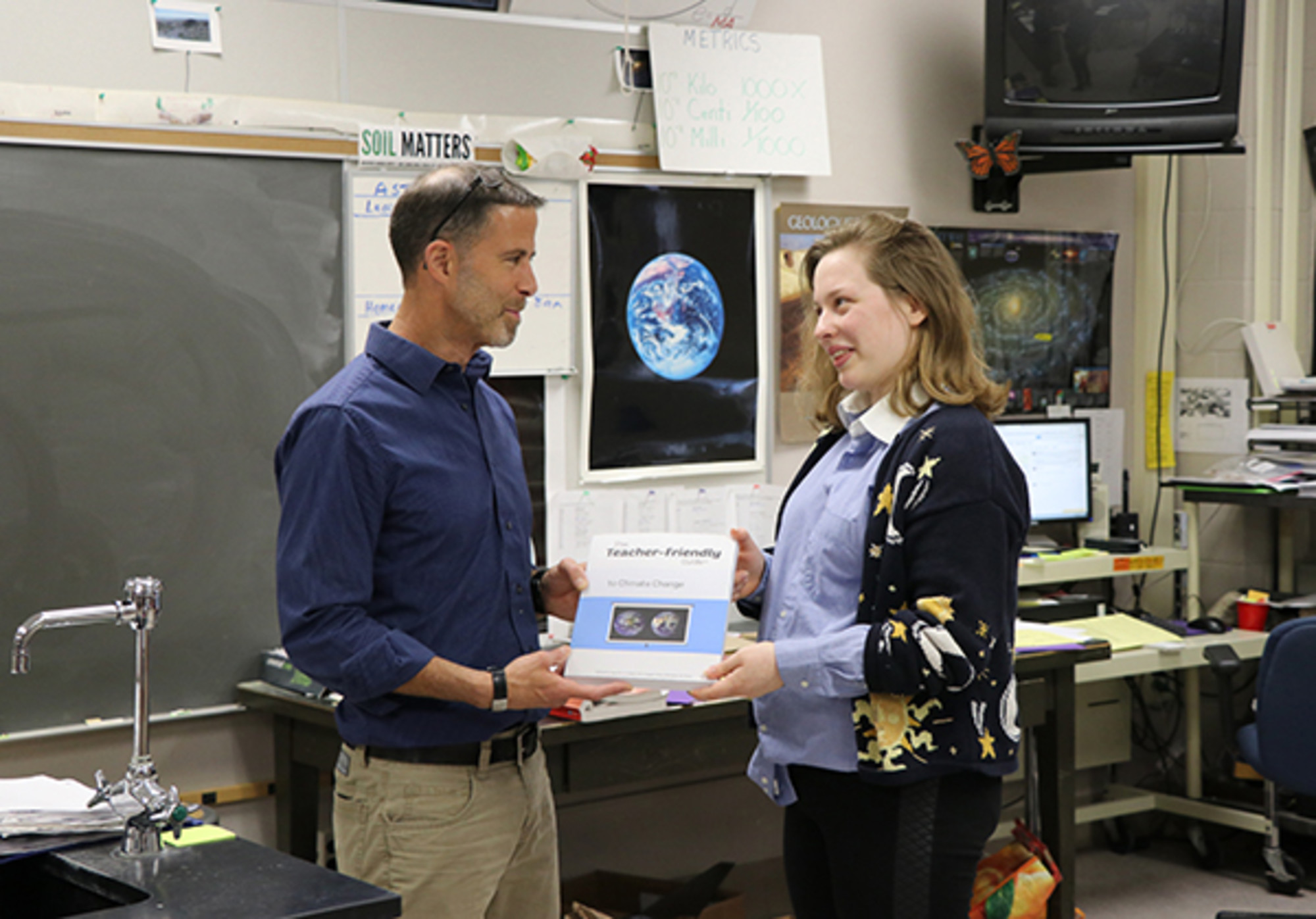
Now PRI is back at it again with a new guide on a subject that grows increasingly important as time goes on. The new teacher-friendly guide to climate change also comes with a mission for PRI. Every guide the institute produces is also available as a free download online. But this time, PRI wants every k through 12 science teacher in America to be able to hold the guide right in their hand. Since the guide was published PRI has been working hard to find the relevant teachers, package the book, and send it out.
The funding for the book came from the National Science Foundation (NSF) after a Cornell University Professor in the Earth and Atmospheric Science department, Natalie Mahowald, was putting in a large proposal to NFS with colleagues across the country. Mahowald got in contact with PRI, Ross said, because the foundation requires scientists to include a broader impact piece of their research proposals and she knew the institute was working on climate change education. Together they decided on a climate change focused exhibit in the museum, and the teacher-friendly guide to climate change.
Before the book was complete PRI turned what looked to be a negative experience into an opportunity to expand their reach with the guide. The Heartland Institute is a conservative think tank that produces media and literature around climate change denial. As PRI was completing the climate change guide, the Heartland Institute announced plans to send their climate change denial literature to science teachers across America.
“We found out about this a couple of weeks before the book was going to be published and we were ready to tear our hair out,” Ross said.
The book wasn’t quite finished but the team that had worked to put it together started talking about how great it would be if they could do the same thing and send the guide across the country. The biggest barrier was funding. That’s where Alexandra Moore, PRIS Senior Education Associate, stepped up and offered to find the money. Although anyone can access the guide for free online, Moore and the team wanted to get it into their hands instead.
“The people who are going to come to your website to download your PDF are the self-selected, self-starters,” Moore said. “The ones who always are the early adopters and the ones who least need this resource. So, there’s an enormous difference between saying ‘Here, take this’ and ‘Oh, you come to my website and get this for yourself.’”
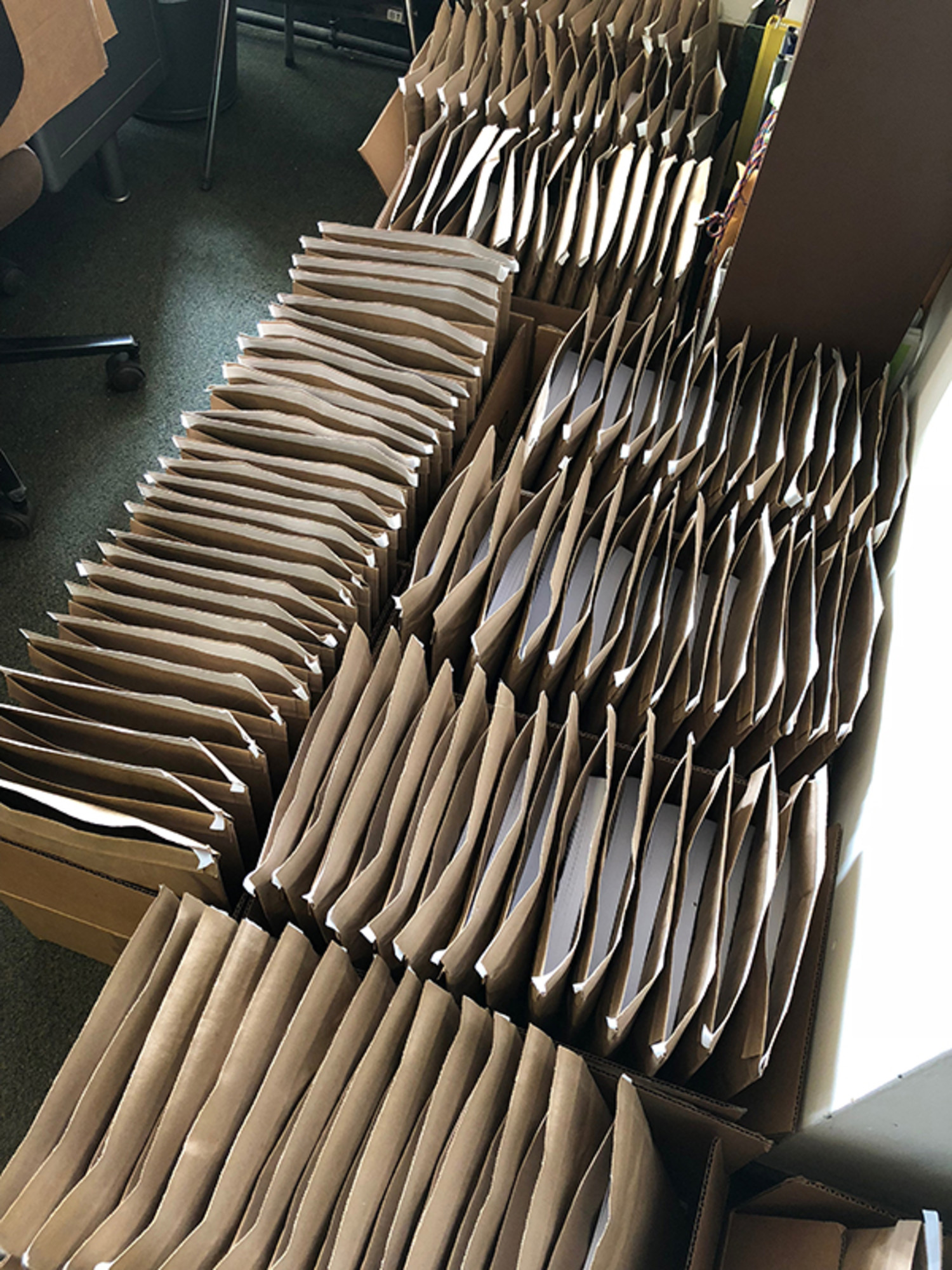
The book was published last May and through small grants and crowdfunding on GiveGab.com PRI has been able to start sending out the guide to teachers in the North-East. The aim is to send it across the country, but they are organizing region by region. It is with the help of volunteers that PRI has been able to stuff envelopes, find names and addresses, create labels, and ship the guide out. But more volunteers would be great, Ross said.
To create the guide, Ingrid Zabel, PRI Climate Change Education Manager, started with an outline that was then shared with national experts in the Climate Literacy and Energy Awareness (CLEAN) Network for feedback.
“We have to decide of course what we thought was important,” Zabel said. “I think the three main focuses are basic climate science; responses to climate change – so, it’s happening, what do we do about it? There are three chapters in there that address that; and climate change communication. So, it’s not just a science book.”
Climate change communication covers how to talk about climate change in a polarized environment, and how to recognize biases.
One of the ways that PRI has been getting the word out about the guide, and getting it sent to the right teachers, is through what they’re calling a reverse book-signing campaign.
“We asked people to nominate a teacher who had been inspiring to them in their education career and we would send a book to that teacher in the name of this student who had honored them in that way,” Moore said.
Along with the guide, several CD versions of the book are included in every package sent out to teachers, allowing for more teachers in each school to have a version. Educators who can’t wait for the physical guide can download the PDF version at teacherfriendlyguide.org.
Related Articles

5 things to do in Tompkins County this weekend
Plan your visit and discover what’s happening this weekend.


Tompkins Chamber announces Rob Montana as new vice president
Rob Montana, community leader and communications professional, has been appointed vice president of the Tompkins Chamber, where he will help drive economic growth, workforce development, and community engagement.