
Proposed hillside community SouthWorks looking for PILOT agreement and potential tenants
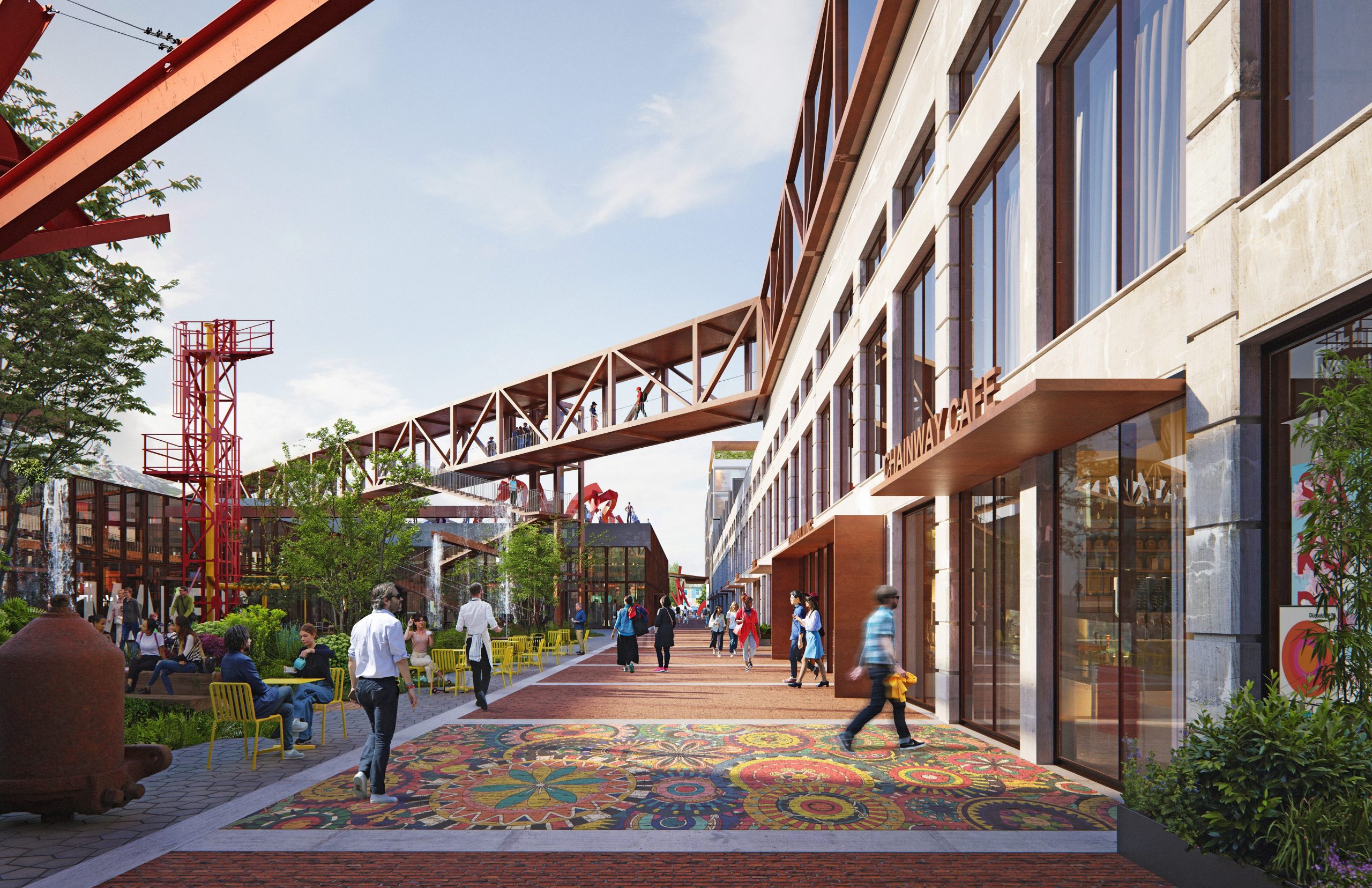
SouthWorks, Ithaca’s would-be new neighborhood that would transform an 850,000 square-foot former industrial facility on South Hill, is anything but a typical construction project. As multiple complicated factors come together in the developers’ push toward their target of first occupancy in 2025, they are currently looking to the Tompkins County Industrial Development Agency (IDA) to offer a payment in lieu of taxes (PILOT).

Managing Editor
“We’re in a weird financing environment right now. It’s really hard to finance basically anything, much less something as complicated, big, weird and difficult as this site,” said Robert Lewis, SouthWorks Development project manager at SHIFT Capital, the real estate development company that owns the site.
Originally built in phases from 1906 to 1971, the old factory would be rehabilitated, and plans include the construction of new residential buildings to create a 1.7 million square-foot mixed-use neighborhood comprising 28 adjacent buildings on 95 acres.
The developers are asking for a 20-year PILOT wherein the new taxes associated with the new investment would be phased in over those 20 years. The developers will still be required to pay taxes on the original assessed value of the property, which is currently $3,506,000. The increase in tax payments would be phased in gradually over time until, after 20 years, the owners would pay the full amount.
About $44 million in new tax revenue would be generated as a result of the new development during the term of the incentive, according to Heather McDaniel, administrative director of the Tompkins County IDA.
“Having a negotiated tax agreement with municipalities gives us a level of certainty on a key operating expense that, if we can pin that down, helps make things a little bit easier for a lender to understand,” Lewis said. “And so that certainty is a big part of why we need that to come together.”
The IDA has been in discussions with the developers since they purchased the site in December 2022, McDaniel said.
“It’s likely the biggest project that the community is going to see in this lifetime,” McDaniel said.
There is a need for deviation from the standard IDA policies when it comes to SouthWorks, McDaniel explained.
“The IDA delivers 10-year incentives based on financial need. … This project doesn’t really fit that,” she said.
SHIFT is anticipating an answer from the IDA this fall regarding the PILOT, and the IDA has commissioned an objective reasonableness assessment, to be conducted by an independent company, to help inform the IDA’s decision.
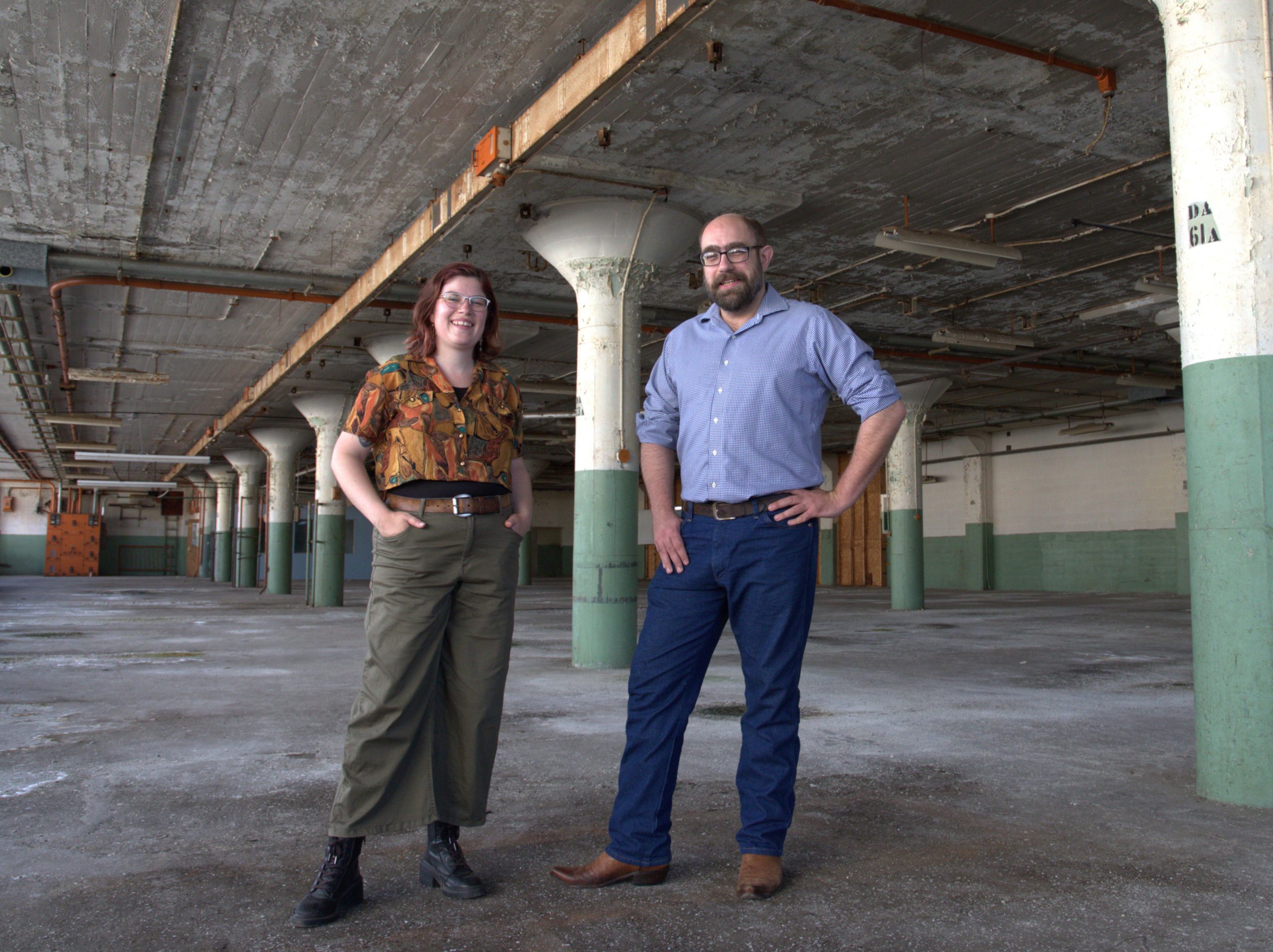
This summer, Sarah Barden, community outreach and leasing coordinator for SouthWorks, has given many tours of the site, helping potential stakeholders, tenants, community members and anyone else interested in the project envision the potential in the vast expanse of interior space that is the historic facility. For those interested, there will be tours of the site at 640 S. Aurora St. available to the public every half hour on July 31 from 3 to 7 p.m.
“I think the interesting thing is that with adaptive reuse, it’s definitely less straightforward than just a rebuild, but you are able to capture the history of the area,” Barden said while walking through the factory on a recent sunny morning.
“It’s also more sustainable to approach a project that way,” Barden added. “The development team, that’s something that’s really important to them: not just doing the easiest thing, but doing the thing that has the most character — that has the most impact — and that’s what we’re able to do here.”
In one space designated to become an open courtyard area, some of the roofing would be removed, but certain original elements like the cranes on the ceiling would likely remain to add character, “sort of like a historic homage,” Barden said.
A retaining wall could become the backdrop for an amphitheater.
“We could have outdoor music here,” Barden said, gesturing to the area that would open up once the wall comes down. “You could bring food trucks in here.”
Three stories of the old building are technically at “ground level” because the factory was built into the hill. This makes renovating the site both easier and harder, Barden said.
Being on a hill creates different stormwater management challenges than the team would be facing with a building on a flat area, “but all of that ground-level access means that multiple spaces have loading access, which, when you’re trying to do industry or you’re trying to have a variety of uses, can be really valuable, especially since there aren’t a ton of spaces in Ithaca that have loading access,” Barden said. “And so we have a sort of a critical mass of them here.”
One section of the facility has seven loading docks and a drive-in dock. “So, this is a really great central loading option,” Barden said. The idea would be to lease the space as an amenity for multiple tenants. “So, there’d probably be shipping and receiving happening here for several different businesses,” they said.
The facility was left empty in 2011 when Emerson Power Company scaled back its operations.
“They used to have a whole division here, and they pulled that back,” Barden said. Eventually, it didn’t make sense for the company to have a site in Ithaca.
“So, they decided that they wanted to sell the property,” Barden explained. “Something they considered was even razing the building down the ground and just selling the land because that’s more straightforward. But it was important to them also to preserve the history.”
In 2011, Emerson brought on David Lubin of L Enterprises, who has been shepherding the process for the past decade. The original New York State Department of Environmental Conservation decision indicated that the space needed to be cleaned up to industrial standards. “But since he had the vision of a mixed-use community, he pushed for it to be investigated more thoroughly and cleaned up to residential standards,” Barden said.
After 10 years of securing planning approvals and working on the remediation of the site, a full development team has been brought on board.
Barden enjoys visualizing the site’s transformation from a vast abandoned factory, with its peeling paint and leaky roofs, to a vibrant space full of unique character.
“This is my favorite view in Ithaca,” Barden said, stepping through the door of what is slated to be a hotel into the sunlight of the facility’s rooftop. With its view of all of Ithaca and Cayuga Lake, there are plans to turn the roof into a terrace and bar.

Preserving historic architecture is valuable from an aesthetic standpoint, but it’s also a worthwhile endeavor because it helps people see into the past, said Barden. “I think lots of times we find ourselves at a distance from times that are not that long ago,” they said. “Having something physical as a touch point can remind us of what came before us.”
“We’re working with the State Historic Preservation Office on, you know, what a path to historic tax credits might look like,” Barden added. “And one of the things that’s important to them is preserving this facade here, because when you look at the building from the Wegmans parking lot, that’s like the iconic view that you have.”
Why is it important to the development team to preserve the distant view of the historic site?
“There were varying numbers of people working here throughout the years, but at one point in time there were shifts of a thousand people per shift, 24/7,” Barden said. “We had a large number of folks in this area whose livelihoods were tied up with this.”
The factory was built piecemeal over the years, which means parts of it no longer meet modern manufacturing standards.
“The columns are too close and the ceiling heights are too low,” Barden explained.
Those parts of the facility not suitable for manufacturing are slated for retail, recreation and other uses.
Other parts of the property are well suited for manufacturing purposes, and the expectation is that those areas would be used for light industry. This is the case with the level with the largest footprint, a 100,000 square-foot section of the site that has a 40,000 square-foot basement. Its columns are farther apart, and the ceilings are much wider than in some other sections.
Indoor recreation is another possible use for this space because there is so much square footage, Barden said, adding that this could help create more options for indoor family activities in the winter months.
If everything goes according to plan, the first light industrial tenants will move in by mid-2025. Some of the spaces around the periphery of the site will be easier to tackle first, while the most interior space will likely be the last to undergo renovations. The goal is keep construction an ongoing process while tenants move in and hopefully thrive as the entire project continues.
Barden is currently speaking with potential tenants. What the future holds for SouthWorks is somewhat dependent on the companies that take an interest in the space. Barden said the SHIFT team is in conversations with a construction material supplier.
“The benefit of that is that they could provide materials both to the projects on our site, the construction that’s happening at SouthWorks, but also to surrounding projects, which could increase efficiency and decrease costs for local construction,” Barden said.
“So we’re really trying to think about what businesses we can bring into the area that will complement and supplement what we have here,” Barden added. “I’ve been talking with some startups who are coming out of the incubators at Cornell who have outgrown the spaces on campus, but they’re not yet at the stage where perhaps they could have their own facility. They just need something that has loading or has high ceilings, but they only need 1,500 square feet.”
There are two substations on site that service SouthWorks, and Barden said SHIFT is exploring a microgrid for the site that would allow SouthWorks to draw power from solar, geothermal and the substations, with the goal of setting up the site to be net zero ready at the conclusion of construction.
In addition to manufacturing and retail, SouthWorks would also include 915 living units of different sizes and levels of affordability. Twenty percent of the housing would be federally defined affordable, 40% would be workforce housing (also referred to as middle income) and the rest would be a mix of market-rate housing, including for-sale townhouses and for-rent apartments.
The goal of “workforce housing” would be to close the gap between market-rate and affordable housing. “There are people who may not qualify for subsidized housing because they are making above what the government threshold is, but they still can’t afford market rate because it’s greater than 30% of their income, which most people aren’t even really paying right now,” Barden said.
Barden said that SouthWorks is being designed to integrate as seamlessly as possible into the rest of the Ithaca community. With that goal in mind, there are plans for a new trail, called the Gateway Trail, which will run across the full length of the site and connect to South Aurora Street and Ithaca College natural lands and, ultimately, Buttermilk Falls.
“What that means is you’ll be able to access all New York state parks in Tompkins County without going on the roads,” Barden said.
“A lot of this project is thinking about how we can blend commercial and nonprofit and community spaces and recreation and residential so that it feels genuine, so that it’s connected to the surrounding communities,” Barden added. “We’re touching on all of the facets of life.”
As the project moves through the IDA PILOT approval process, Barden will continue her search for the right tenants to be the first to occupy the space.
“I’m looking for people who have vision, who are excited to co-create this, who can look at this raw space and say, ‘Ooh, I know what this can turn into,’” Barden said. “And not just create their own space, but really, co-create the community up here. And I think when we bring in folks who have that energy, who are excited to be the first ones on the ground, who are excited to blaze this trail with us, it’s going to excite folks, and it’s going to open doors.”
The original version of this article was changed to correct inaccuracies relating to the PILOT program. The new taxes associated with the new investment at SouthWorks would be phased in over 20 years in the PILOT SouthWorks is proposing; there would be an estimated $44 million in new tax revenue as a result of the new development during the term of the incentive.
Author

Related Articles
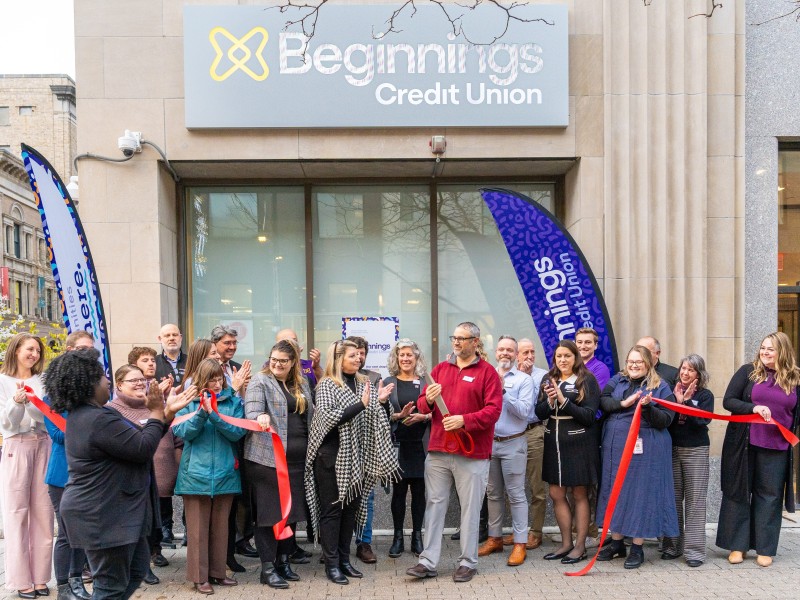
Beginnings Credit Union holds ribbon cutting
Beginnings Credit Union celebrates a branch rebrand in Ithaca, providing improved services and engaging with the local community.
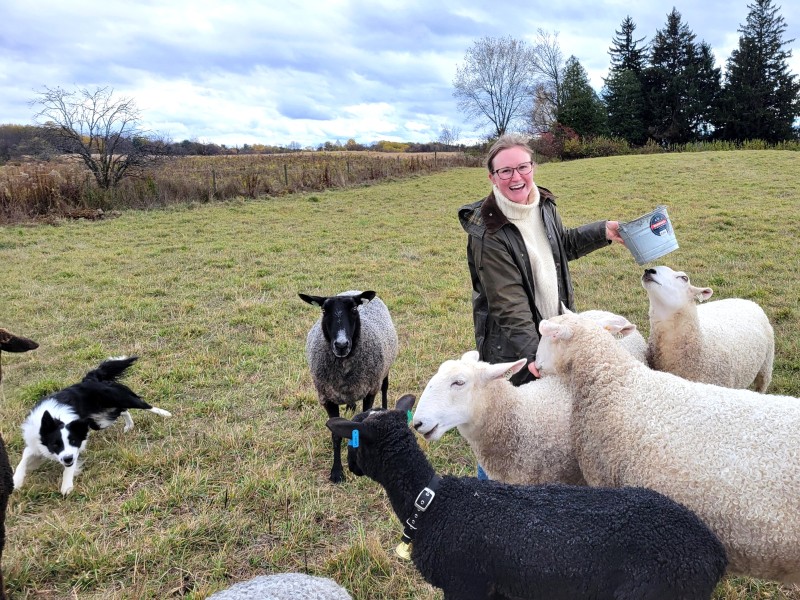
Cailyn McMahon: From Brooklyn to Groton for the love of sweaters
Designer Cailyn McMahon moves from Brooklyn to Groton to raise sheep and pursue her dream of making American-made wool sweaters.
New bakery and coffee shop brings community and homemade treats to Newfield
Morning Moon Coffee and Bakery opens in Newfield, offering homemade treats, coffee and a cozy community space run by Amy Heffron.