
Free showing of “Remaining Native”
The film “Remaining Native” screens free at Cinemapolis Dec. 7, with director Paige Bethmann joining for a talkback on culture and healing.
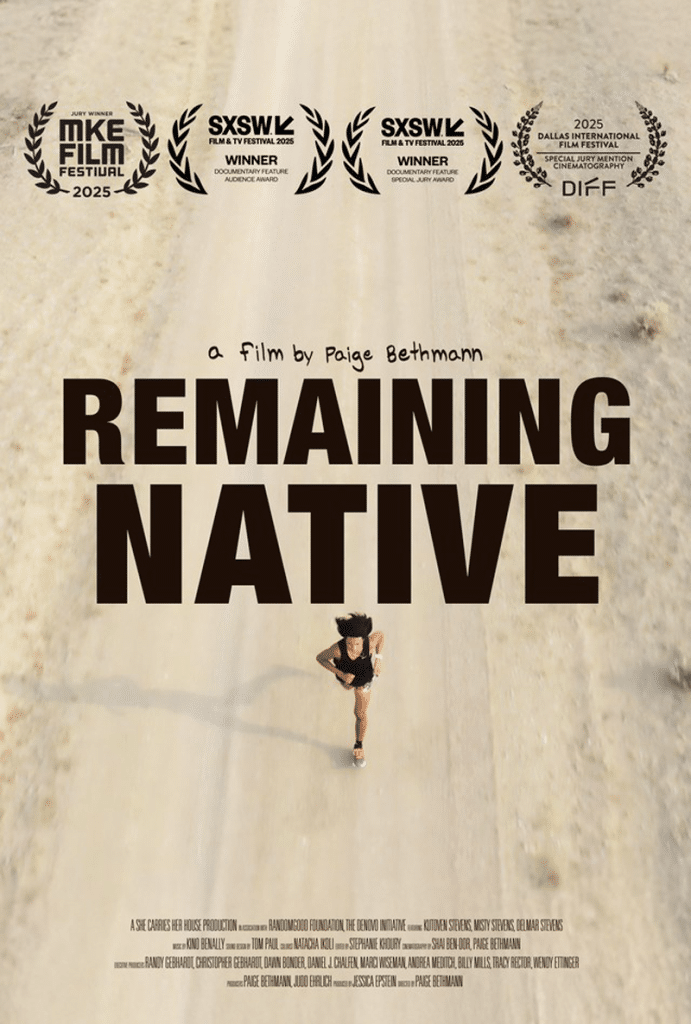
The movie poster for “Remaining Native,” showing at Cinemapolis Sunday, Dec. 7, at 2:30 p.m. The film’s director, Paige Bethmann, will be on hand for a post-screening talkback.
By Cathleen and Eric Banford
The Gayogo̲hó:nǫˀ Learning Project is presenting “Remaining Native” at Cinemapolis Sunday, Dec. 7, at 2:30 p.m. This is the fourth free film in a series which fosters the understanding and appreciation of Gayogo̲hó:nǫˀ (Cayuga) history, culture, and contemporary issues. The film’s director, Paige Bethmann (Mohawk/Oneida), will be on hand for a post-screening talkback. As a Hodinohsó:nih filmmaker and Ithaca College Alumna (2015), Bethmann will offer firsthand insight into the film’s creation and its important cultural and historical themes.
When asked about how she came across this story, Bethmann said, “It was a local publication that wrote a story about this kid who was going to retrace his great grandfather’s 50 mile trip through the desert. I was very moved by not just the visual idea of an eight year old trying to go across a desert so young and being so scared, but really this kid who’s seventeen who wanted to do something to honor his family.”
This led Bethmann to reach out to Ku’s mother. “It’s a story of a young person who’s confronting this past while also trying to aspire to define what his future looks like by going to get to the University of Oregon.”
During training, Ku would solo run for miles with no one in sight. “He’s running on like the memory of his ancestors,” shared Bethmann. “I was trying to evoke ancestral muscle memory through the film, and get into the breathing and the rhythm and spirit.”
Bethmann shared, “My grandmother went to an Indian boarding school, and it definitely left lasting impacts on my family and on my upbringing. During 2021, unmarked graves were discovered in Kamloops, Canada.” Bethmann recalls that this was an emotional time for many, “especially from my own community who’s been sharing these stories for a long time.”
The residential school in Stewart was in operation for 90 years, from 1890 to 1980, and it’s now a cultural center and museum. “Some people call themselves alumni, and some people call themselves survivors, and it’s just really sensitive,” said Bethmann. “Every Native person has some connection to the boarding schools. By doing this run and being together really opened up a space for people to talk openly about this, and to share, and to be together in movement.”
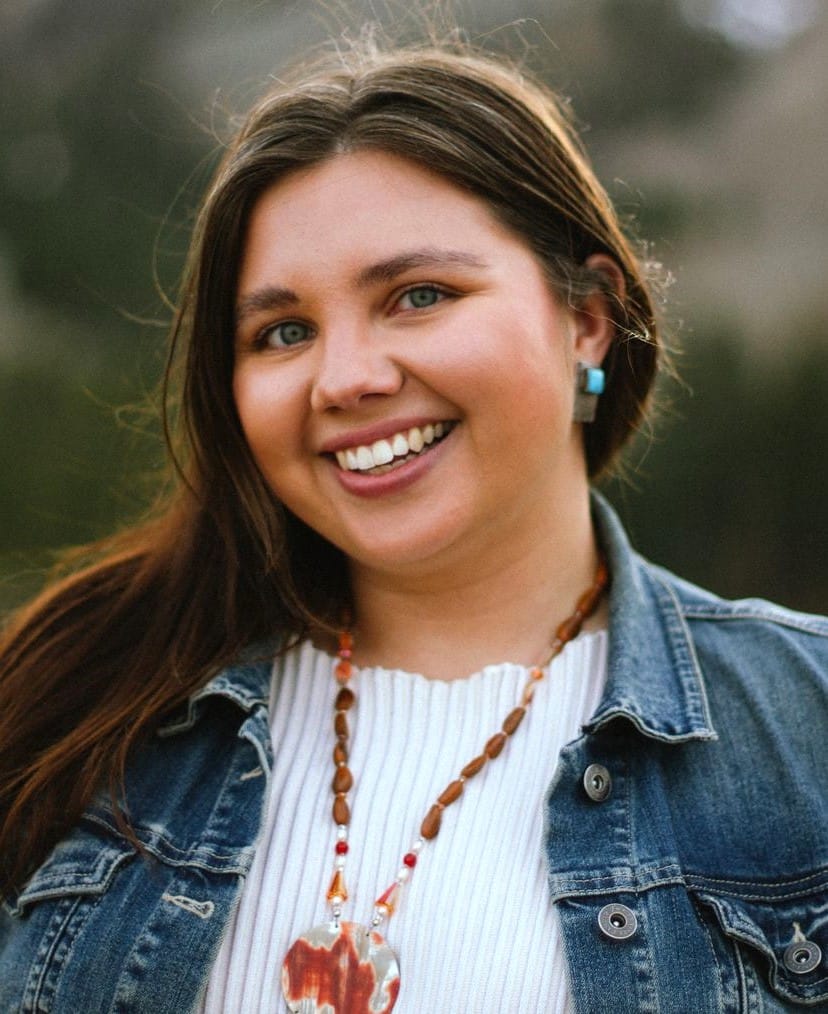
Paige Bethmann (Mohawk/Oneida), director of the film “Remaining Native,” will be available for a discussion with the audience at a free showing of her movie at Cinemapolis Dec. 7.
The opportunity to talk helped many in the community to start healing. “I think the community really needed it at that time to find an outlet to be able to express how painful this resurfacing is, to be open and feel safe doing so. There’s just so much shame around this history, and a lot of people have held these stories in for so long,” shared Bethmann.
When Ku’s grandfather got back home after a third time escaping, he was still young, and he was able to participate in culture, participate in continuing the ways of fishing and hunting and speaking Paiute, according to Bethmann. “He became a tribal councilman. And the ways in which Ku was raised stemmed from the fact that his great grandfather made this sacrifice to retain culture. This had a huge role in why we named the film ‘Remaining Native,’ because he ran away from boarding school to stay Indian, to keep his culture.”
“Being Paiute is all about being connected to the environment and doing those traditional things, like pine nut picking in the late summer and berry picking in the spring, and foraging onions. Acknowledging all four directions and doing sweat lodge ceremony, that was the way that Ku grew up,” said Bethmann.
“Over the course of filming I really identified where I was on the healing spectrum,” shared Bethmann. “It feels like an opportunity to know that there is hope. Healing is actually possible, Ku was able to use his community to hold some of this history, and also be continuously running forward, because we can’t separate our history from ourself. But we can learn how to run with it and take what we need from it to move forward, and also share it with other people who have experienced it. I hope a lot of people can resonate with this film.”
Reserve tickets on line through Cinemapolis: cinemapolis.org
The Gayogo̲hó:nǫˀ Learning Project: gayogohono-learning-project.org
Author

Related Articles

5 things to do in Tompkins County this weekend
Plan your visit and discover what’s happening this weekend.
Music, hot dogs and Santa: Newfield to host tree lighting celebration
Newfield Christmas Tree Lighting returns Dec. 6, offering music, Santa, food, and community fun for all ages.

Sponsored Sponsored content Tech gifts for the holidays – and why fiber internet makes them even better
Explore the best holiday tech gifts and see how fast fiber internet from Empire Access helps your new devices perform their best this season.