
RHIZE Up intentional farming community coming to Danby

The Town of Danby will soon be home to RHIZE Up Community Farm, a group of families who will form an intentional community and work together to grow mushrooms and produce other agricultural goods on 14 acres of forest on Hornbrook Road.
The project is being developed in partnership with Khuba International, an Ithaca-based nonprofit that aims to integrate sustainable agriculture, youth education and community development.
It is part of Khuba International’s Quarter Acre for the People program, which focuses on children and families, and also the Gayogo̱hó:nǫʼ Learning Project, which focuses on the development of intentional farming communities.

MANAGING EDITOR
“It will be focused on growing food,” explained Christa Núñez, director of Khuba International. “It’s a heavily forested farm, so we’ll be doing a lot of forest projects like beekeeping and mushrooms, and doing a lot of educational activities, including community and youth education.”
“We know how important it is, especially for young people, to support people and live in harmonious lifestyles in a diverse spectrum of community stakeholders,” Núñez added. “We’re hoping to model what that looks like.”
A steering committee is in the process of choosing which families with children will be part of the community.
“The families will have gatherings; there will be workshops teaching different things around regenerative agriculture and forest farming and welcoming the general public to the farm,” she said, adding that the farming community will also be a stop on the Farming for Freedom Trail, another Khuba International initiative.
The organizers are also in the process of developing building plans, and they already have a first draft of the architecture for the homes.
“We are looking to submit a building proposal to the town planning board in the Town of Danby, and are also developing the cooperative structure,” Núñez said, adding that the organization is looking to submit its proposals to the town by the end of the month in the hope that they are approved by the end of the year.
Felix Heisel, assistant professor and the director of the Circular Construction Lab at Cornell University’s College of Architecture, Art, and Planning, worked on the project with his students. They envisioned what the community would look like, including best building practices within the environment. “That’s a really important part of the puzzle,” Núñez said.
“We are hoping to use some of the money that we were able to fundraise through the Tompkins County Relief Fund grant to build some of the infrastructure,” she explained.
The grant money will help the group create a driveway and install a well, septic tank and electrical connections, hopefully by the end of April 2024, Núñez said.
“Then we will break ground, fundraising all the while, and build the actual dwellings by June of 2024 and have everything completed by the end of 2024 or early spring 2025,” she said.
Aleksandr Mergold, an architect who cofounded Austin and Mergold LLC, an architecture, landscape and design practice and an assistant professor at Cornell University, is also involved in the project. “He has been a really important factor in envisioning these mushroom-inspired buildings and what they would look like,” Núñez said.
Núñez said that community engagement is important to the project and that RHIZE Up will be a stop on the Farming for Freedom Trail next year. “We will be welcoming community members to see whatever structures are built by then and to get to know the project better,” she said.
Núñez is a PhD student in Cornell University’s Global Development department. “This project has been a really cool way to engage all my interests,” she said. “As a Black woman developer in this region, I think it’s really important — embracing my identity and using it as a way to inspire other people, other children of color and community members of color, to pursue their dreams in the way they see fit.”
She sees the project as a small community that will function as an active part of the larger Danby community. Outreach is key, she said.
“It’s love oriented,” she said. “It’s really the only way in which we’ve discovered this will actually work — having a basis of love in a way that can expand outward to the broader community where this is coming from, and we’re eager to welcome people in.”
Author

Related Articles
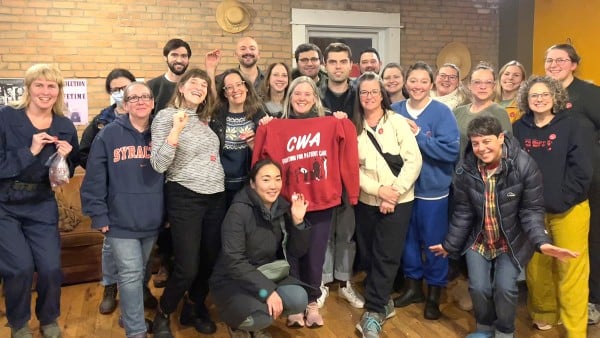
Cayuga Medical Center nurses to rally, alleging anti-union tactics by hospital management
CMC nurses plan a rally, alleging unsafe staffing and illegal anti-union tactics as the hospital highlights recent patient-safety gains.
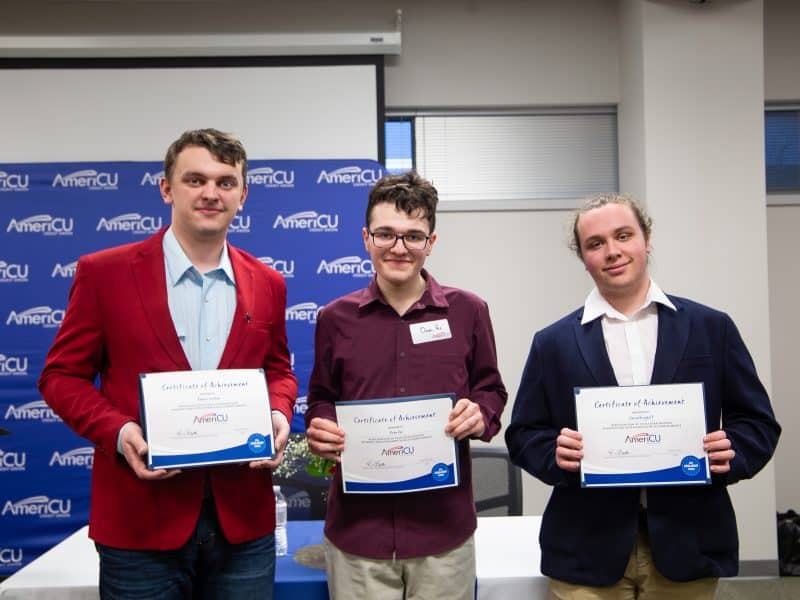
AmeriCU proudly connects students with annual scholarship opportunity
AmeriCU scholarship program awards $1,000 to students pursuing college or vocational education. Applications are open through March 15.
Street Beat: What’s one of the best holiday gifts you ever received?
We asked five random people. Here’s what they had to say.