
Rotary’s highway cleaning ‘picks up’ this weekend
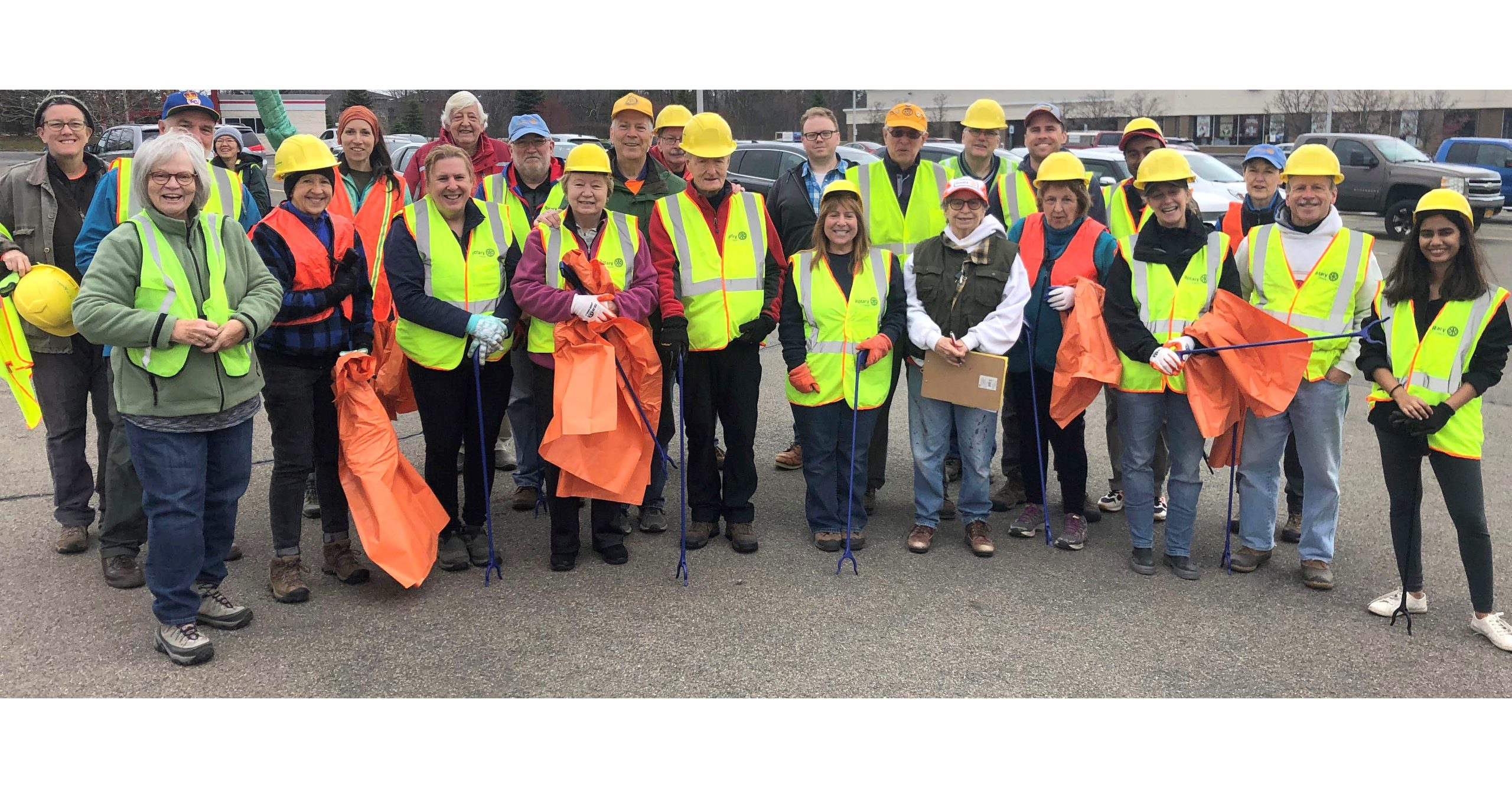
Beginning in the fall of 2005 and continuing every year since, the Ithaca Rotary Club has organized highway cleanup events for a portion of Route 13, and its next event is this weekend.
On Oct. 8 at 9 a.m., Rotarians and community members will gather at the Tops parking lot at 2300 N. Triphammer Rd., Ithaca, where they will then clean up trash along both sides of Route 13 stretching from the on and off ramps on Triphammer Road to the on and off ramps at Stewart Park (about 2 miles).
Those interested in joining in their efforts are encouraged to visit tinyurl.com/2juwvfxf to learn more and contact the Ithaca Rotary through its Facebook page, facebook.com/IthacaRotary. Prospective participants have until this Friday, Oct. 7, to sign up.
The Ithaca Rotary has maintained these cleanup efforts at least twice a year because of the numerous benefits it creates for community members and Rotarians alike, as those involved explained.
Longtime Rotarian Bob Gravani said that the Rotary’s highway cleanup efforts began in 2005 thanks to a push from late Rotarian Noel Desch.
“The Department of Transportation started this cleanup program around 1999, 2000-ish,” he said. “And apparently, a Cornell fraternity had gotten that section of the highway, and they got their sign up and everything. And Noel said, ‘Well, it’s very difficult for students to maintain this over time because clearly, students turn over, the classes change, people’s thoughts about projects change, etc.’ And sure enough, the fraternity unfortunately fell down in their cleanup activities, and Rotary had a chance to jump in and pick it up.”
Desch remained actively involved in the cleanup efforts up until his death in 2021 (tinyurl.com/2nuvzyfo), Gravani said.
“Noel was a great mentor in a lot of different ways,” he said. “He was also actively engaged in the cleanup, so he wasn’t just the cheerleader. He and his wife, Janet, were actively engaged on cleanup crews out there when we were doing it and always brought goodies for the cleanup crew and [were] just really so dedicated to community activities and community involvement.”
The state’s Department of Transportation (DOT) has also supported the cleanups since their inception, longtime Rotarian Mary-Lynn Cummings said.
“We signed an agreement with them; we follow their rules,” she said. “They provide us with the hard hats. They provide us with the safety vests. They provide us with the bags. They provide us with logistical support in terms of the scheduling — they try not to mow the day before we go pick up the trash because that makes it a lot harder to pick up trash. And they are just usually supportive, like with the signs and everything, very quick to respond, very timely.”
Gravani and Cummings were part of the first cleanup crew and have been a part of them ever since. Cummings said one of the largest reasons she and so many others have “picked up” this activity year after year is the benefit it brings to the community at large.
“We’re doing something useful — cleaning up next to the road — but also the visibility of people out there cleaning up the road might serve as a reminder to people to be careful about what’s flying out of their car, for instance, to think about, ‘Somebody’s going to have to clean up after me if this leaves my vehicle or when I dropped something out of the window, intentionally or unintentionally,’” she said. “Maybe some people will be more thoughtful in the future about securing things in their vehicle and not intentionally depositing waste by the road.”
Cummings added that the cleanups are also a very uplifting and engaging experience for Rotarians.
“The first priority, I think, for the Rotary Club is to have a chance for hands-on, in-person team building [and] relationship building,” she said. “So, there’s nothing like getting out by the side of the road with the traffic whizzing by with a partner, two or three other people. The conversations that start up while you’re doing this rather mundane task of picking up trash can be really fascinating. And you can really get to know each other.”
Since you don’t have to be a Rotarian to participate, Gravani said the cleanup efforts are also a great opportunity for community members, particularly those who are part of environmentally focused organizations like the Ithaca Sunrise Rotary Club, Zero Waste Ithaca and more.
“There’s just some community members who enjoy the whole issue of environmental sustainability and wanting to help clean our roads, so we contact them and they come and help us out,” he said. “So, in addition to club team building and community building, we’re also building community with the wider Ithaca area as well.”
And the reaction from participants has always been positive, Cummings said.
“The participants who show up show up because they really do enjoy it,” she said. “It’s a very satisfying way to spend a couple of hours. You feel like you actually accomplished something. You only have to look behind you and look at the number of bags that we pick up, often close to 30 bags along that 2-mile stretch.”
As for what participants typically find, Gravani and Cummings said that just about anything one can think of has been found and picked up at some point.
“We find car parts — a lot of car parts,” Gravani said. “We find a lot of, unfortunately, fast food, remnants of fast food meals, etc. … We find a lot of unsecured load issues from pickup trucks and other wide vehicles and things. So, it ebbs and flows.”
Cummings added some others she’s encountered.
“We do find a lot of cups, fast food containers, and bottles and cans,” she said. “And that’s a shame because they’re usually very dirty, sometimes have liquid in them. We can’t recycle them. We can’t recover them at that point. So, that’s a shame. We do find a lot of that. I will say the number of plastic bags, I feel like, has gone down. … The number of masks has gone way up. … I think I can say very safely we never found a mask before 2020. But we do find a lot of disposable PPE.”
Cummings and Gravani both said that the pandemic has had a minimal effect on the cleanup efforts, only canceling the spring cleanup in 2020.
“By fall, we were back out there with lots of hand sanitizer, requesting everyone to mask, requesting people work in teams that they were comfortable working in,” Cummings said. “Maybe the turnout was a little down that fall; I don’t really remember. We might have gotten some different people because people’s schedules adjusted.”
Regardless of the pandemic, Gravani and Cummings said that the largest challenge leading up to most every cleanup has been getting enough people to sign up.
“We’re constantly reminding folks and seeking volunteers for help because the more people we have, the quicker we can get the job done, but also the larger expanse of highway that we could cover,” Gravani said. “We can do more with more people, so that’s what we’re always looking for. We’re always looking to recruit folks to help us out, both in the club and in the community as well.”
Overall, Gravani and Cummings both shared enthusiasm toward the next cleanup event and encouraged interested readers to sign up. And as for cleanups next year and beyond, Gravani said Rotary plans to continue and perhaps even expand its highway cleanups for the foreseeable future.
“Our goal is to just see if we can get as many volunteers as we can out there to help us out and, again, make this something that the community is proud of so that when they drive up or down the road, they don’t think about trash on the side of the road; they look at it, and they see the beauty of our area,” he said. “And I think that’s what one of our goals is is to keep our community roadway, that 2-mile stretch, really looking good.”
Jessica Wickham is the managing editor of Tompkins Weekly. Send story ideas to them at editorial@VizellaMedia.com.
Related Articles
Cayuga Medical Center nurses to rally, alleging anti-union tactics by hospital management
CMC nurses plan a rally, alleging unsafe staffing and illegal anti-union tactics as the hospital highlights recent patient-safety gains.
Design details unveiled for new Center of Government
Design details for the Tompkins County government building in downtown Ithaca are now public, with a county survey open for feedback.
Holiday traditions bring community cheer
Tompkins County holiday traditions light up homes, farms, and schools with festive cheer and community spirit.