
Democratic View: Rural Healthcare Is At A Breaking Point. Here’s How We Fix It.
Josh Riley outlines the rural healthcare crisis and proposes bipartisan solutions to protect hospitals, workers, and seniors in Upstate New York.
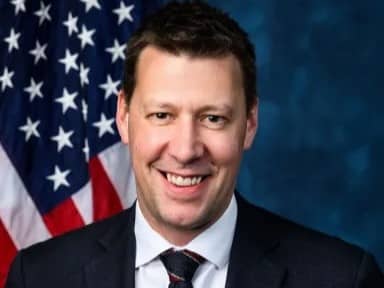
Josh Riley, Democrat representing NY-19 in the U.S. House.
By Josh Riley
Editor’s note: The opinions expressed in this column are those of author Josh Riley and are not representative of the thoughts or opinions of Tompkins Weekly.
Last year, I wrote that I would make rural healthcare one of my top priorities in Congress. I know that too many rural families are waiting too long, paying too much, and travelling too far for the care they need, and I know that our healthcare providers are overworked and underpaid.
What I did not know then is that our rural healthcare system would face several crises in the following months–all of them created by politicians and special interests.
I’m writing now to give you a recap of the challenges that have been thrown at us over the past year, the work I’m doing to fight back, and the work I’m doing to improve rural healthcare.
***
On a Saturday in April, while thousands marched in the first “No Kings” rally, I convened a roundtable discussion with folks who are not as politically active but whose voices really needed to be heard.
One was a nurse who–like every nurse I’ve met–went into the profession for one reason: he loves caring for others. But he’s burning out. His hours are long, and his pay just isn’t keeping up with rising costs.
Conversations like those and my recent rural healthcare town hall confirmed that the so-called One Big Beautiful Bill threatens a knock-out punch to rural healthcare. That legislation takes one trillion dollars out of the public health system and puts it into the pockets of the wealthiest Americans.
I voted against it, delivering a floor speech that made national news for cursing out the politicians harming our community. But Republicans fully control Congress, and they jammed through the One Big Beautiful Bill without bipartisan support.
So now I’m working to undo the damage. I’ve sponsored the bipartisan Rural Hospital Stabilization Act to restore funding for rural hospitals, and I’ve sponsored bipartisan bills to fix reimbursement formulas that undervalue rural nurses and homecare workers.
I also wrote part of the rural development appropriations bill to bring home millions of dollars in direct federal investments to reinforce our rural health system–state-of-the-art hospital equipment, a new primary care clinic and outpatient facility in the Catskills, and EMS stations in Guilford and Athens. These investments will strengthen rural communities that too many politicians have neglected for too long.
***
Then, we recently learned that insurance companies were dropping Medicare Advantage plans in rural counties. These corporations didn’t walk away because the need for coverage disappeared. They abandoned us because the profits did. They treat our neighbors like numbers on a spreadsheet and hope our elected leaders would look the other way.
I didn’t. I demanded answers from the CEOs, and I’m using that information to write new legislation to hold these corporations accountable and improve rural seniors’ access to care.
My fight against these insurance companies is for every senior in Upstate New York who has had the rug pulled out from them. But it’s also about more than that. It’s about a broken and corrupt political system that rewards powerful corporate interests at rural America’s expense. Insurers abandon rural communities because the politicians who cash their corporate PAC checks let them get away with it.
So I’m working on legislation to truly “Drain the Swamp”–overturn Citizens United to end dark money in politics; ban corporate PACs; and ban Members of Congress from insider trading that makes them rich off the predatory practices they should be fighting.
***
Just when it looked like things couldn’t get worse for rural healthcare, House Republicans chose a government shutdown over bipartisan negotiations to renew the tax credits that millions of Americans use to buy health insurance. When those credits expire, Upstate New Yorkers will see premiums double. Folks simply cannot afford that.
Folks like Andrew in Cooperstown and Kirstin in Gallatin who called to let me know what those premium hikes would mean for them–either going broke or skipping care. Why the hell is Congress giving trillions in tax breaks to Wall Street while forcing Andrew and Kristin to make those kinds of impossible choices?
I’d have supported a bipartisan budget deal that addressed the rural healthcare crisis in Upstate New York. But the final budget proposal not only failed that test miserably, it also included a poison pill that gave million-dollar handouts to self-serving politicians at taxpayers’ expense. Maybe that’s the kind of backroom deal politicians are used to cutting for themselves, but we won’t stand for it in Upstate New York.
My office stayed open during the shutdown, continuing to serve constituents. I visited food pantries from Ithaca to Coxsackie, and I worked with Rep. Alexandria Ocasio-Cortez to keep SNAP benefits flowing.
Now, with the government reopened, I am participating in a bipartisan working group that is negotiating a deal to extend ACA tax credits–because I will work with anyone who will do right by Upstate New York.
Josh Riley is a fifth-generation Upstate New Yorker, a Union-Endicott grad (go Tigers!), and the Democrat representing NY-19 in the U.S. House. He lives in Ithaca with his wife Monica and their sons, Pato and Mateo.
Author

Related Articles

The Life and Legacy of Former Assemblymember Martin “Marty” Luster
The Marty Luster legacy includes lasting impacts on mental health, education, and environmental policy in New York.

Democratic View: When hope is not enough: An urgent call to action in support of our immigrant neighbors
Stacey Dimas urges immediate action to support immigrants in Ithaca, highlighting local resources and volunteer opportunities.
Democratic View: It’s time to end hostility and embrace humanity
Shawna Black urges communities to end political hostility by promoting civility, dialogue, and safety for public servants.