
Sapphire Farms, Newfield’s cannabis farm, seeks to upgrade manufacturing center
Sapphire Farms cannabis operation in Newfield seeks to expand its facility to improve storage, processing, and efficiency.
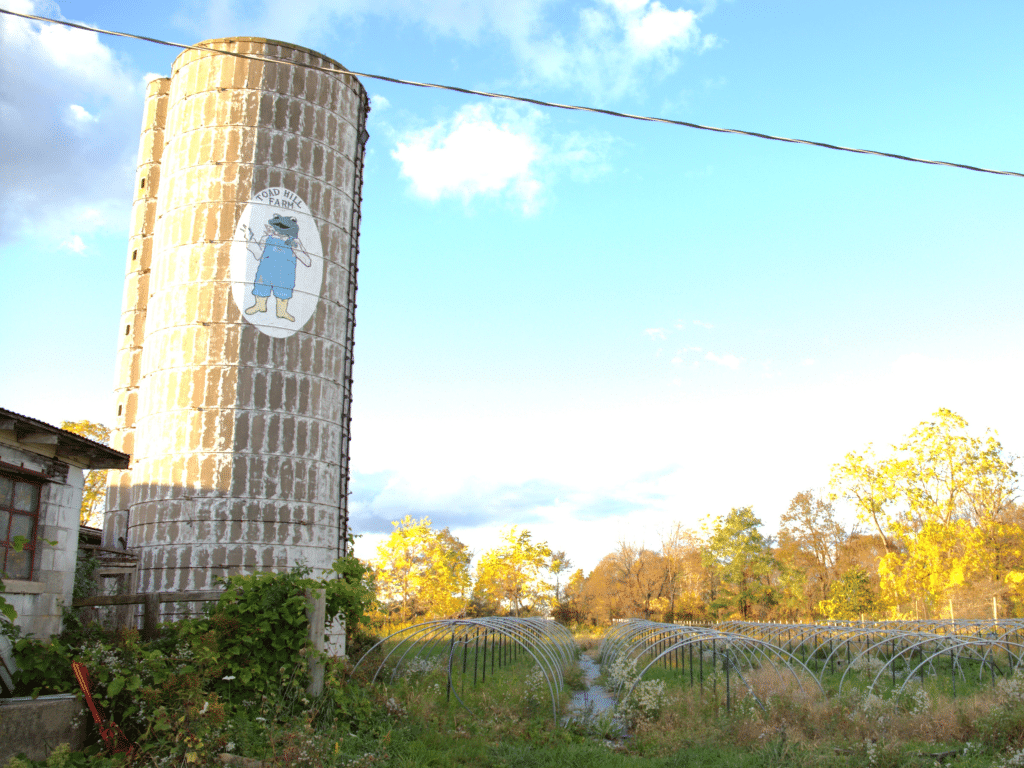
Cannabis being grown at the 150-acre Sapphire Farms in Newfield. The land used to be occupied by Toad Hill Farm before Sapphire Farms began operating in the space last year.
Sapphire Farms, a 150-acre cannabis farm that began operating in Newfield last year, is asking the town for approval to expand and upgrade its manufacturing center.
Construction of a new 24,000-square-foot building, which will be used to store, dry, manufacture and process cannabis, began this summer but needs the town’s permission to finish the development. The project will also include building a parking lot and a driveway, as well as a code-compliant septic system and a stormwater pollution prevention drainage system, according to the farm’s manager, Anthony DiStasio.
“This project will allow us to have more space to actually operate, because the current building we’re working in is pretty cramped and we don’t have much storage space,” DiStasio said. “It’ll really help us work more efficiently and help our operation go smoother.”
The new building will feature a gray exterior finish, which was chosen due to its low reflectivity to minimize its visual impact and complement the surrounding rural landscape, according to the project’s community impact statement.
Sapphire Farms founder and owner Carmine Pistolesi said that the farm distributes a few hundred thousand cannabis products, including pre-rolls, vape cartridges and packaged flowers, to licensed dispensaries across the state every month. Sapphire Farms has also operated a cannabis farm in Michigan since 2018.
The building, which will cost about $5 million to construct, will house $5 million of equipment that has already been purchased, according to Pistolesi.
Sam Parlett, a member of the town planning board, said that the farm received a building permit before construction started. However, because Newfield does not have zoning laws, he said that the developers didn’t initially need planning board approval for the project.
“It’s important for the project to get planning board approval at this stage because there’s hazardous chemicals involved that might impact the local water quality,” Parlett said, noting that the farm uses substances like ethanol to extract certain properties from cannabis plants, which is a common practice for mass producers of cannabis products.
Parlett said the date when the planning board will vote on the project is uncertain. He added that if the planning board approves the project, the developers would have to submit paperwork, including a Stormwater Pollution Prevention Plan (SWPPP), before it goes to the town board for final review.
Pistolesi said that the farm, which also includes a house and three barns, has been working with T.J. Miller, an Ithaca-based civil engineering and land surveying firm, to create its septic and stormwater pollution prevention drainage systems.
The SWPPP will include “bio-retention areas, permeable surfaces where feasible, and proper grading to control runoff,” according to the project’s community impact statement. These efforts, the document says, will prevent erosion, protect water quality and comply with local and state regulations.
“I do think that the water table is the biggest concern from the community,” Parlett said. “Sometimes these projects will affect how water is drained during storms, and then when the flood maps get changed, all of a sudden people like myself, who just bought a house, are told we now need to get flood insurance on top of our regular insurance because our house could flood.”
However, Parlett said he had no reservations about the project and didn’t anticipate that the planning board would have many concerns, either.
“I think everything looked pretty up to code,” he said. “They already had their documentation that they were working on, and it seemed pretty good to me.”
Pistolesi estimated that the farm, which currently employs about 20 people, would grow to a staff of about 50 after the project is complete and become one of the largest employers in the town.
Once the project is approved, Pistolesi said that he anticipates it will take three to four months to finish the building.
“We’re hopeful that everything goes off without a hitch,” he said.
Planning board meetings continue with new members
The Newfield Planning Board resumed its monthly meetings last month after not having the number of members needed to convene.
The planning board went for at least three months without meeting as new members were voted in, according to the planning board’s secretary, Lynne Sheldon.
“I took somebody’s place on the board,” Parlett said, “and then two months later, three of the four members of the board had to decide if they wanted to stay for another term or not, and several left.”
The planning board currently has four volunteer members — Parlett, Tammy Van Orman, Steve Wright and Kevin Hulbert, who serves as the board’s chairman — who meet on the first Wednesday of each month. The planning board usually meets at town hall but is currently meeting at the Masonic Temple, located at 186 Main St., until the end of the year, when the renovations on town hall are expected to finish.
Parlett said that there is still one vacant seat on the planning board. He encouraged Newfield residents interested in local development projects to consider applying on the town’s website.
Author

Related Articles
Newfield fire chief: 2025 saw 11% fewer calls, uptick in false iPhone crash notifications
Newfield fire calls fell 11% in 2025, though officials report an increase in false iPhone crash detection alerts across the town.
‘Gigantic monstrosity’: Newfield residents speak out against NYSEG infrastructure project
Newfield residents raise concerns over NYSEG’s infrastructure project, citing property impacts, aesthetics, safety, and communication issues.
Newfield nonprofits prepare for community meals, festivals and new traditions next year
Newfield Community Events in 2026 include Old Home Days, town meals, and local traditions highlighting volunteerism and community service.