Lansing schools preparing for electric school bus fleet changes
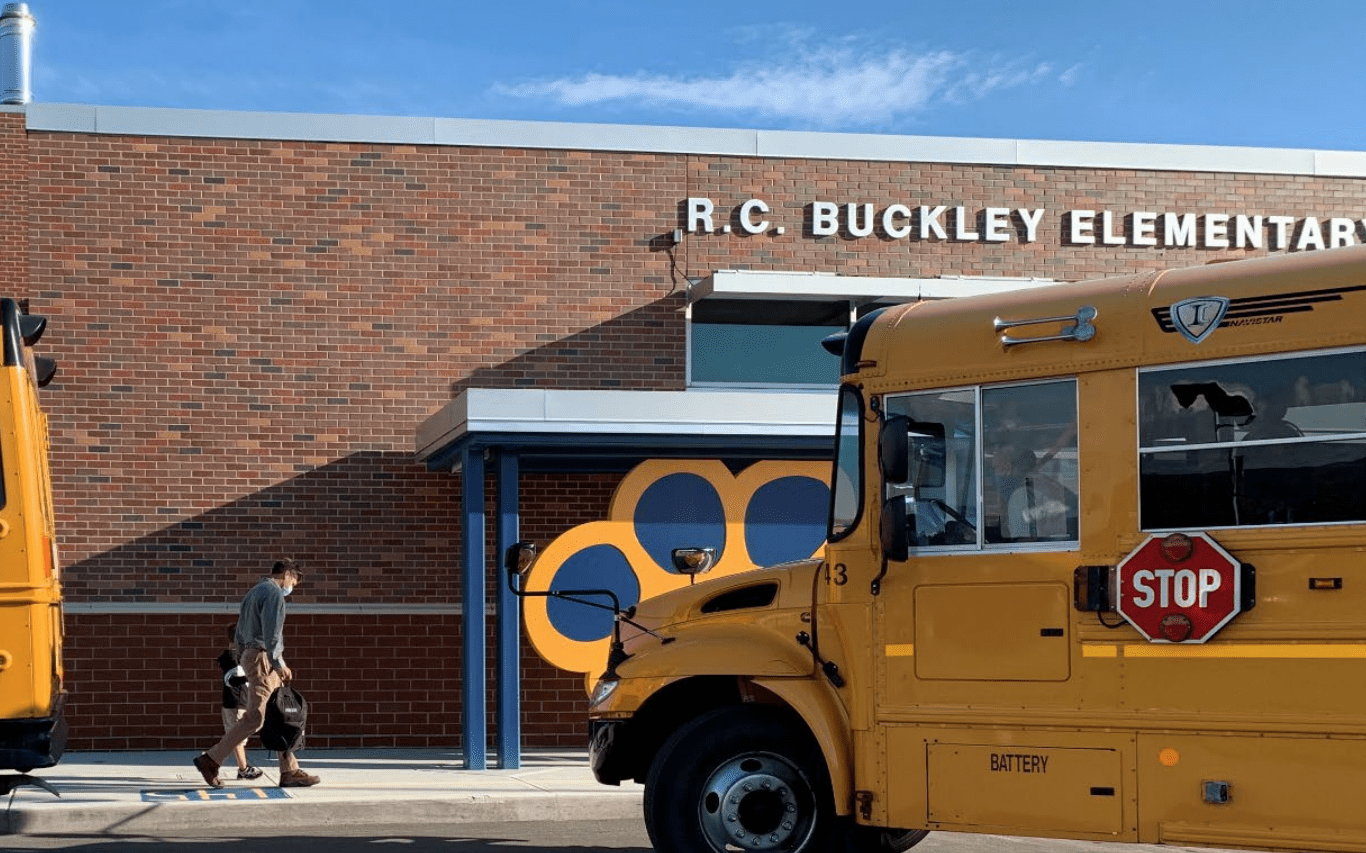
At its March 11 meeting, the Lansing Central School District (LCSD) Board of Education discussed what it would take for the district to be prepared to face changes to its bus fleet mandated by New York state.
As the state continues to attempt a transition to a 100% zero-emission electric school bus (ESB) fleet by 2035, school districts like Lansing are still working on figuring out how to set up the requisite infrastructure for an all-new fleet.

ESBs are powered by rechargeable electric batteries that run off New York’s clean energy grid and produce zero tailpipe emissions. By contrast, diesel and gasoline buses emit pollutants linked to asthma and respiratory illnesses, posing harm to children’s health and development.
State officials say that phasing out New York’s diesel and gas school bus fleet entirely by 2035 will ensure the health and safety of the 1.5 million students who ride the bus every day.
LCSD Superintendent Chris Pettograsso said that district officials recently attended a state presentation regarding ESBs, where they learned about changing to a new bus fleet.
“We have been doing a lot of research,” she said. “We have infrastructure concerns a lot around available electricity for this area and having a mechanic who is trained to support these buses. At this time, our recommendation is that we have a strong focus implementation plan for next school year. We will begin purchasing in the 2025-2026 school year.”
Pettograsso said that the district will spend the next year aiming to figure out how to prepare an environment where the ESB fleet can work optimally. For starters, the district will commission studies to get a better understanding of the needs of an ESB fleet.
“We started the process of commissioning a fleet study,” said Kathryn Heath, LCSD’s assistant superintendent of business administration. Heath noted that the district is working with Clear.gov, a contractor of the state’s Education Department to commission one of the preliminary studies.
“And we are working to get the funding from [the New York State Energy Research and Development Authority (NYSERDA)] to do a fleet study through them. Two fleet studies should hopefully get us a really complete picture of where we are.”
Pettograsso said the district will analyze both studies before moving forward.
Next steps would include ensuring there are mechanics in the area who have knowledge of ESBs.
“We will have more mechanics in the area actually working on and with some electric buses,” Pettograsso said. “We will also have more research on some charging ports and on the certainty that [ESBs] are buses that work well in our area. We will have conversations about how we can plan around our transportation facilities and how we can improve them with this in mind.”
Some infrastructure details could be facilitated by upcoming infrastructure improvements across the district, Pettograsso said.
“Our heating ventilation and air conditioning (HVAC) system should be completely redone and more efficient by then, and the whole purpose of that is to have more efficient electrical use,” she added. “Some locations where we would like to have a charging port could be up by Sobus Field. That will be starting in 2025.”
The district could also take advantage of funding supplied by the state to ease up the transition.
Gov. Kathy Hochul announced earlier this month that districts can apply for funding for ESBs if they meet specific criteria. Funding starts at $25,000 per bus for hardware, installation and related costs, with an additional $10,000 available for districts designated as priority districts. Applicants can receive up to an additional $30,000 per bus if they opt for a comprehensive fleet electrification plan.
“Young people are at the center of the climate crisis, and enabling the transition to a zero-emission school bus fleet is not only a commitment to a greener future, but to the health and well-being of our students,” Hochul said in a press release. “As school districts make the switch to electric buses, my administration is providing the resources necessary to transition as easily and affordably as possible.”
At the March 11 meeting, Pettograsso also announced that April 8 will be an off day for students and district staff due to the solar eclipse occurring that day.
“With our available emergency days, because we haven’t used many, we are able to have the day off,” she said. “Campus reopens at 4:30 p.m. for afternoon activities.”
Then, on May 21, the district will have a virtual instruction half-day. This will be a test for the district to try out a potential pivot to remote instruction should circumstances merit the change.
“We make sure we know all students have access to the internet and tech, making sure we are prepared, if we have to, to go remote,” Pettograsso noted.
Author

Related Articles

AmeriCU proudly connects students with annual scholarship opportunity
AmeriCU scholarship program awards $1,000 to students pursuing college or vocational education. Applications are open through March 15.
Trumansburg schools consider regionalization as TST BOCES plan advances
Trumansburg school regionalization remains undecided as TST BOCES outlines goals for shared services and student learning.