Schools submit final reopening plans, brace for new normal
Friday, Aug. 14, was the deadline for K-12 school districts to submit their reopening plans to the state, and for many county districts, solidifying their plans wasn’t an easy feat.
Much has happened since Tompkins Weekly covered schools reopening last month, with schools changing their plans and ideas based on community feedback and a multitude of needs and risks. As most agree there is no risk-free way to reopen schools and colleges this fall, education and health leaders are working to minimize risks as much as possible and ensure equitable education for students, regardless of what learning method they choose to pursue.
On the college side of things, there’s been considerable coverage surrounding Cornell University’s reopening plans. Joel Malina, vice president for university relations at Cornell, explained that the reopening plans Cornell originally announced several weeks ago came before several states were added to the New York state travel advisory.
As of the time of this story’s publication, that list includes 32 states, and travelers from those states to New York are required to quarantine for 14 days. And with many students set to return to Tompkins County from out of state, many were concerned with how a quarantine would fit in with move-in day and classes.
“We believed we had the space to provide that all-important 14-day quarantine here, either in our dormitories or in local hotels, but when those number of travel advisory states got too large, the reality is we no longer had the space,” Malina said. “And it’s not so much the space to house people but really to house people for that quarantine under the required guidelines of the state.”
As a solution, Cornell advised students that were returning from out of state to stay at their permanent residence until their state was taken off the list, and for those who couldn’t, the university could make an exception and find a place for the students to quarantine locally. So far, about 400 students have applied for and been granted such an exception.
Cornell wasn’t the only one whose plans were complicated by the 14-day quarantine. On Aug. 18, Ithaca College announced that its fall semester will be entirely virtual, making it the only area school to do so. IC President Shirley Collado explained the college’s reasoning in a letter to the community (read the letter at t.ly/97Ae).
“Due to the absolutely necessary modifications around things like facilities preparedness and population density, the on-campus experience that our students would have had this semester would ultimately be very different from the IC experience our students would expect and that we would want them to have,” she said. “It is easy to foresee the likelihood of a public health trajectory that would mandate the closure of the college due to circumstances beyond our control. Bringing students here, only to send them back home, would cause unnecessary disruption in the continuity of their academic experience.”
Tompkins Cortland Community College’s reopening plans — in contrast to Cornell and IC — haven’t changed much in the past few weeks. Deb Mohlenhoff, associate vice president for college relations, explained that TC3 will have a phased move-in schedule and, like Cornell, will do mandatory testing for all residential students.
Moving on to K-12 school districts, the last time Tompkins Weekly covered the reopening subject, some districts had yet to finalize plans. But now, every district has submitted its plans, with district leaders having to consider not just keeping students safe but also ensuring all students — regardless of economic background — have access to equitable education.
While going all virtual may seem like the best solution on paper, county districts steered away from that model, with most offering some form of a hybrid model that blends virtual with in-person learning. Eric Hartz, superintendent of Newfield Central School District, explained his district’s reasoning regarding its hybrid plans.
“It’s proven that all virtual is not good for all kids, and certain students need to be in classrooms learning,” Hartz said. “That’s why we’re running a split-day program where our kids will do midday bus runs and our elementary [students] have the opportunity to be in school every day for half a day. So, we just feel that’s important in the educational world to make these connections, both for academics and social emotional needs.”
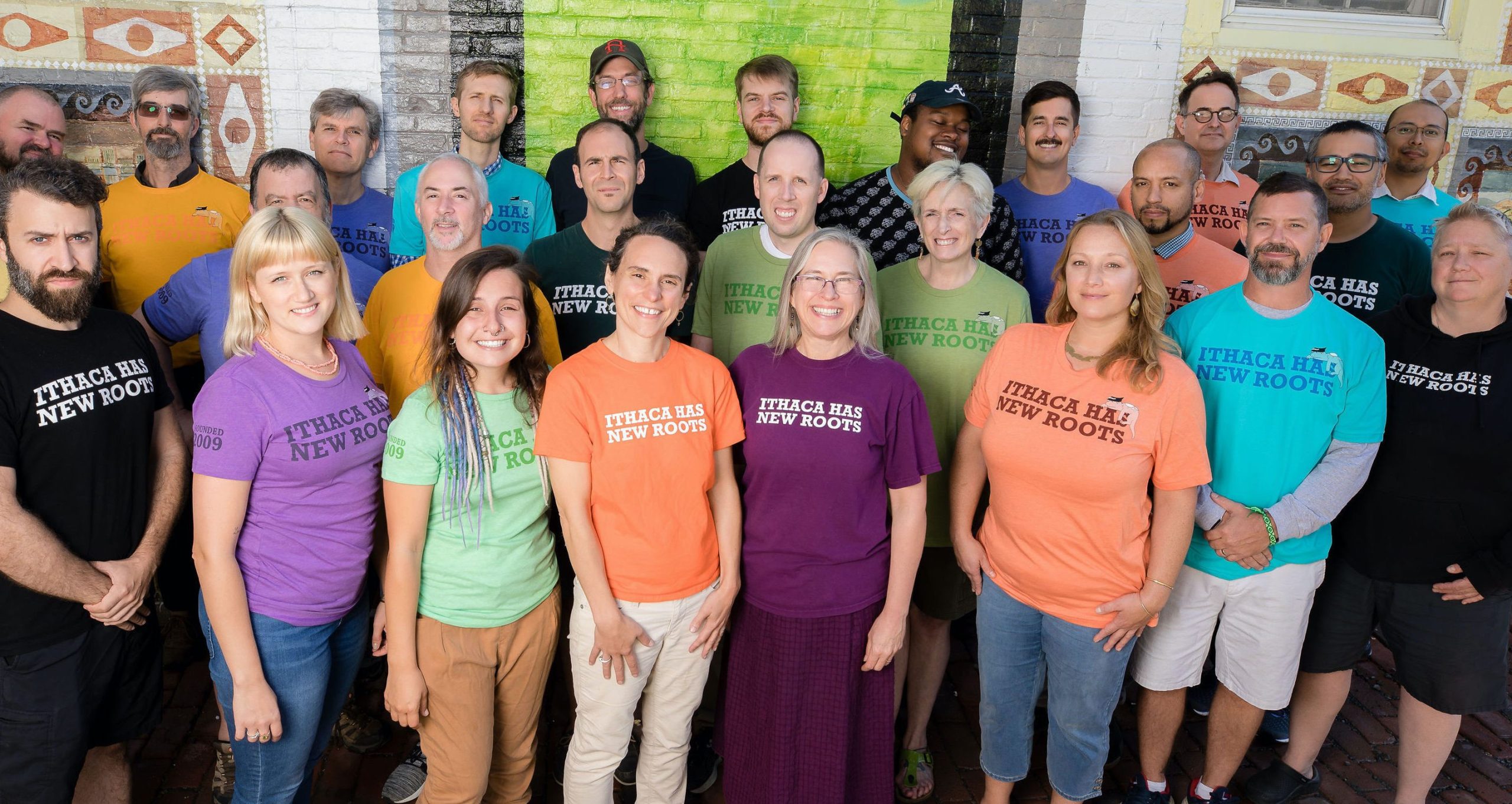
Another school that recently submitted its plans, New Roots Charter School is also opting for a hybrid learning model, with no more than 50% of its students returning to the Clinton House facility at a time. Principal and founder Tina Nilsen-Hodges explained that though the hybrid model presents some logistical challenges, New Roots is prepared to adapt.
“Our teachers are meeting the challenges involved in planning for hybrid classes head-on with professional development and planning meetings starting this week,” she said. “We are especially excited to have the flexibility to offer extended outdoor learning opportunities this fall focused on science, career exploration and the arts.”
For districts that had already announced their plans, the past month has mostly been spent refining and further clarifying those plans. Trumansburg Central School District Superintendent Kimberly Bell explained that transparency has been crucial for her and other educational leaders.
“At this point, we are really providing a lot of careful communication with teachers, students and parents and letting them know that we’re moving forward with a lot of compassion and patience and that we are absolutely following the public health protocols,” she said. “And that level of detail, I’m hoping, will reduce the level of anxiety for all the individuals that will eventually be on our campus.”
One thing on all leaders’ minds is enforcement. Actually getting students, particularly K-12 kids, to abide by the rules can be a challenge in itself. TST BOCES Superintendent and CEO Jeffrey Matteson spoke to this firsthand.
“We’ve never had to do this where we had to monitor the steps of every single student in ensuring distancing, ensuring masking, etc.,” Matteson said. “There’s one thing to make your plan. It is another thing to how we’re going to supervise all this stuff, how we’re going to do logistics to get students in the building and to have students have a classroom safely and how we’re going to track their movements.”
Regardless of a college’s or district’s reopening plan, a common challenge sources interviewed for this story shared was trying to prepare for every possibility, good or bad.
“Right now, what we’re trying to do is write a big long laundry list of like, OK, what if this happens on move-in day? OK, what if this happens on move-in day?” Mohlenhoff said. “We’re really essentially just mapping out every possible ‘what if’ scenario and making sure that we have a plan or resources in place for that, but that’s pretty hard to do, given that there are so many unknowns.”
And that adaptation won’t stop when classes start. As Matteson explained, educational leaders are expecting to have to change plans and practices on the fly based on the progress of the pandemic, new information from the state and local health departments and feedback from the community as the plan plays out.
“We know we’re going to find an issue we may not have thought of,” he said. “We’re just going to have to ask for a lot of patience as we try to resolve holes that there may be once we actually try to implement a plan.”
Sources advised that each district’s and college’s reopening plans are unique, adapting to the needs and capabilities of staff and students alike.
“We are absolutely still working out the playbook, so to speak,” Bell said. “Each district has their playbook … based on their resources, their capacity. And so, as we work out those details, I think it’s important for the public to realize that even a neighboring district, their details could be slightly different based on their resources. It doesn’t make one plan better than another.”
County Administrator Jason Molino added that families should choose whatever style of learning works best for their situation.
“I understand you’re nervous,” Molino said in Aug. 18’s Moving Forward update. “As you go through the process, understand that the decision you make is what works for you and your family, and that’s OK. And that may not be the same as other families, may not be the same as your neighbor, may not be the same as your friends, and that’s OK as well. It’s really about what best works for you.”
Ultimately, the success of the reopening plans will depend on both the pandemic and community participation. While the pandemic is unpredictable, leaders said residents, students, parents and others can help decrease health risks by continuing to be vigilant.
“As our higher education institutions reopen, and thousands of people from around the world arrive in Tompkins County, it is more important than ever that we work together to ensure that reopening happens safely,” said Leslyn McBean-Clairborne, chair of the Tompkins County Legislature, in the update.
Public Health Director Frank Kruppa elaborated further.
“It really is about personal responsibility, and … it really does boil down to the mask wearing, the social distancing and the hygiene,” Kruppa said. “Those are core. They’re the pillars that we’ve been using throughout this, and it’s gone well for us here because people have followed that guidance.”
Moving forward, Malina emphasized that collaboration and communication is key.
“We want this to be a community conversation,” he said. “We need to come together as one community and really make sure that all questions are answered, that concerns are addressed and that we’re all taking the care to ensure that we’re treating each other with the right level of respect and attention to public health.”
Related Articles

AmeriCU proudly connects students with annual scholarship opportunity
AmeriCU scholarship program awards $1,000 to students pursuing college or vocational education. Applications are open through March 15.
Trumansburg schools consider regionalization as TST BOCES plan advances
Trumansburg school regionalization remains undecided as TST BOCES outlines goals for shared services and student learning.