Schools work to connect remote students
When Michael Lockwood, Lansing Central School District’s director of informational and instructional technology, was hired in 2018, his biggest job was the acquisition and distribution of laptop computers to each of the district’s roughly 1,200 students at the beginning of the 2020 school year. That project assumed new importance and was accelerated when the coronavirus pandemic shut down the school system in March 2020.

Lockwood graduated from Groton High School and went to DeVry University in Columbus, Ohio, for a degree in computer information science. He added a master’s in network and communications management before taking a job at TST BOCES. He has spent six years on Groton’s School Board, and that experience serves him well at Lansing.
The laptops Lockwood distributed gave students a tool for at-home instruction, but the key to making virtual learning work is connecting students and their laptops at home to their teachers in the classrooms. For about 40 Lansing students, that connection didn’t exist.
“When things started looking like we might shut down, we started planning how to get the devices to kids,” Lockwood said. “We were brainstorming on a whiteboard, throwing ideas up there.”
Lockwood and his colleague Adrian Mitchell had already put together an internet form for requesting the laptops. As responses came back, they were busy readying the devices and getting them assigned to students. Bus drivers were out several times a day delivering them to students.
“The district came together to do whatever it took,” Lockwood said. “The bus drivers were instrumental. They were more than willing to do it and great to work with.”
Colleen Ledley, director of curriculum, instruction and assessment, developed the district’s “Distance Learning Resource” webpage, based on brainstorming by the schools’ staff and librarians. The site provides links to technology help and learning tools, the “School Tool” app for parents and their students, food and childcare programs, and internet access.
“There are a million different ways to do virtual or remote instruction,” Lockwood said. “We aimed to keep it simple. That means not too cumbersome or challenging. We wanted to get education flowing.”
For about two dozen Lansing families and their 40 students, lack of internet access was stopping that flow.
“That’s pretty good, considering Lansing’s size, population and how rural the town is,” Lockwood said.”
History teacher Dan Ferguson serves on the Town of Lansing Broadband Committee, and his connections with local internet providers were important, Lockwood said.
Together, the team outlined three options for students and their families:
1) If a family had cable to their door, Spectrum could provide a reduced speed, 30-megabyte download connection, initially for free. After 60 days, the monthly charge was $25 if the student qualified for the free or reduced lunch program. Otherwise, the usual rates applied.
2) If the family did not have cable, Clarity Connect would install a wireless broadband connection using an antenna mounted on the house.
3) If neither cable nor an antenna would work for the family, a cellular “mobile hotspot” provided a workable connection that was nonetheless slower than the other options.
About 10 of Lansing’s families ended up using a mobile hotspot, Lockwood said.
“Mostly, these are single-child homes where they work efficiently,” he said.
The remaining 14 families were split half and half between Spectrum and Clarity Connect. In the meantime, both providers are expanding their cable network to cover more of the town, Lockwood said.
While Lansing residents are benefitting from the COVID-driven expansion of internet access, Lockwood worries that pandemic-driven economic hardships make the service harder to afford.
“If someone has lost their job, are they going to pay the internet or the electric bill?” he said.
As for the school’s efforts, Lockwood expressed his gratitude to staff and students alike.
“I am impressed by how well the staff and students have adapted and put in the work to transform what they teach to their group of students with some doing 100% virtual and some doing both,” Lockwood said. “We are kind of in a groove — we got it figured out and we are full steam ahead.”
Lockwood and Mitchell have a store of surplus laptops in case a student’s device stops working or is broken.
“We’ve been pleasantly surprised and happy with how well students are taking care of devices,” Lockwood said. “[We’ve had] a very minimal number of broken devices. We have a repair service through BOCES for a minimal cost and good turnaround.”
Lockwood said that the pandemic response has changed school, perhaps forever.
“Will we ever have snow days again?” he said. “What is education going to look like down the road? It will be interesting when we are back to normal.”
For now, Lockwood is glad to be able to help students get the internet access they need.
“It’s amazing to walk down the hallway to help teachers and watch what they are doing,” he said. “Everybody is coming together, and it’s very impressive and fun to see. We are transforming technology from a tool to a centerpiece of what we do.”
Related Articles
Village of Lansing wins more than $500K for new sidewalks
Lansing sidewalk funding exceeds $500K as the village earns state support through New York’s Climate Smart Communities program.
TeraWulf AI data center wins zoning appeal in Lansing
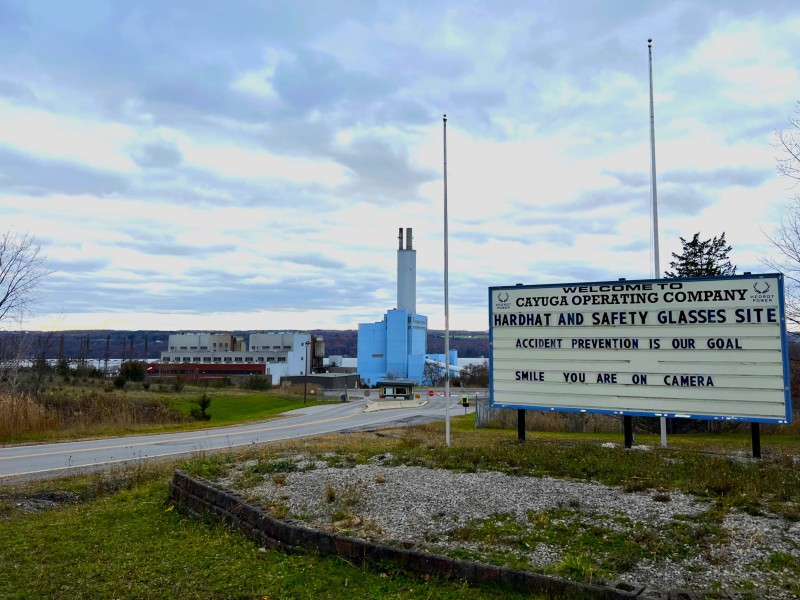
TeraWulf’s proposed AI data center at the former Cayuga Power Plant site in Lansing moves forward after winning a key zoning appeal on Dec. 22.