Second Wind Cottages continues serving community
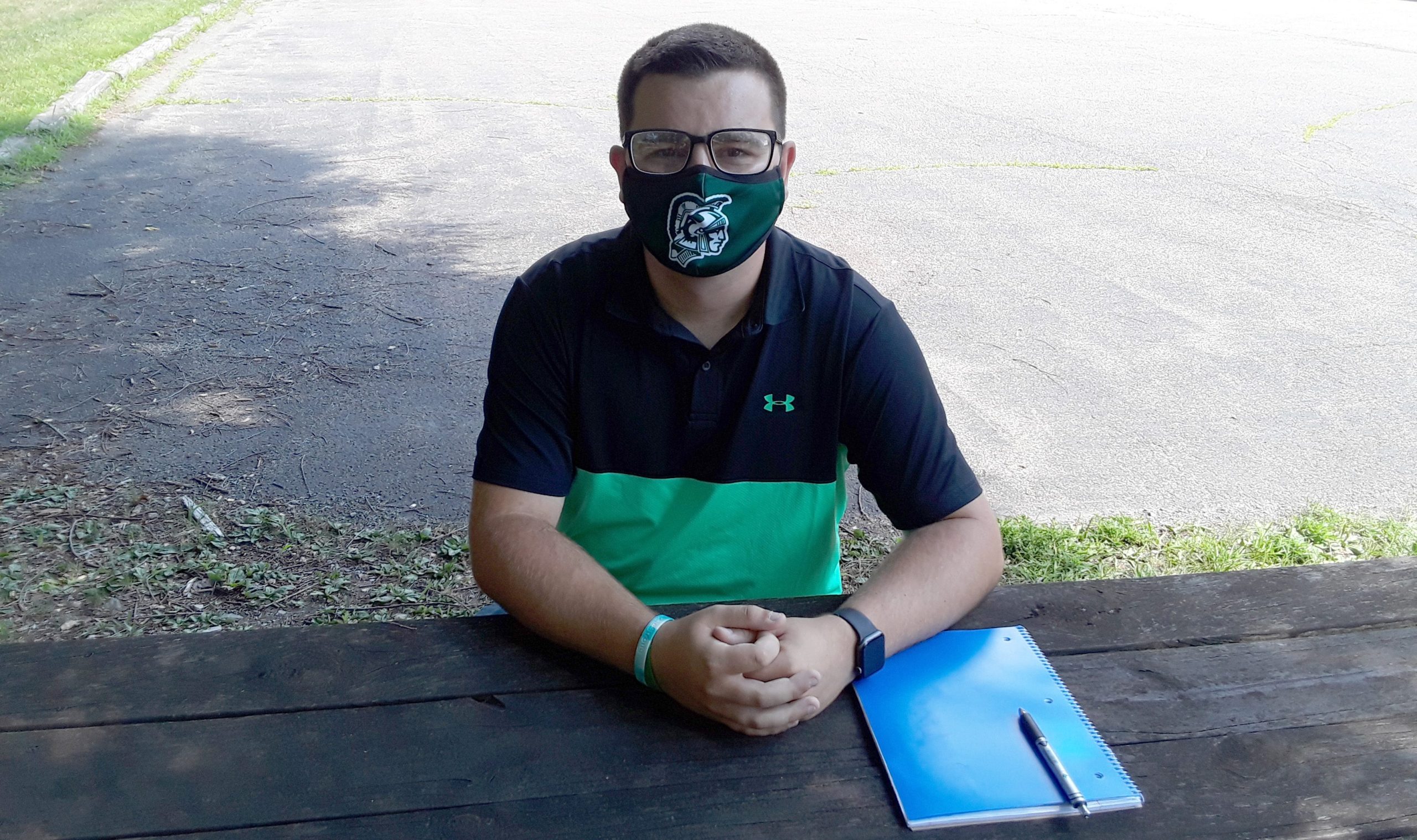
When Carmen Guidi was invited by a friend to help build an orphanage in Haiti, he never could have known it would change his life and the lives of those often forgotten by society. This trip to Haiti put him on a path of providing homes and hope to “invisible people” in his community.
Upon his return to Tompkins County, Guidi began to visit the homeless encampment in Ithaca known as “the Jungle” to offer supplies and support and to learn about the people residing there. As time went on, he built relationships and made friends with the people there. He was moved by their stories and saw a desperate need for change for the residents of the Jungle, who had been largely forgotten.
During his ongoing visits, he was invited on another trip to Haiti. When he returned to the Jungle, he learned that a friend there had died by suicide. This was a friend who had previously expressed his desperation to escape his bleak circumstances.
Profoundly affected by the sadness, loss and hopelessness that plagues the people with few options who reside there, Guidi knew that something had to be done to create change for people so desperately trying to reclaim their dignity and lives.
Recognizing an immediate, urgent need for relief to avoid future tragedies, Guidi started using the property he owned behind his family’s Newfield auto body shop to quickly put up trailers that offered not only shelter but electricity and running water to assist individuals desperate to change their circumstances.
Despite this being a welcome and needed relief, he recognized the lack of sustainability due to circumstances, climate and conditions. With that, Second Wind Cottages was born.
Starting as a grassroots movement including friends, volunteers and local organizations and businesses, Guidi sold the 14-acre property where the Cottages had started being erected to Second Wind Cottages, a nonprofit 501(c)(3), for $1. He began building homes and, more importantly, hope for those largely disqualified or forgotten by the constraints of the existing systems in place.
Initially, Guidi started obtaining trailers to place on the property with running water and electricity, but he quickly saw that long-term sustainability would require more. Upon selling the property to Second Wind Cottages, plans were quickly underway to construct cottages. Four cottages were built in 2012, followed by three additional cottages per year. Second Wind Cottages now has 18 cottages on the property.
After visiting the Jungle, learning the stories of residents there and developing a greater understanding of their needs and the immediacy to address them, Guidi learned that men comprised the largest group of people lacking assistance.
Though Second Wind Cottages is a community built for men, there have always been plans for a facility for women in the future. With the donation of a property destroyed by a fire on Main Street in Dryden, that vision will now become a reality starting in the spring of 2022.
“Originally, we were going to try and rebuild the structure, but the fire damage was too severe, so we leveled it and are now building a four-unit house that will feature two one-bedroom units and two-bedroom units that will be offered to women and children,” Guidi said.
He also noted that there is a barn on the back of the donated property that will be salvaged and will be used for residents’ needs.
The recent addition of Community Manager Mike Foster has allowed the community to implement more strategies for achieving attainable and sustainable goals of the residents.
“I work one on one with individuals to set goals and lay out action plans to move towards realistic and measurable goals,” Foster said. “Each plan is tailored to each resident; they choose the goals, and I help them put steps in place to reach them.”
Before becoming an official employee, Foster had long volunteered at the cottages. Foster explained that this has also allowed him to share his visions with his son, as he has brought his son many times in the past, taught him how to swing a hammer and helped him to build things to better this community.
Both Guidi and Foster explained that the resources and approaches used at the Second Wind Cottages differ from more standardized community assistance programs in the way that success is not measured by a structured set of guidelines.
“Nobody is a throwaway person, everyone has value, and a relapse or a stumble along the path to reaching your goals doesn’t mean exclusion or expulsion,” Guidi said.
Foster expanded on this premise, stating that there are no set criteria for joining the Second Wind Community, every person’s circumstances are unique to the individual, and their community is all inclusive. People will naturally face challenges and occasional missteps, Foster said, but the overall goal is progress and viewing one’s success within the scope of their own circumstances.
Despite steady growth and progress and the Second Wind Community being well received by the surrounding neighbors, help is still needed with board development, human resources, treasury assistance and legal advice, as well as mental health and drug and alcohol rehabilitation resources.
A trailer is set up in front of the Cottages with an unlocked door where donations of any variety can be dropped off 24 hours a day, seven days a week to assist with resident needs and furnishing the cottages. Guidi feels that there is still a great need for assistance in these other areas.
The Second Wind Cottages website (secondwindcottages.org) has a tab for donations as well as contact information for anyone in the community wishing to donate via the website or to discuss volunteering services.
“After experiencing what I had in Haiti, something changed within me, and I could no longer go on as I was before,” Guidi said. “I saw the profound need to recognize people that had become largely invisible and forgotten. Before my realization, I would have been one of the people that thought, ‘I’m not going to bother with any of those bums at that camp,’ but after going there, meeting people and learning their stories, it reaffirmed my belief that every human is valuable, that every person matters.”