
Serving county’s neediest on Thanksgiving and beyond

Husband and wife duo Shaun and Stacy McNeil have been a part of the Salvation Army for almost their whole lives, eventually becoming officers six years ago and captains just last June.
“Both of our families benefited from the Salvation Army assistance when we were younger,” Stacy said. “I remember being one of those kids whose mom applied for Christmas assistance when I was a kid. We’re a product of getting a hand up from the Salvation Army. And now, we’re in a position and we’re raising our daughters to understand what it’s like to give back to their community and what it’s like to not have the next meal on their table.”
That desire to give back to the community has remained consistent for the couple, and they’re not the only ones — local nonprofits have been working all throughout the pandemic to help those in need.
With cold weather and the holiday season coming, two such nonprofits — the Salvation Army and St. John’s Community Services — shared the challenges they’ve faced and those still ahead as they continue providing important services to county residents.
The Salvation Army in Ithaca provides a variety of services to the area, including a food pantry and free meals, clothes and other essentials. At the start of the pandemic, staff went into “emergency disaster services” mode to give the community whatever it needed during the hectic and stressful time.
Almost immediately, the Salvation Army had to shut down its in-person meals, which created the biggest emotional challenge for staff.
“During our soup kitchen meals on the weekends, a lot of people come to those meals because they like to be able to sit with one another and fellowship with one another and be able to be with people,” Stacy said. “And that was probably one of the biggest challenges for our people, for our clientele, was because they didn’t have a place to sit and enjoy fellowship.”
In addition, access to its food pantry had to change, said Ronald (Ron) Seacord, chairman of the Advisory Board and volunteer.
“The previous way was that a client could come to the window in the hallway there and show an ID card and receive a number, and then, when their turn came up, they could go to the door of the pantry and tell people what they wanted and get it, carry it out,” he said. “Now, we can’t let them in the building. … It’s unfortunate, but that’s the way it is.”
St. John’s Community Services took over operations of the homeless shelter in Ithaca, and it continues to provide sheltering and other services to homeless county residents. At the start of the pandemic, like the Salvation Army, St. John’s immediately focused on how to effectively continue to provide those needed services.
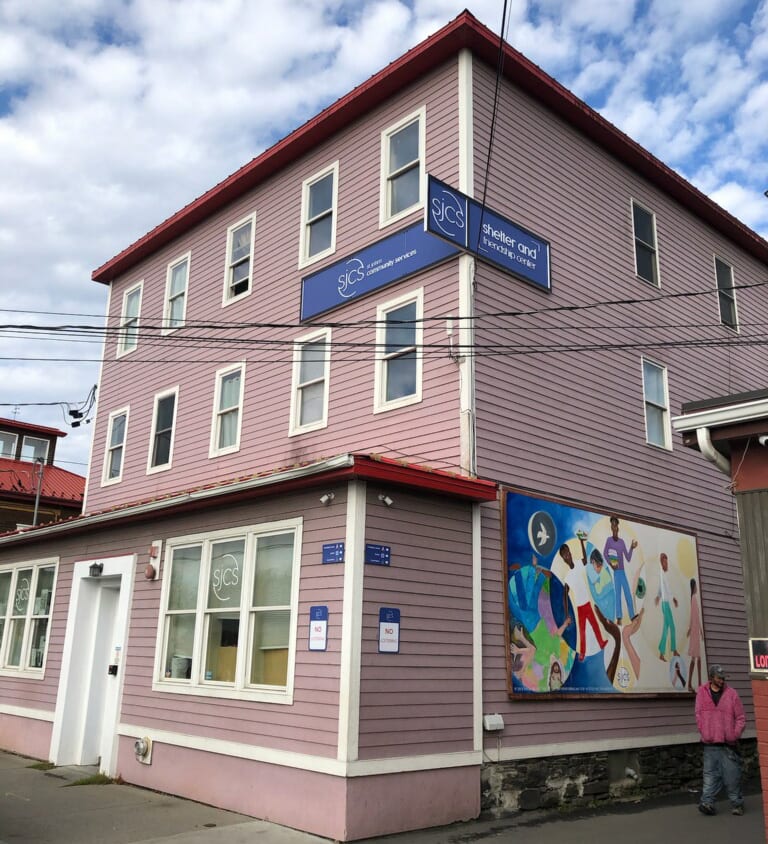
St. John’s had to limit capacity at its homeless shelter, which usually houses 20 beds, to just 10. It also had to limit attendance at the Friendship Center to those in need of essential services, which Roy Murdough, Ithaca shelter program director, said affected many residents.
“I always used to think of the Friendship Center sort of being the living room for the disenfranchised,” he said. “This was a resource and a place where people could go, they could feel safe there, and then, that space was no longer available. So, there was just a lot of communication going on with the people in the community that these are the new rules and this is the way that it has to be … not just for the health and safety of the staff but for the health and safety of the people in it.”
The services the Friendship Center provides — like food, bathrooms, laundry and more — are still available to community members in need. Staff just provides those services on an individualized basis due to safety concerns. And homeless residents that can’t be at the main shelter are still sheltered by St. John’s — just at other locations like hotels.
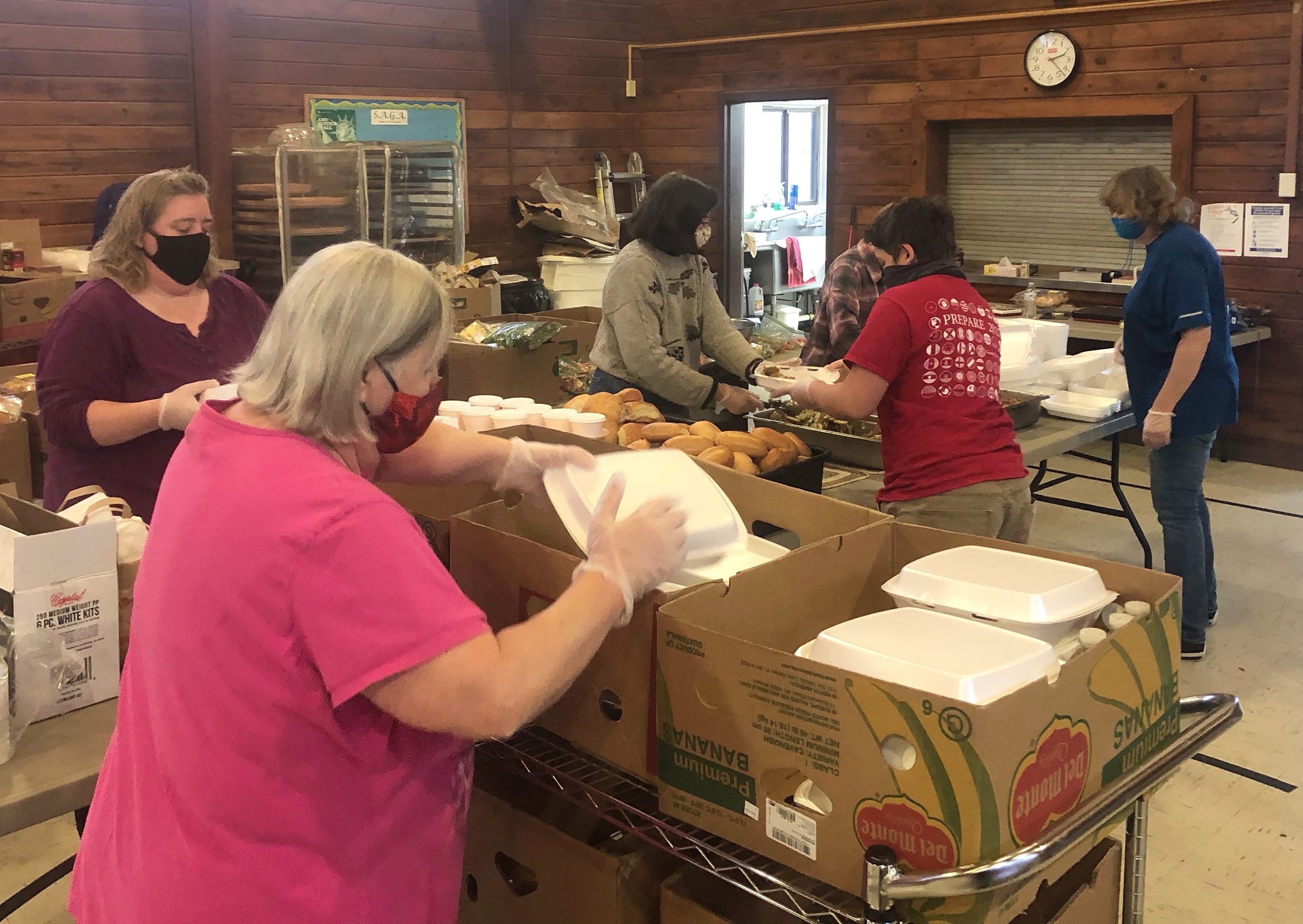
As the pandemic continued on, both organizations said that even though providing services was more difficult, demand for services increased. At the Salvation Army, for example, the nonprofit’s usual 120 to 150 meals served on the weekends nearly tripled to almost 400. And staff had to increase distribution of essential supplies.
“When [people] couldn’t actually get into places and take a shower or do stuff like that, we provided something for them that they could at least get clean, feel like they can brush their teeth and just simple things,” Shaun said. “That, to us, is everyday. But to them, the homeless people, they don’t have access to that. … So, that’s grown exponentially.”
The situation for these organizations generally stayed steady throughout the spring, summer and early fall, but both shared concerns about the coming arrival of winter. At St. John’s, Murdough said that staff is needing to find new places for people to stay.
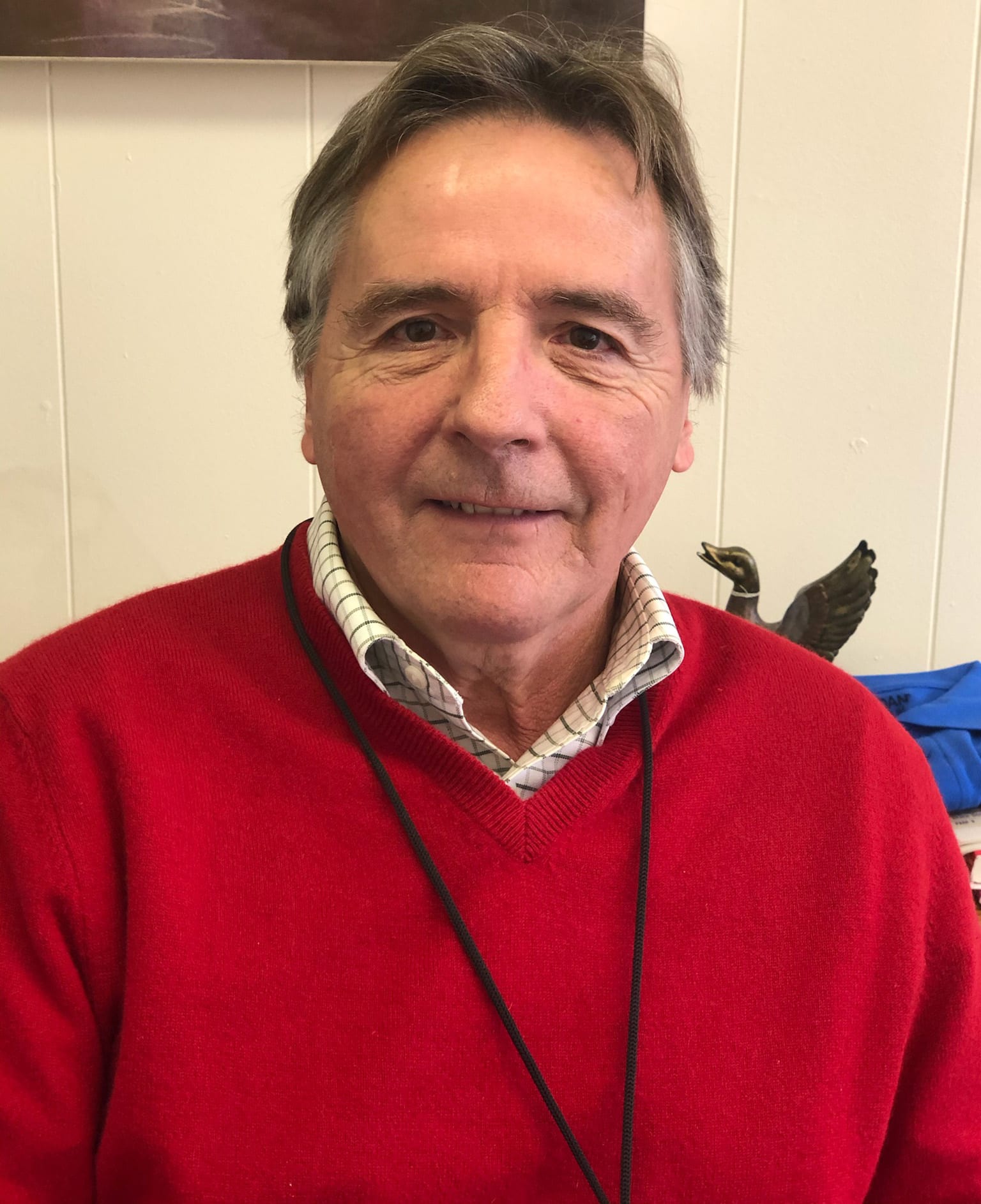
“During the course of the summer, people found other places to gather, so the need to gather at the Friendship Center was really not that important,” he said. “Now that it’s getting colder again, the community and this population really needs a place where they can stay safe and warm not only at night but during the day as well.”
The loss of the Friendship Center is also affecting those the Salvation Army serves, as Stephen Lyle, community outreach coordinator, described.
“If you’re homeless, you’re on the street, you used to be able to go over to the Friendship Center down at St. John’s, or you could go into the library. There are other different places you could go to try to keep warm,” he said. “[Now,] there’s not really anywhere where people can hang out and congregate.”
As St. John’s works to find more places to shelter people, the Salvation Army is working on trying to get warming stations throughout the county to protect people while they’re outside.
Those they serve aren’t the organizations’ only concern heading into the colder months. At the Salvation Army especially, financial concerns have increased with the arrival of the holiday season.
The Salvation Army’s largest fundraising effort of the year is the red kettle drive, where volunteers ring bells by kettles at various locations to ask for donations. But with many regular volunteers being older, many have opted out of volunteering due to the risk of contracting COVID-19.
“With the people’s uncertainty and not feeling safe about being within their community, our volunteer base has dropped drastically,” Stacy said. “You could have walked through the locations and not seen a single kettle bell ringer. People just don’t want to work. They don’t want to volunteer. And it’s not because they don’t love to do it, but it’s an unsafe feeling. And we’ve probably called over 100 people that rang last year. And we maybe have a dozen that said yes.”
The lack of volunteers is especially challenging because the Salvation Army’s expenses have increased as staff work to meet increased demand for services. Applications for Christmas assistance increased by over 30% locally, and nationally, it’s expected to increase by 155%, according to the Salvation Army’s website.
“We need volunteers,” Shaun said. “The kettle season is our one and only fundraiser all year. And if we don’t have those funds, then I’m a little concerned that some of the programs that we do further down the road, we may not be able to do as extensively.”
Despite all these obstacles, sources interviewed for this story said that giving up is simply not an option.
“Just because there’s a pandemic, that doesn’t mean that people are no longer going to be homeless,” Murdough said. “Not only did we continue to do the service, but we actually figured out better ways to serve the community during a pandemic.”
Stacy shared that sentiment, adding that the Salvation Army is committed to helping children this holiday season.
“They’ve had to suffer so much through all of this pandemic, with the uncertainty of school and with not being able to see their friends and not even be able to see some of their family,” she said. “And so, the thought of letting them down, letting them down during Christmas, is just not something I’m prepared to do. So, I’ll do everything I can.”
Shaun said that plays into the overall goal and mission of the Salvation Army.
“There’s really no strings attached,” he said. “If you need something, from a bus pass to tankful of gas to a bottle of water, we’re going to give it to you. If we have it, we give it out. That’s what it is. And that’s what I like, that the Salvation Army doesn’t have a lot of the corporate red tape where sometimes even nonprofits can get tied down.”
Lyle offered a final message for residents still struggling.
“I want to encourage people that they’re not alone,” he said. “One of the main reasons I do this, I want to bring hope to people and cheer to people and let them know that you might be going through a difficult time — and everybody has their own things they’re struggling with — but you’re not alone.”
As their work continues, St. John’s and the Salvation Army encourage residents to reach out and donate time, money or other resources. Visit the Salvation Army at easternusa.salvationarmy.org/empire/ithaca and St. John’s at sjcs.org for more information.
Related Articles
Cayuga Medical Center nurses to rally, alleging anti-union tactics by hospital management
CMC nurses plan a rally, alleging unsafe staffing and illegal anti-union tactics as the hospital highlights recent patient-safety gains.

Design details unveiled for new Center of Government
Design details for the Tompkins County government building in downtown Ithaca are now public, with a county survey open for feedback.
Holiday traditions bring community cheer
Tompkins County holiday traditions light up homes, farms, and schools with festive cheer and community spirit.