
Sheriff selection process studied
By Jay Wrolstad
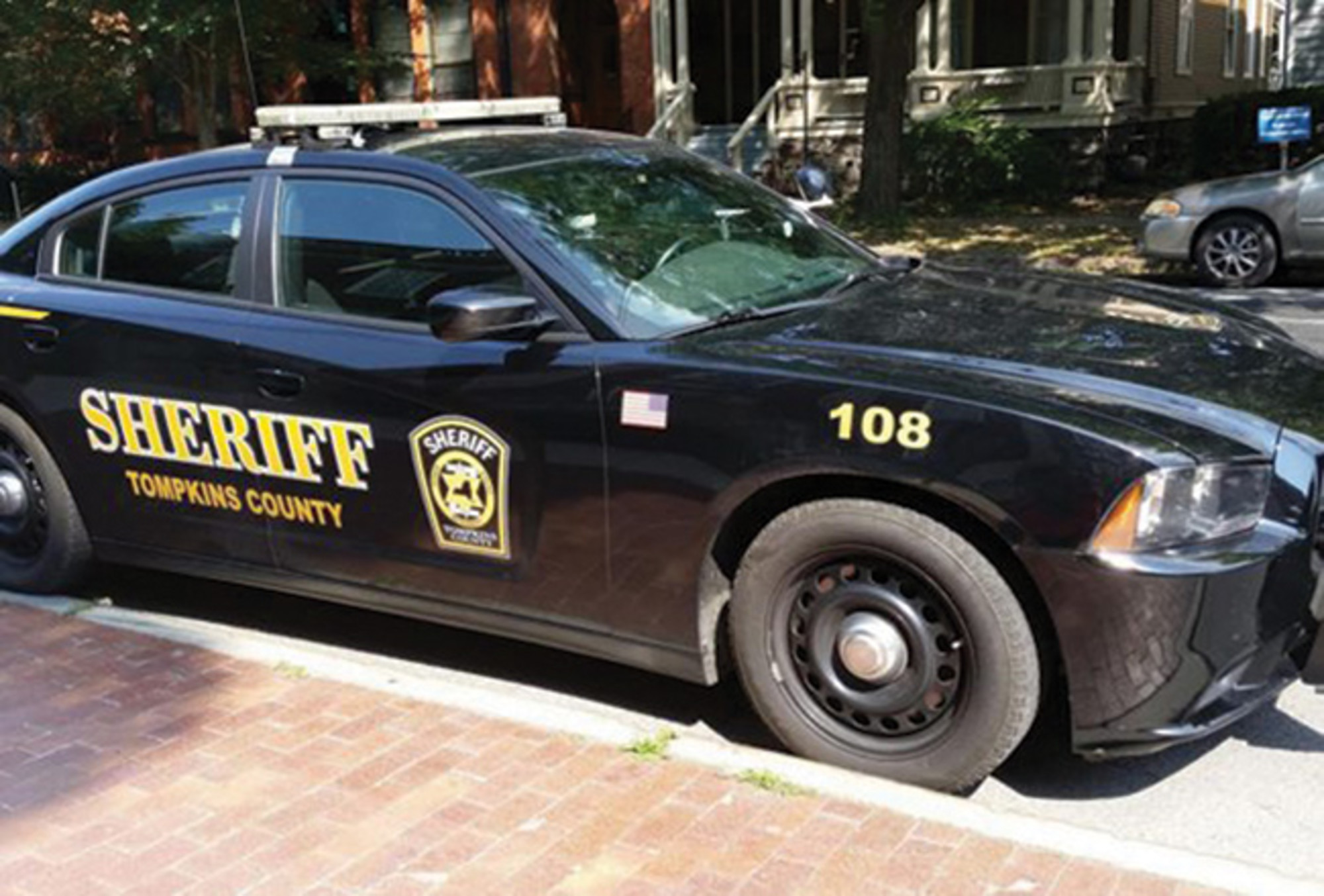
The discussion regarding whether the Tompkins County Sheriff should be elected or appointed is once again being held by the county legislature, as lawmakers conduct their periodic charter review.
It’s a subject that has been addressed over the years since the 1990s, including during the last charter review a decade ago. The sheriff currently is elected by county voters every four years. Making the position an appointment, similar to the hiring process for police chiefs, requires a change to the county charter and would give the legislature more direct control over the position.
In New York State, only New York City and Westchester and Nassau counties have appointed sheriffs.
Among those who support the change is legislature chairman Michael Lane. “Many people prefer to elect local officials, and feel that if a change is made they have something taken away from them, but they don’t always understand the roles of those officials,” Lane says. “We look at the sheriff as a department head position. We want the most qualified person in that job, with a certain level of professionalism and experience. If that person doesn’t measure up to the job, he or she can be evaluated like other department heads.”
Lane notes that the Sheriff has three primary roles: to oversee road patrols; to lead the civil division, which includes working with the courts and handling evictions and other property executions; and running the corrections division. “That requires a level of professionalism and knowledge of state regulations and requirements. An election may be a popularity contest, with candidates who don’t have the qualifications to address budget or personnel issues, or the required knowledge,” he says.
As an elected official, Lane says, the sheriff is subject to review by the voters. “We have had an uneven experience with the county sheriff over the past 20 to 25 years, and that can be a problem when he is only accountable to the public and there is not an opportunity to review job performance or make a change until the four-year term is completed.”
Legislator Dooley Kiefer, head of the Charter Review Commission, offers a similar take. “The reason to consider this change is to create a professional position; it’s now a popularity contest. There is no job description, and without specific qualifications we can have a good sheriff, or some not so good,” she says.
“A candidate for this job should present some credentials. The position is more complicated now than it has been in the past, and just because voters have a say it is not necessarily the best way to go,” Kiefer adds.
County Sheriff Ken Lansing understands these concerns, but suggests that the differences between the duties and responsibilities of a police chief and those of a sheriff merit consideration when considering an appointed position.
“I have worked as an appointed police chief in Cayuga Heights and an elected county sheriff. The chief usually works up through the ranks, taking civil service tests and demonstrating his qualifications, before reaching the position. There is no such system for the sheriff—no tests or qualifications required. Anyone can run for this office, and that brings up the idea that why can’t we look for qualified candidates and appoint them,” he says.
“But the sheriff, who has more broad responsibilities, is considered a county official who serves the people, and should be elected by the people,” he adds, noting that 99 percent of the sheriffs in the U.S. are elected. “There is a reason for that—the responsibility is with the voters, and they can vote me out of office, which is not possible if the position is appointed.”
There are no civil service protections for the sheriff, unlike appointed police chiefs, says Lansing. “If the sheriff works under the supervision of the county administrator and legislature, they have the authority to determine if his actions are right or wrong, not the community he serves. Our decision-making process is different; unlike police chiefs, we don’t have to worry about losing our job by the decision of just a few people,” he says. “I would hate to see a wrong decision made by a select few, as opposed to decisions made the greater community. We can’t have that in this position, because the sheriff answers to the whole community.”
As might be expected, Peter Kehoe, executive director of the New York State Sheriffs’ Association, makes no bones about his support for elected sheriffs.
“Our position is that the sheriff is the only law enforcement officer chosen directly by the people and accountable directly to the people,” he says. “To change that means you are putting someone between law enforcement and the people. We have seen that when the sheriff is an appointed position the people lose some measure of accountability and control over the law enforcement officer.”
Kehoe detects an element of “elitism” in governments that say they know better than the public who should be sheriff and that the people are not smart enough to make the right choice. “Give me the choice of the people any day, rather than someone who may have a personal or political agenda. This could be seen as a power-grab by a county legislature,” he says.
He cites the New York State Court of Appeals, where about 20 or 30 years ago a change was made to make the judges appointed rather than elected. “We saw more political involvement in those appointments, with judges accountable to politicians, not the people,” says Kehoe.
“If county government is concerned about finding qualified candidates for sheriff, they may want to consider what they pay for the position, which for most elected sheriffs is low,” he says. “And maybe they should consider starting with appointed legislators, if that is the best way to get the best people, then consider it for the sheriff.”
Kiefer says that any change to the sheriff’s selection process requires a referendum, unlike other changes to the charter that may be made by a local law approved by the legislature.
“It would be difficult to make the case for an appointed position to the public if they learn they no longer have a choice in the matter,” she says. “We don’t want to take that away.” She notes that the four-year term of the current sheriff expires this year, so any change will not affect him.
The county plans to conduct a feasibility study examining the potential for shared services or consolidation involving area law enforcement agencies, including local municipalities, Tompkins County and the City of Ithaca, which Lane says could affect any decision regarding the county sheriff.
Related Articles
5 things to do in Tompkins County this weekend
Plan your visit and discover what’s happening this weekend.

Tompkins Chamber announces Rob Montana as new vice president
Rob Montana, community leader and communications professional, has been appointed vice president of the Tompkins Chamber, where he will help drive economic growth, workforce development, and community engagement.