
Sheriff’s Office enacts policy for interactions with trans community
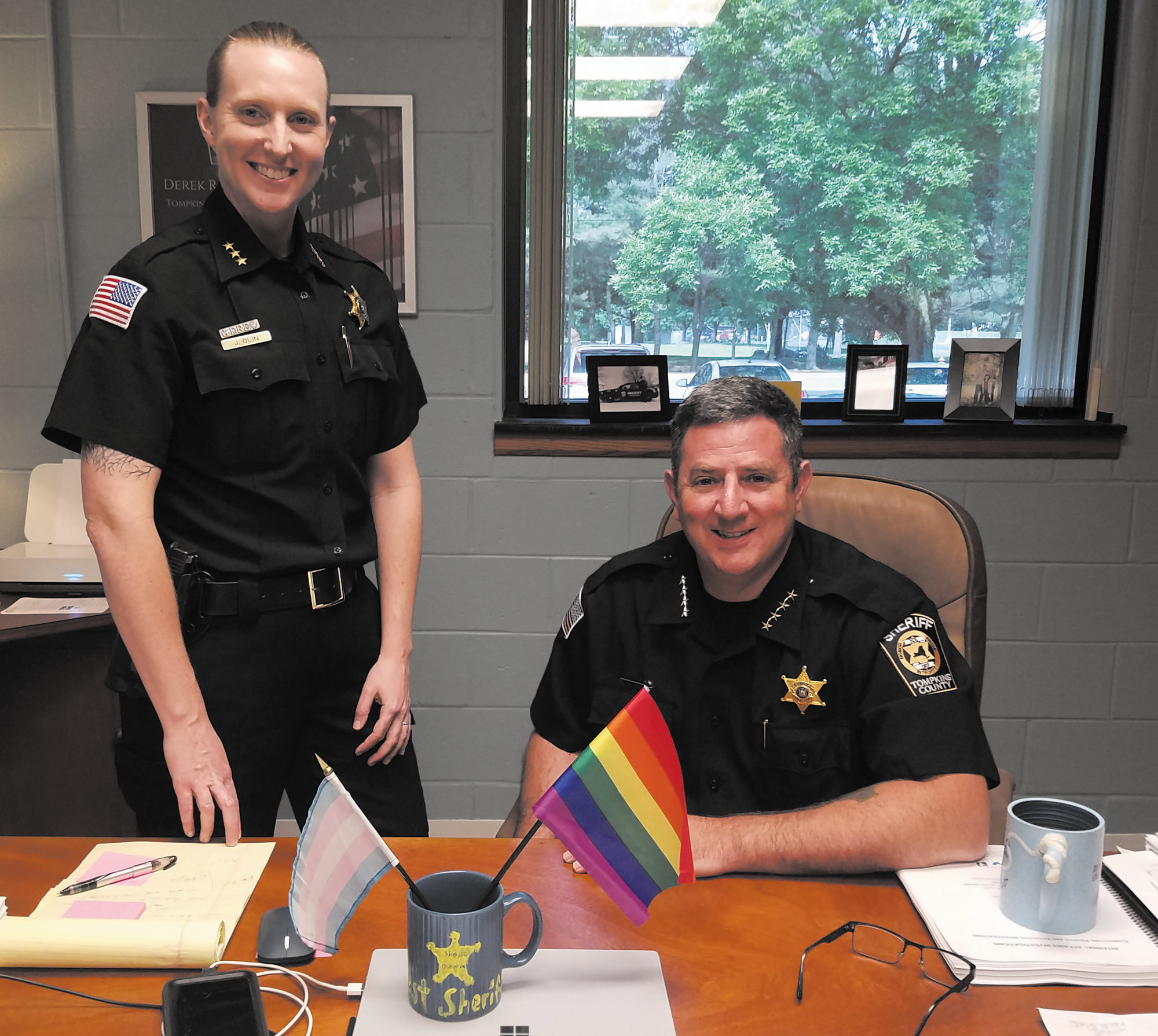
The Tompkins County Sheriff’s Office recently passed a policy outlining the guidelines for officer interaction with transgender people, which focuses on respect, accountability and safety for everyone involved.
The policy, which applies specifically to road patrol officers, is the first Tompkins County sheriff policy outlining interactions with transgender people. Effective as of April 3, 2019, the policy is a long time coming, said Sheriff Derek Osborne. It is part of the department’s efforts to meet what he sees as a growing need to address transgender interaction with law enforcement in an official manner.
“During my campaign, it became very aware to me that we have certain marginalized community members locally that may feel like they can’t approach law enforcement when they need help and they also possibly fear that the interaction they receive from law enforcement will be negative,” Osborne said. “So, it was just a step forward in trying to build that relationship.”
Undersheriff Jennifer K. Olin drafted the policy, modeling it off the transgender interaction policy of the SUNY system. The drafted policy was shared with the Advocacy Center and the LGBTQ+ and Workforce Diversity and Inclusion committees in the county legislature, and those stakeholders provided helpful feedback, Olin said.
The process of creating the policy was meant to include as many stakeholders as possible, Olin said, to ensure the policy met fair standards and provided appropriate guidelines. She said the policy serves several purposes – not just determining how officers are expected to act.
“These policies aren’t necessarily always for the officers or the deputies,” Olin said. “They’re so the community has a belief and awareness of what kind of training, what kind of policies we have so they know what they should expect when they interact with our deputies.”
Osborne said the policy was a big educational opportunity for his deputies. Though he said he is confident officers have always tried to treat those in the transgender community with respect, there is still plenty of room to grow and learn, and his officers have been very receptive.
A big part of the policy is recognizing and respecting somebody’s gender identity during all steps of an interaction.
“The Tompkins County Sheriff’s Office recognizes and places a high priority on the rights of all people,” the policy reads. “All Sheriff’s Office personnel are to interact with transgender and gender non-conforming persons and the entire LGBTQ+ community in a manner that is professional, respectful and courteous.”
Olin said that, when drafting the policy, she wanted to start with the foundation of the topic, which she sees as the definitions used within the transgender community. The second section of the policy outlines several definitions used to inform officers of LGBTQ+ vocabulary, including “adopted name,” “gender identity,” “gender expression” and “gender non-conforming.”
From there, the policy touches on every step of a patrol officer’s interactions with a transgender person, from pulling them over and putting them in a police car to arrest and booking. In addition to the policy, the Department of Justice issued a 15-minute video covering the policy for officers to watch and learn more about expected practices.
Luca Maurer, head of the LGBTQ Center at Ithaca College and author of “The Teaching Transgender Toolkit,” said this policy is a step in the right direction for helping to counteract the mistreatment transgender people have historically received from law enforcement in the country.
“Transgender people, as a group, experience, unfortunately, sometimes targeted harassment and profiling by law enforcement,” Maurer said.
A 2015 survey by the National Center for Transgender Equality found a majority of transgender people (57%) are afraid to go to the police when they need help. This policy could help strengthen LGBTQ trust in Tompkins County law enforcement and help to build a positive relationship between deputies and transgender people, Maurer said.
“When there are policies in place that respect the dignity of transgender people, that both provides a roadmap for law enforcement personnel about what the expectations are, and it also potentially in the long term might help reverse these trends,” Maurer said.
Osborne said the policy can go a long way toward transgender people trusting law enforcement personnel enough to actively report hate crimes. The office’s hate crime policy itself will be amended in November to include LGBTQ people.
“As sheriff, I’m a conservator of the peace,” Osborne said. “It’s important that all members of our community feel comfortable contacting law enforcement when they need help and knowing that they’ll be treated fairly and respectfully.”
In addition to the initial training deputies received, the Sheriff’s Office plans to train officers regularly, at least once per year, on this and future policies regarding LGBTQ and law enforcement. Olin said she also tells her deputies to take appreciative briefing time out to practice these behaviors, including asking everyone their preferred name and pronouns.
“Practicing and doing that with everyone you interact with makes it a more comfortable experience,” Olin said. “It doesn’t necessarily have to be with someone you believe may be a transgender person.”
Maurer said regular training is important, as well as ensuring the policy is widely available and understood and there is a system to report mistreatment if someone believes the policy has not been followed.
For now, Olin said there is no public database with the office’s policies, so she and others at the office are working to spread the word and put the policy in the hands of stakeholders in the community, like the Advocacy Center. It is important that officers be held accountable to the policy, Olin said, and people can file a complaint with the Sheriff’s Office if they believe they were treated unfairly.
This policy is part of Olin and Osborne’s continued efforts to improve relations with those in traditionally marginalized groups, and Olin said she hopes to see more changes for the better in the future.
“I’m proud of the progress that law enforcement has made, but I’m naive to think that there isn’t more needed,” Olin said. “Sheriff Osborne and I are taking some really good stances and some really good training, and hopefully, we can progress each and every day.”
Related Articles

Legislature unanimously adopts the 2026 budget
Tompkins County 2026 budget passes unanimously, raising taxes 3.59% and funding key programs and community services.

From smartphone bans to building plans, Tompkins County schools adjust
As the school year begins, local districts roll out smartphone bans, major capital projects, attendance policy changes.
Groton Olde Home Days: Connection, fun and food
Groton’s three-day festival begins with the opening of the Playland Amusements Carnival Midway at 6 p.m. Thursday, Aug. 22 in the Speedway lot on Main St.