
Showing Up for Racial Justice’s new campaign hits milestone
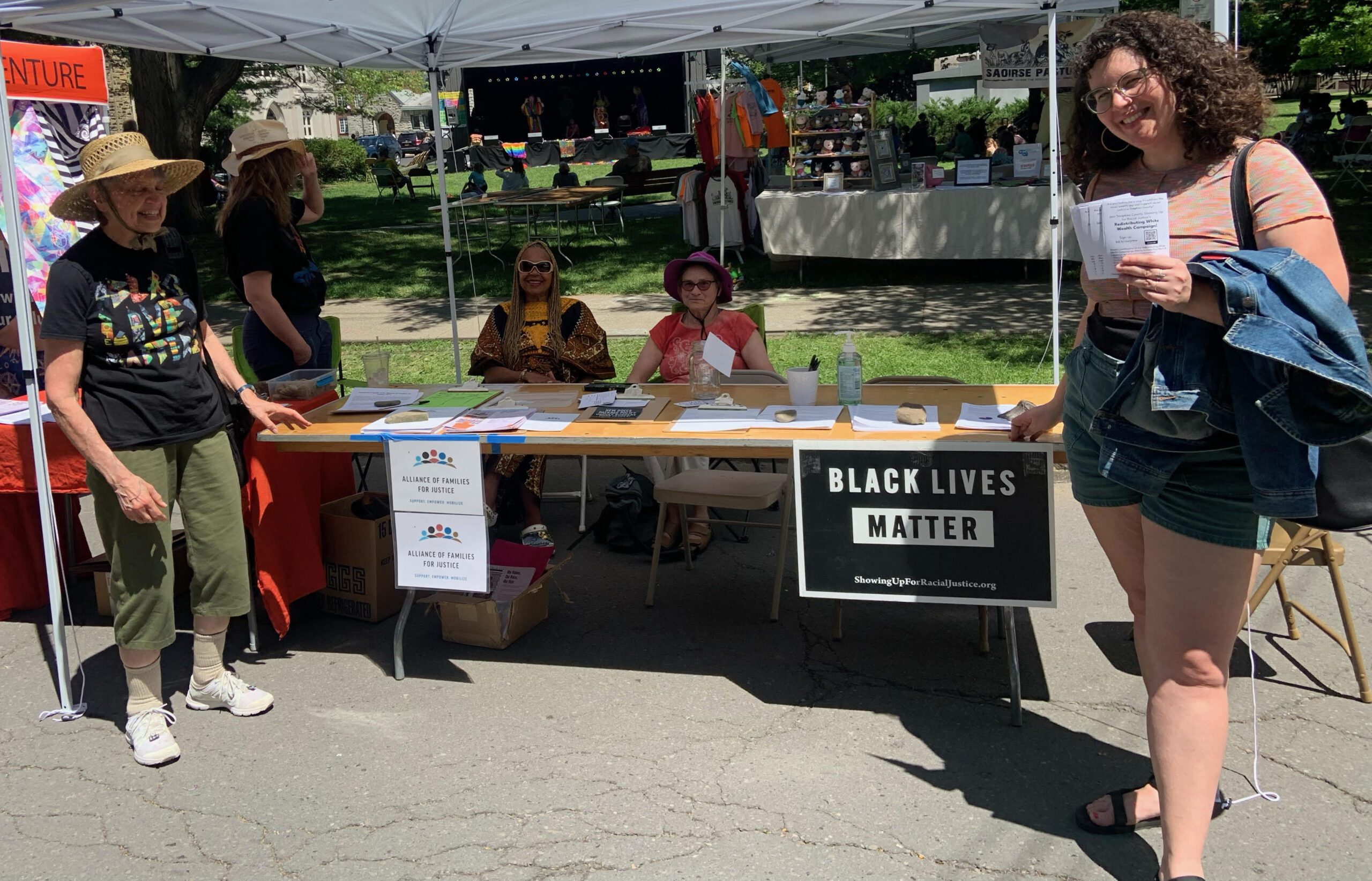
Standing Up for Racial Justice’s ‘Redistribute White Wealth’ campaign recently passed the $18,000 in donations milestone. Photo provided.
Earlier this month, the Tompkins County Showing Up for Racial Justice’s Redistribute White Wealth campaign announced a milestone: with 45 individual contributors it had raised its first $10,000.
Since that announcement, the program has soared to even higher highs. SURJ community organizer Ariana Taylor-Stanley said that the group has now raised more than $18,000 from more than 50 contributors.
The premise of the Redistribute White Wealth campaign is simple, but not easy. SURJ’s mission with the campaign is to take back wealth that it said has been stolen throughout history from communities made up of people of color.
Each month, contributors make a pledge to different organizations in Tompkins County. SURJ organizer Katie Church said the amounts range from $5 to $500, with most individuals contributing $25-100.
Five local organizations receive monthly contributions from the fund: Black Lives Matter Ithaca, Southside Community Center, The Multicultural Resource Center, Alliance of Families for Justice and the Gayogo̱hó꞉nǫ’ (Cayuga) Nation.
“It’s been an on-going need and ask from the organizations we work with,” Taylor-Stanley said. “The organizers have been very clear about the disparity they see in terms of access to wealth and resources. We need to do work to address that.”
Church said the organization number could increase, but the campaign wants to make sure it can fund $1,000 per month per organization before expanding. At the moment, she said the campaign is close to halfway to its goal.
The campaign started when Taylor-Stanley was put in contact with a SURJ chapter in Northeast Ohio. That chapter had ran a successful Redistribute White Wealth campaign, and was more than willing to help.
Tompkins County SURJ had looked into helping communities and organizations in need through reparations, but had concluded that because reparations also include an apology and a promise that inequities won’t happen again, the organization didn’t have the bandwidth to perform them properly.
What it could do was move money back into the communities it worked with, just like the SURJ chapter in Northeast Ohio.
“It was so simple, they were just working with organizations that they already had relationships with and already had a lot of trust with and were just asking regular people to move a certain contribution each month,” Taylor-Stanley said. “We thought that we could totally do that.”
Church said the goal is to have 60 contributors by the end of the year, and so far the campaign hasn’t received much pushback from the community.
She did say that some contributors are interested in what the money is being used for by the organizations. Since this is not a charitable donation, but instead redistributing wealth that has been stolen throughout history through a system of racism.
To that end, Church said SURJ does not monitor where the money is going the same way a charity would.
“One thing that comes up is the difference between charity and solidarity,” she said. “I think the narrative around charity is that people are helping other get better and there’s a standard in the philanthropic world as someone who supports and helps that you’re entitled to reports and a certain amount of feedback from those organizations, and this is a very different model on that.
“We live in a capitalist system where we’re supposed to hold on to what we have at the threat of it being taken away. There’s that risk that people feel, where ‘I can’t let go of my resources, and if I do I need to control it out in the real world.’ That’s really not what this campaign is about.”
Both Church and Taylor-Stanley said although the campaign has gotten off to a good start since being launched in May, especially with no in-person events being held, but there is a long way to go to restore financial justice to the area.
Taylor-Stanley said a success of the campaign is making more people aware that there is a disparity, which is an essential goal of SURJ.
“The reality of the financial and economic impact of structural racism is always something we’re bumping up against,” she said. “Our focus in SURJ is bringing white people into the movement for racial justice.”
Plenty of the people who have recognized that have become contributors to the campaign, which Taylor-Stanley said doesn’t mean they are admitting guilt. Instead, she said it shows that people can asses a problem and work to solve it.
“(The campaign is) For white folks who are coming into an understanding that racism means that white folks have more access to resources than people of color and want to do something about that.” She said. “The money they have access to disproportionately benefits them through the accident of birth, but it’s into a system that was set up intentionally. People who want to recognize and address that can join this campaign.
“We’re offering this as a meaningful way for people to plug in and support the meaningful ant-racist work that the five organizations that we’re partnering with are doing.”
Geoff Preston is the interim managing editor for Tompkins Weekly. He can be reached at editorial@VizellaMedia.com
Related Articles
Holiday traditions bring community cheer
Tompkins County holiday traditions light up homes, farms, and schools with festive cheer and community spirit.
The gift of an experience: Local businesses offer hands-on holiday fun
Holiday experience gifts in Tompkins County include candle making, gourd crafts, and pottery workshops for creative seasonal fun.
Code Blue shelter opens amid praise, concerns and ongoing debate
Ithaca’s Code Blue shelter opens with larger space, showers, and case management to help residents during cold weather.