Small Business Recovery Grants to address lingering challenges
On June 10 of this year, Gov. Andrew Cuomo announced that applications were open for the state’s COVID-19 Pandemic Small Business Recovery Grant Program. The program reimburses businesses throughout the state with grants of up to $50,000 for pandemic-related expenses incurred between March 1, 2020, and April 1, 2021. These grants are also tax exempt.
While many businesses have seen significant progress since last year, the state’s grant program shows that there are many businesses still struggling, both in Tompkins County and throughout the rest of the state.
Tompkins Weekly spoke with local leaders and business owners to see how the Small Business Recovery Grant Program could help businesses that continue to face pandemic-related challenges, and while most sources agree that it’s a great resource for those in need, they also called for more assistance to fill in the gaps.
Effects on county
Of the eight businesses Tompkins Weekly interviewed, only one — Nowhere Special Libations Parlor in Ithaca — plans to apply to the Small Business Recovery Grant Program. Owner James Dean said that while this year has fared better than last year for his business, he’s still dealing with significant losses.
“Everything’s been changing at such a rate where, as a small business, I’ve had to pivot monthly,” he said. “And then as the state of emergency went away, then so did the to-go cocktails, which was, not a huge part of my business, but a decent profitability margin that allowed me to do some more things than before. But now that that’s gone, everything kind of just goes to 100% on premise, which is back to normal, but it was nice having a to-go cocktail option.”
If he receives a grant through the state, Dean plans to use it to recoup lost income and bring on a few more employees, he said.
Of the remaining businesses, most said that conditions have stabilized enough that they want to leave the program for those that need it most.
At Instant Replay Sports in Lansing, for example, owner Larry VanOstrand said that though business dipped in early and mid-2020, things started to improve around last winter. The business also focused on activities that people could still do during the pandemic, like cross-country skiing and snowboarding, which helped to boost sales.
“As things started to open back up, people were basically tired of being cooped up and wanted their kids and themselves to be able to do some things,” he said. “Those categories, in addition to in-line skating and tennis and golf, during the fall, winter, were much bigger than they normally are. … So, we don’t have any major setbacks.”
It’s a similar story at Synergy Physical Therapy in Trumansburg, as co-owner Colleen Robinson described. Synergy has remained open throughout the pandemic but saw a large decrease in folks coming in for treatment around March and April of last year. Recently, that traffic has increased substantially.
“The biggest issue, I think, is trying to get people care quickly because everyone has kind of come back to getting normalized care, and if they’ve been dealing with something for a little bit of time, we don’t want them to have to wait longer,” Robinson said. “But that’s been a good problem to have.”
Other sources interviewed were not eligible for the grant program due to the restrictions in eligibility. Businesses interested in applying have to have been established before March of 2019, as the grant amount will be calculated based on a business’s annual gross receipts for 2019. Kristina Thelen, business support coordinator for the Downtown Ithaca Alliance (DIA), said that this leaves a lot of businesses out.
“If you became a business owner in 2019 after March, you’re really left out in the cold,” she said. “So, that is something that’s a hugely detrimental part of these relief funding activities. … And there were several businesses that opened during the pandemic, which is brave and fantastic, really, to see that hope for the future, but have really been let down, I think, in regard to the relief funding not being accessible to them at all.”
Businesses like MindWell Center in Ithaca, which was established in 2020, are not eligible. But in MindWell’s case, owner Dr. Aaron Rakow said that even if he was eligible, he has no need for the program because business has generally thrived during the pandemic. MindWell provides evidence-based mental health care, a service that has seen increased demand over the past 18 months.
“What we are seeing is, in many ways, an additional wave from the COVID pandemic that is taking shape as a mental health crisis,” Rakow said. “Although the social distancing limitations of COVID are beginning to be lifted and people are coming back out into the world for the first time in many, many months, they’re also taking stock of what their personal needs are. And a lot of individuals are recognizing the need for high-quality, evidence-based mental health care as part of their reentry plan back into the world.”
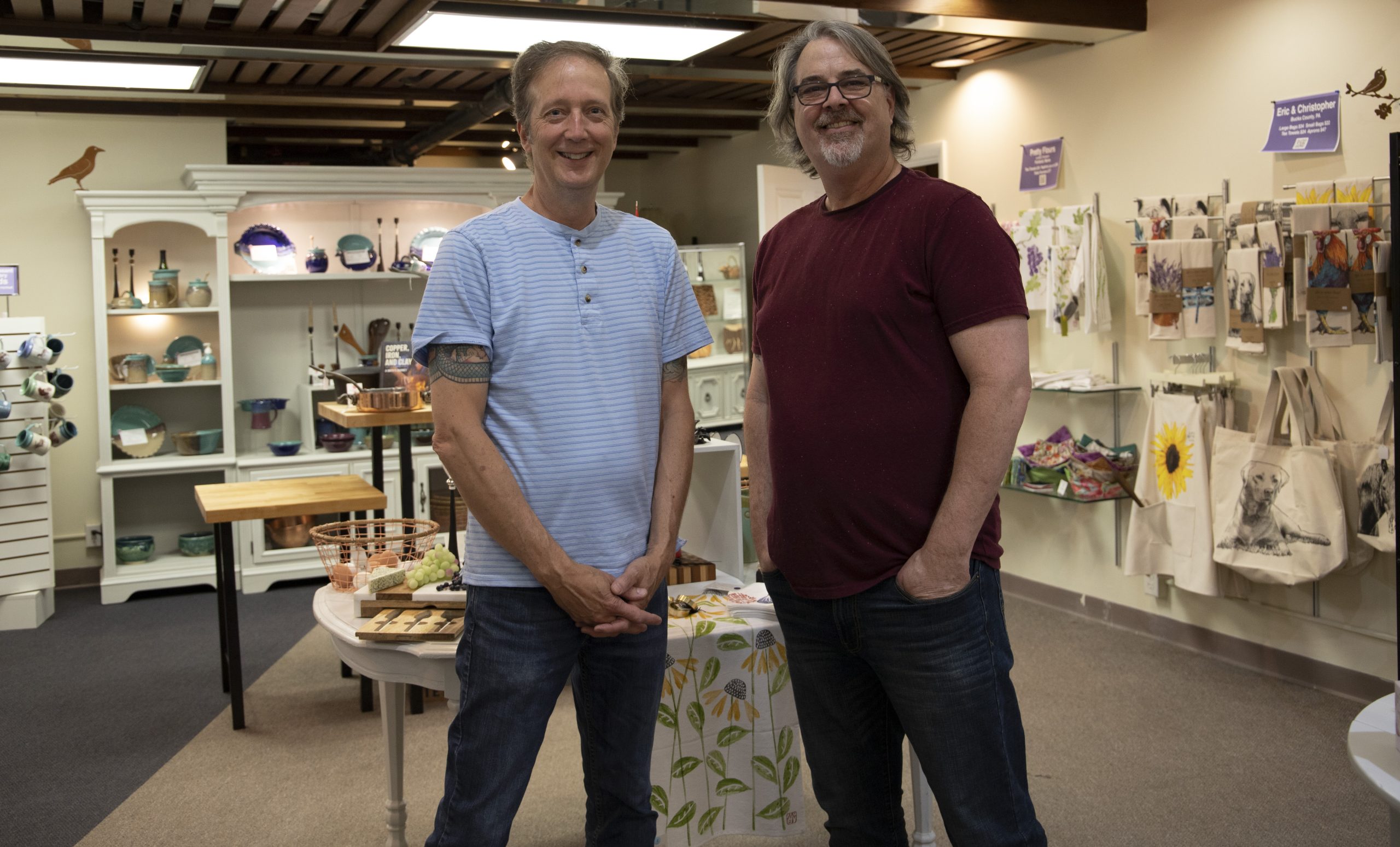
Kelly Serbonich, owner of Jillian’s Drawers and Mama Goose in Ithaca, is facing a different issue. Serbonich took over ownership of Mama Goose last August (full article at t.ly/SuCl) and has the two businesses under one legal name, which complicates her situation.
“Because I bought and have two stores under one legal business name, it looks like our sales are way up, and you have to show that your sales are way down in order to apply for that,” she said. “So, it’s really difficult. I don’t know how to do that on paper to show that I was two separate businesses before and then I acquired another one. So, it’s really tricky to show on paper that anything is down.”
Even so, Serbonich said she’s fortunate enough that she doesn’t have a great need for financial assistance at this time.
Remaining challenges
Whether or not they plan to apply for a state grant, nearly all sources interviewed said there are still plenty of lingering difficulties they’re contending with. The biggest of these hurdles is workforce.
“We hear almost universally that people are struggling to find enough workforce and to be able to actually maximize their open hours and to maximize the revenue opportunities,” said Jennifer Tavares, president of the Tompkins County Chamber of Commerce. “That is the single largest impediment to recovery that we’ve been hearing about at the Chamber.”
Gary Ferguson, executive director of the DIA, said he’s seen a similar situation with downtown businesses.
“[Workforce is] just hard to get, and that has had some impact on folks’ ability to be open certain times and their ability to process [people],” he said. “So, that’s an outstanding issue that still needs to be dealt with, and I know one that we’ve been thinking about ourselves.”
VanOstrand is one owner who has been struggling with his workforce, and he said he’s not the only one. He cited the continuing unemployment bonuses as a possible explanation.
“The biggest situation right now is getting people that haven’t been working throughout this pandemic and still now [have] no reason to come back to work,” he said. “We’re starting to get into our busier season. We’ll definitely need to look for some part-time help and maybe full-time help. … There’s not a business I’ve talked to that hasn’t said the same thing, that no one wants to work.”
Outside of workforce issues, some businesses are facing challenges related to the mask regulations. While many have lifted their mask mandates for vaccinated individuals — in accordance with the CDC recommendations released earlier this year — some owners have maintained the mandate, but it’s become harder to enforce.
“We are still asking people to wear masks in our store because we have such a high percentage of babies and children in our stores,” Serbonich said. “So, we never really had to play the mask police too much before because everyone knew and expected it. But now, it feels like we have to be the mask police all the time because people don’t expect it so much.”
The last challenge sources shared was with supply. At 15 Steps on The Commons, for example, owners Scott Dolphin and Todd Nau said that their biggest hurdle right now is with their supply chain.
“It’s just getting merchandise in from some of our vendors,” Dolphin said. “Some of them have just put a ‘no more new orders until Aug. 30,’ flat out. Certain vendors actually kind of mushroomed during the lockdown — cookware, things like that. They were swamped, so just getting product out of them, they’re still backlogged.”
Nau added that the supply chain issues have had an impact on all operations.
“It’s affected every single one of our supplies, [like] clasps from jewelers,” he said. “We place orders and they have to change it because they couldn’t get that chain or they couldn’t get that clasp. It’s just strange things that you never think would be an issue.”
Additional need
When asked what more they’d like to see done to support struggling business owners, many sources cited the Tompkins County Microenterprise Grant Program, an initiative of the Tompkins Chamber Foundation.
“The Chamber Foundation and Tompkins County have been informed that we are going to receive a microenterprise grant from the New York State Office of Community Renewal, which will help us participate more regularly in rural microenterprise development in the smaller villages and towns throughout Tompkins County,” Tavares said. “So, we’re really excited about that opportunity to be able to attract additional grant funding to our community to support those businesses as well.”
Thelen called for another round of investments to specifically help newer small businesses, citing the DIA’s pop-up program (t.ly/vDuQ) as an example of what that assistance could look like coming from the state or federal level.
“Our pop-up program was very popular during COVID, and we had several people take advantage of that reduced rent for a very short time period just to see if they were interested in going into business more long term,” she said. “And the majority of them did stay and want to expand, and so, people want and need these gateways, these pathways to entrepreneurship. They needed it extra badly during COVID, and there’s just always a need for it even in normal times.”
The Chamber and the DIA are both focused on addressing any remaining needs business owners have, Tavares and Thelen said. For a full list of programs and services, visit the Chamber at tompkinschamber.org and the DIA at downtownithaca.com.
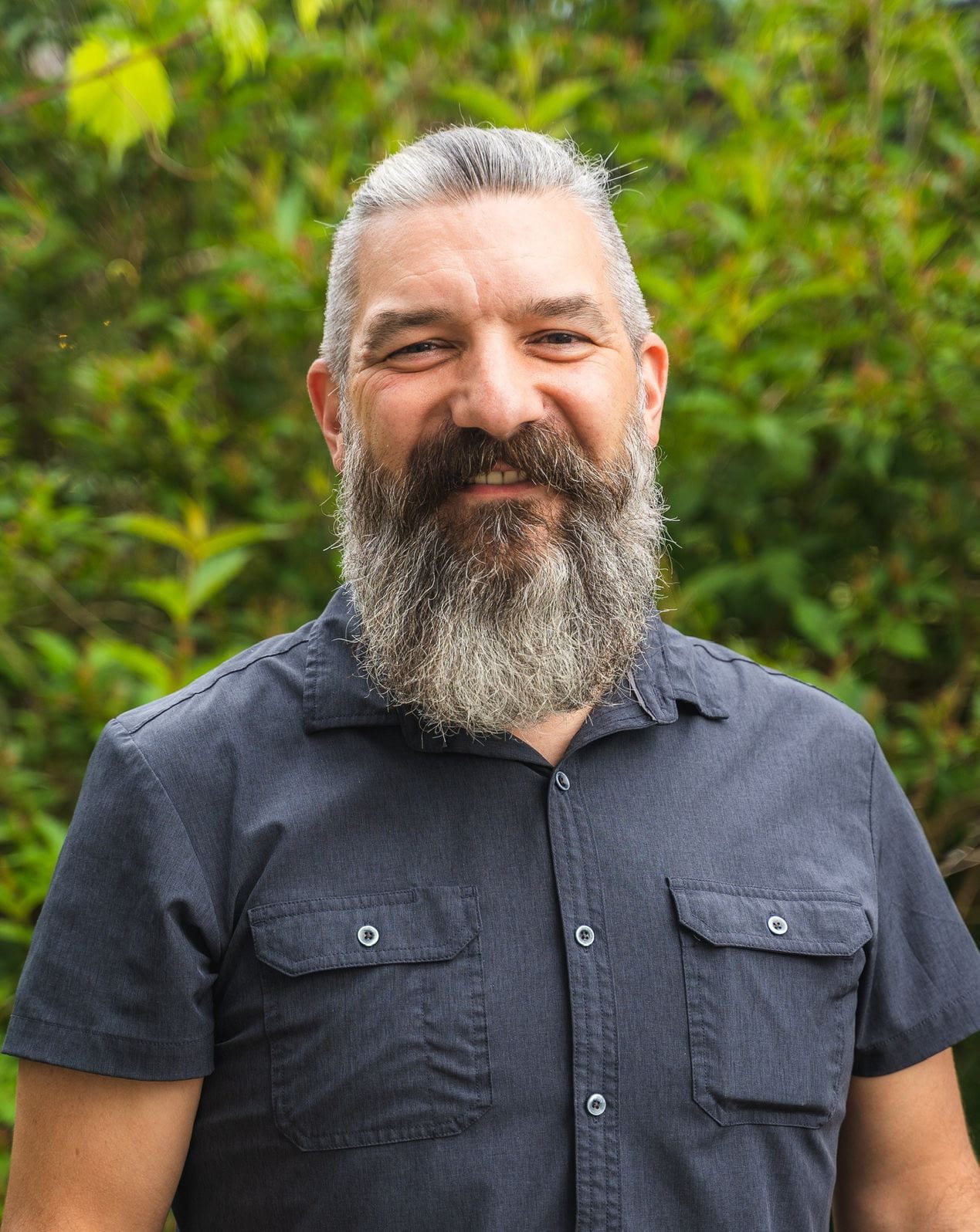
Business leaders also shared their thoughts on what more is needed. At Rosie, an Ithaca-based grocery e-commerce provider for independent grocers, Chief Customer Officer Dave Makar said any new programs, financial or otherwise, need to account for businesses that are still playing catch-up.
“It’s not you flip a switch, there’s a pandemic, you flip the switch, it’s completely over,” he said. “[We need] programs that will help extend the runway for other businesses and organizations so people are a bit more patient with them getting back on their feet. Here in town, a number of businesses have closed, a number of restaurants are either closed or have reduced hours. And to whatever degree we can support them, as individual consumers or as a few programs, just give them a little bit more time, a bit more patience to get back on their feet.”
Dolphin added that he’d like to see programs that address those in minority communities.
“One of the things that has been bounced around is some sort of shared workspace incubator for small entrepreneurs, something like that to open up opportunities for people who would probably not otherwise have an opportunity to have a small business in the downtown area,” he said. “We’re doing some small things out here in the food court, but I think they could expand on it. … I think it’s really just a matter of connecting more into the communities of need, specifically those in the BIPOC community.”
Looking ahead
Sources generally agreed that the county’s small businesses are well on their way to a full recovery. While there’s still a ways to go, most said that the Tompkins County community has repeatedly shown that it values small businesses, which gives many hope for what’s to come.
“There’s still just so much great investment happening in our community,” Tavares said. “I can’t tell you how many ribbon cuttings we’ve done in the last several months. … There are a lot of small businesses, especially microbusinesses and first-time entrepreneurs, that are taking risks and taking initiative right now, even in this very strange environment. And so, that’s all really exciting to see.”
Makar said that a continued focus on small business in future aid packages and programs will be crucial to ensuring a full economic recovery.
“If we’re going to grow as an economy, we know that local business is a huge part of local economies,” he said. “A lot of money stays closer to local. Many jobs are created by small business, local business. So, anything that we do to support those local businesses and help them remain open, pay their employees, be successful, that’s all going to be good for the economy. And we’re all about that.”
For more information about the Small Business Recovery Grant Program, visit nysmallbusinessrecovery.com.
Related Articles
Quantera’s new tech promises faster, safer chemical testing
Quantera Analytical is developing faster, safer chemical testing technology in Ithaca with roots at Cornell University.

“A Silent Force”: Gail Belokur brings creative leadership to the United Way
Gail Belokur, a Hometown Hero, brings compassionate and creative leadership to the United Way of Tompkins County.