
State Senate primary candidates address potential voters
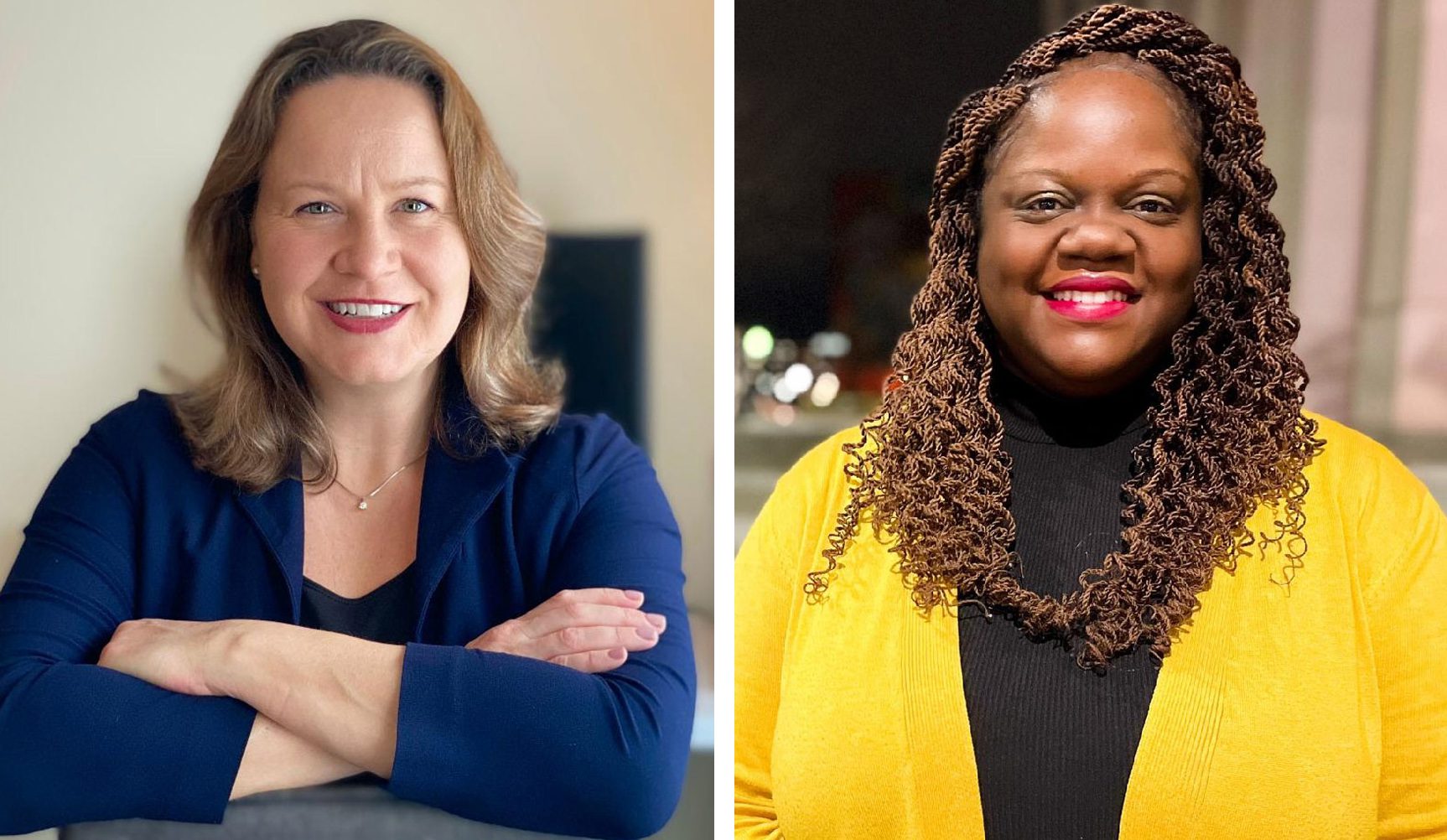
The Democratic Primary for the new 52nd State Senate District will occur Aug. 23 of this year. District 52 includes Cortland and Tompkins counties and parts of Broome County. Tompkins Weekly asked the two candidates, Leslie Danks Burke and Lea Webb, a series of questions, which they both answered over email. Their answers are below.
TW: Why are you running for State Senate?
Leslie Danks Burke: For me, this is deeply personal: progress demands results. I’m a mom raising my children in public schools, a lawyer, the daughter of farmers, and I have deep and long experience advancing solutions for local farms and businesses, schools, union jobs, healthcare, childcare, internet, housing, and transit. It’s the same reason I lead Girl Scout troops, bring my kids to labor rallies, why I served for years on Planned Parenthood boards, why I’m active with my kids’ PTA’s, and why I chose to fight for people who are incarcerated or homeless in my law practice.
I’ve taken on big oil and wealthy corporations on climate change and single-payer health care, and with our democracy imperiled, I will hit the ground running in Albany to stand against the forces shoving folks out of the middle class, make Wall Street and corporate developers pay their fair share, and deliver for local jobs, schools, and farms.
Lea Webb: I am running for State Senate because there is a huge disconnect between our elected leadership and the struggles that everyday people are facing in our community. I know how to create more opportunities for equity and inclusion across the state, and I want to be a State Senator so I can work on key policy areas including affordable housing, climate justice, quality affordable healthcare, and jobs for working class people in our district.
I was a community organizer in my hometown of Binghamton, building grassroots power to make the City more responsive to our needs, and was elected to Binghamton City Council. Our state government could do so much more to create a state and an economy that enables all of our people to thrive, and I am ready to bring that vision to the state senate.
TW: How would you distinguish yourself from your opponent?
LDB: I appreciate every Democrat who stands up to raise a voice for democracy, so I focus on my own strengths, not my opponent. What I bring is that I know how to advance our Democratic values even in the toughest environments. I was the only Democrat to run in 2016 and 2020 when the district was wildly tilted against us, and I took on those battles because I believe we must stand up — especially when it seems hopeless.
I won 55,000 votes even in the face of the gerrymander, outperforming the Democratic base by double-digits, by relentlessly showing up, meeting people where they are, and staying true to my progressive values. I’ve pulled votes in deeply conservative turf, I have the broad regional experience to beat our well-funded Republican opponent in November, and I have the strength to get the results we need on the Senate floor.
LW: I have 8 years of experience as a former legislator. During my two terms as a Binghamton City Councilmember, I addressed critical issues that families face. From removing blighted properties and supporting their redevelopment into homes, to addressing food desert issues by establishing community gardens, I worked hard to improve the lives of those I represented on the council.
I also passed legislation supporting equal pay for women, creating a city-based human rights commission, banning fracking and establishing a city-wide climate action plan, and supporting small business development and job creation.
TW: What would you describe as your strengths and weaknesses as a public servant?
LDB: I listen, and I show up. I have long experience walking into rooms where I’m the only progressive, and I walk back out having met people where they are, found common ground, and bridged divides. Our democracy of and by the people demands personal connections from all of us, and I put that into action every day by listening hard and getting the work done. My greatest weakness may be my belief that every person deserves a second chance.
LW: My strengths as a public servant are that I am a coalition builder, active listener, and a hard worker who intentionally centers the needs of the community.
With respect to weaknesses as a public servant, part of the challenge is addressing long standing institutional barriers (policies/practices), especially as an elected official, that create disparities within a fixed set of time (i.e. one term). This is why it is important for any public servant to stay in consistent communication with constituents not only in their district, their colleagues and other key stakeholders.
TW: If elected, what are your top three priorities as a senator?
LDB: 1) Cut property taxes. I have a plan to pay for it: Get rid of unfunded mandates, make Wall Street pay their fair share, and pass single-payer health care.
2) Fight climate change by building union jobs. I have a plan to pay for it: Use long-promised money stolen from our region to invest in infrastructure and expand alternative energy and internet buildout.
3) Get the overdue education funds we’re owed, and put that to work to fully fund public schools, universal pre-k, childcare, and our Upstate higher ed corridor.
LW: My top three priorities as a State Senator are:
1) Health care (Reproductive Rights and Passing NY Health Act to establish universal health care in NY)
2) Housing (Quality and Affordable for rural and urban communities, pass Good Cause)
3) Climate justice (Implement the provisions of the Climate Leadership and Community Investment Act (CLCPA)
TW: What would you like potential voters to know about you?
LDB: I love the person-to-person connection that our democracy demands of us. Every day as I walk across the three counties of this district, visiting voters at their doors, I hear voters express surprise that I’m there myself, and don’t leave it to volunteers or paid staff. I learn so much in those voter visits about what’s important in our communities and how much we all have in common. I could never give that up, and I believe those personal connections strengthen our imperiled democracy, and give us hope.
LW: I was born and raised in Broome County. I grew up in a blue collar household with two parents who were very active with their respective unions and I am a proud Union member of NYSUT/UUP. I was publicly educated and was the first person in my family to graduate from college and earned a degree in neuroscience at Binghamton University.
I have worked for more than 15 years as a community organizer on healthcare, education, environmental, racial and social justice. I made history as the youngest and first African American elected in my city’s history, and I became an award-winning activist who was recognized as one of tomorrow’s leaders by Oprah magazine. Most of all I was able to advance policies that had a positive impact on the community.
TW: How do you plan to address the needs of the different cultures, socioeconomic statuses, etc. that are in this district?
LDB: We live in a beautiful region, full of hard-working people from all walks of life, who are getting shoved out of the middle class. Systemic inequity exponentially compounds this for thousands of people. I believe in real solutions to inequity, beyond rhetoric, so I want our budget to reflect our priorities — yet our ruinous property taxes fuel one social concern after another.
That’s why the first thing I’ll tackle to address educational inequity, unaffordable housing, healthcare access, racial and economic inequality, is to demand a drastic cut and serious overhaul of New York’s hyper-regressive property taxes, complemented by a full, single-payer health care system.
Today, senior citizens fear losing their homes. Landlords hike rents to unsustainably high levels and middle-class families get priced out of homeownership. Upstate New York has the biggest Black homeownership gap in the country. Our fastest-growing demographic is the working poor.
Yet most of these sky-high taxes don’t even go to our needs like schools, mental health services, or fixing culverts. Instead, they line the pockets of private corporations profiteering off Medicaid and other healthcare programs. Cut regressive property taxes now to put our money where our mouth is on equity.
LW: I believe that it is necessary to address how issues of cultural identity, institutional and systemic oppression shapes and influences policies and practices. As an educator and long time advocate on diversity, equity and inclusion it is necessary that leaders create opportunities for having intentional and consistent community dialogues.
As a state senator I would implement this by holding town halls and building collaborations with community stakeholders. I would develop policies that center the diverse needs of our communities, especially those who are historically marginalized, and provide equitable resources on a consistent basis.
TW: How are you best suited to address the economic and social impacts of COVID-19?
LDB: The pandemic highlighted stark inequalities that I have been fighting against for decades, and we cannot disregard its lessons. The fallout will continue, especially for our children who were robbed of years of schooling and support, for anyone already living in precarious circumstances, and for our vital institutions such as schools, businesses, and hospitals.
I have long experience fighting for equity for those whom society has left behind, from people who are incarcerated or homeless to advancing solutions for local farms and businesses, schools, union jobs, healthcare, childcare, internet, housing, and transit.
I know the magnitude of these problems, and I also know that my deep experience, my tax and budget expertise, and most of all my compassion and ability to bridge divides, will help me find ways to bring all our varied strengths together to achieve real solutions.
LW: In my experience as a former healthcare organizer, legislator, and a current educator, I understand first hand how and why we must utilize equitable and inclusive practices to address the intermediate and long term impacts of COVID-19.
This pandemic has further exacerbated existing disparities across our respective institutions (i.e. jobs, housing, environment, healthcare, education, etc.). One of the ways to address this is by establishing a statewide equity assessment that examines the economic and social impacts on our state. This would also facilitate more inclusive policy development and implementation of strategic and sustainable resource investment.
Related Articles
Cayuga Medical Center nurses to rally, alleging anti-union tactics by hospital management
CMC nurses plan a rally, alleging unsafe staffing and illegal anti-union tactics as the hospital highlights recent patient-safety gains.
Holiday traditions bring community cheer
Tompkins County holiday traditions light up homes, farms, and schools with festive cheer and community spirit.
Design details unveiled for new Center of Government
Design details for the Tompkins County government building in downtown Ithaca are now public, with a county survey open for feedback.