
Summer swim safety
By Jamie Swinnerton
Tompkins Weekly
You know the saying, Ithaca is Gorges. And in the summer the gorges are an inviting way to cool off and have some fun. But, each and every year, the dangers of the gorges also become apparent as local law enforcement and emergency services make headlines rescuing, or recovering, someone who did not heed the warnings. While keeping cool this summer be sure to keep safety in mind.
“This summer is going to be fantastic,” said Lieutenant Tom Basher with the Ithaca Fire Department. “It’s already nice and warm and people are going outside to enjoy the area and to stay cool. But, the reality is our gorges, while beautiful, are incredibly dangerous and we’ve had far too many people go swimming in restricted areas where they shouldn’t be and are getting caught in rip currents, are getting caught underneath waterfalls, and then our people have to go in and try and do a rescue and unfortunately more often it’s a recovery.”
Staying on the marked trails and staying out of restricted areas is the number one thing Basher urges everyone to do to stay safe. While many of the trails around the gorges are carefully maintained, unmarked trails are not. This can create a danger of slipping and falling for hikers who are not careful. Depending on where you are the fall could be 5 feet, or it could be 50.
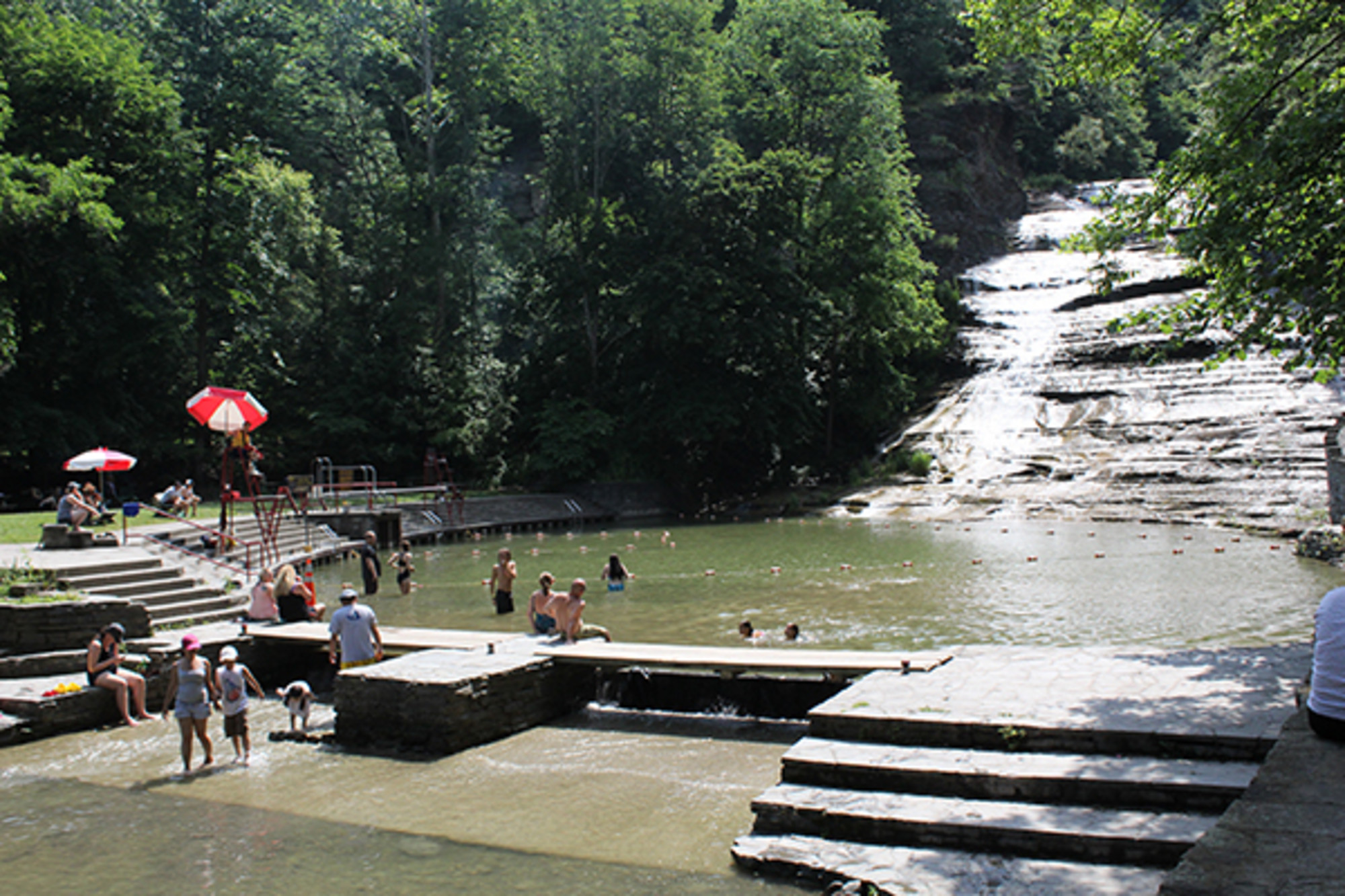
For swimming, Basher said there are plenty of places to swim in the area that aren’t restricted. The ones that are restricted are off-limits for very good reasons.
“If they start going swimming in these pools that look tranquil, they don’t realize that the pools aren’t perfectly round,” Basher said. “A lot of times they’re comma-shaped and they look circular from the top but they actually go underneath from years and years of waterfalls gouging them out. So, people go underwater and the next thing you know the current pushes them underneath and they can’t come back up.”
While local emergency services train for these scenarios and have the equipment for it, these rescues still put the rescuers in danger too and require an incredible amount of people. It can often be a coordinated effort between agencies.
First rescuers must get down into the gorge and find the person in danger and figure out the best access point. Once the rescue or recovery has been made rescuers then must figure out the best way to get the person out of the gorge. If they are injured or can’t walk rescuers must find a way to carry them out.
“It requires a ton of people,” Basher said. “We train for it, we’re prepared for it, but when we’re there we’re committed and if there are other emergencies in the city we’re taxed and we have to call in people from off-duty and rely on our neighbors for help. That’s why we’re here, but we’d much rather people follow the signs and listen to our warnings because every year it seems we have to get somebody out of the gorge who just didn’t listen.”
Some of the more popular spots that Basher said his crew has to go rescue people include the flower preserve and the dams where people like to swim. The gorges along Fall Creek and up along Stewart Avenue have also been visited numerous times by emergency services responding to calls for help.
“Unfortunately, we end up in there far too often,” Basher said. “We go to the same places because they’re dangerous, and people don’t seem to heed the warnings.”
But Basher said they recognize that the transient population of the area because of the schools means that incoming freshman may not be aware of the danger of swimming in the gorges. That’s why every year the Ithaca Fire Department and other emergency service departments run an awareness campaign, trying to spread the word to newcomers that staying out of restricted areas could save their life.
“We keep doing it year after year and we don’t want to sound redundant but we have to because we don’t want to see people get hurt,” Basher said.
Hiking safety tips: bring a cell phone, let someone know where you are going and when you expect to be back, hike with a friend, bring a map of the area (or download an app with a map) so that if something happens you can give emergency responders your location, pack plenty of water to stay hydrated, prepare for a long day out in the sun, and stay on the marked trails.
Related Articles

5 things to do in Tompkins County this weekend
Plan your visit and discover what’s happening this weekend.


Tompkins Chamber announces Rob Montana as new vice president
Rob Montana, community leader and communications professional, has been appointed vice president of the Tompkins Chamber, where he will help drive economic growth, workforce development, and community engagement.