
Sustainable Viticulture Systems: Turning wine by-products into flour
By E.C. Barrett
Tompkins Weekly
TRUMANSBURG – In less than four years, Hector native Hilary Niver-Johnson, now based in Trumansburg, has taken her wine flour business from the planning stages to 65 retailers from Massachusetts to California.
Entering the third year of sales this spring, Sustainable Viticulture Systems is just one of five companies nationwide capturing the by-products of wine production, a combination of skins and seeds called “pomace,” to produce an antioxidant rich, heart-healthy, gluten-free food supplement.
After graduating from SUNY ESF in 2011, Niver-Johnson moved west to study the renewable energy possibilities of grapeseed oil for use as a biodiesel. Unsatisfied with the results – grapeseed oil uses a mere three percent of the seed – she returned home to start producing wine flour, utilizing a greater percentage of the pomace in creating the mineral rich “superfood.”
“Wine flour is high in fiber and high in protein with 150 grams of fiber and 100 grams of protein in each pound,” said Niver-Johnson. “It is a supplement, not a substitute, adding flavor, color and nutrition to your cooking.”
SVS gets its pomace from three area wine makers: Hector Wine Company, Red Newt Cellars and Atwater Estate Vineyards, and they’re adding Bloomer Creek Vineyard this year.
“They have to pay someone to haul off the pomace, so we provide a service to them, supplying the bins, and they let us know when the bins are full and we come and haul them away,” Niver-Johnson said. “Atwater field spreads some of it. There are people who use it as fertilizer. The only options for wineries are to field spread it, let it rot or let me take it.”
According to Niver-Johnson, the Finger Lakes region produces 11,000 wet tons of pomace per year and her company recycled 80 tons in the last season, but they’re growing.
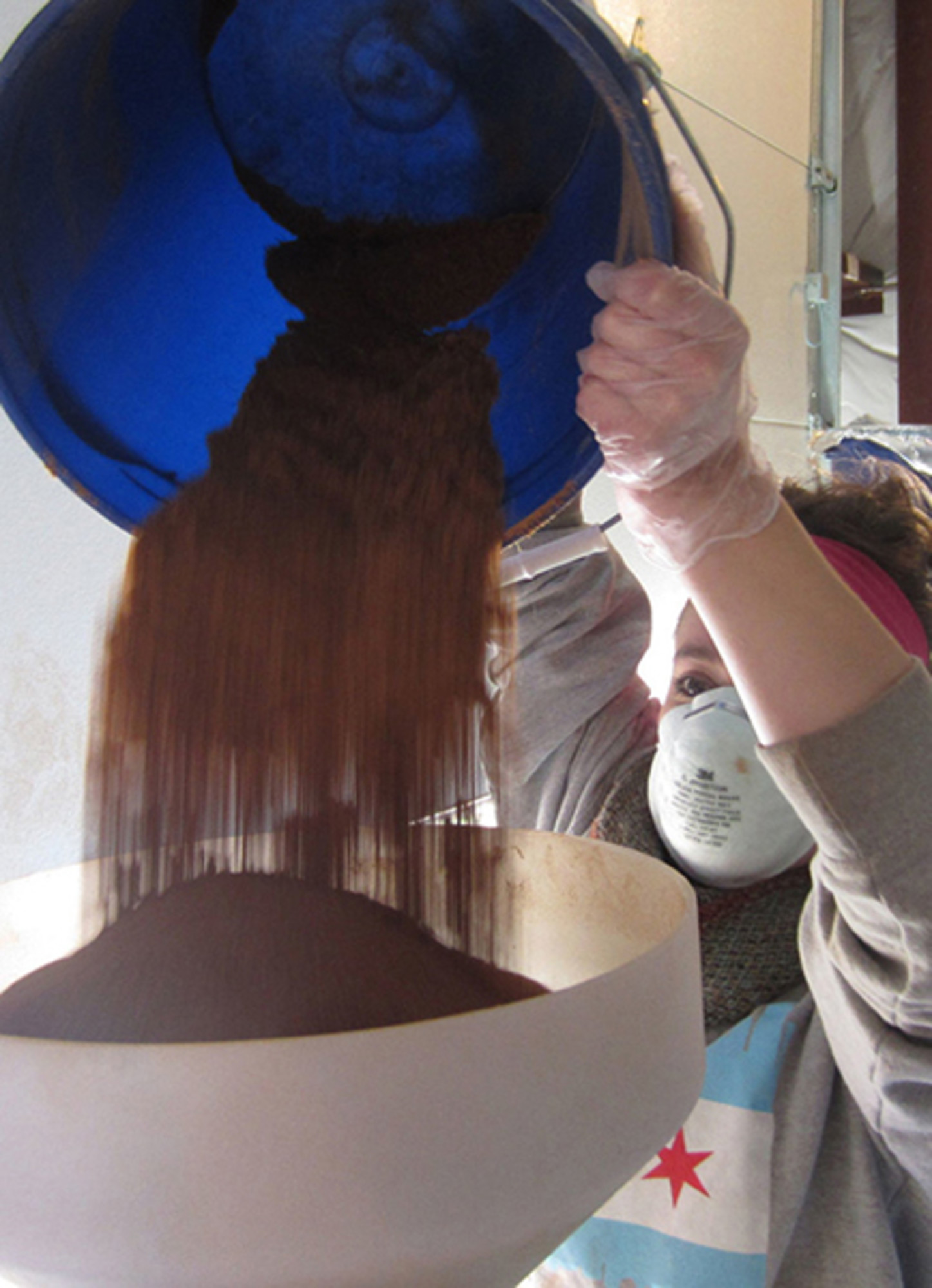
SVS staff, two interns, one part-time employee, Niver-Johnson and her parents when she needs the assist, hand sort and separate the seeds from the skins, sun-dry them and stone mill them in their Hector facility.
“We finally got a bigger mill to increase production,” said NiverJohnson. “Before we could only produce five pounds an hour and now we can produce forty pounds an hour.”
Last year, even with being unable to keep up with the demand, SVS sales increased by around 35 percent, but this year with their new production they hope to sell their entire stock by September, increasing revenue by 100 percent.
Niver-Johnson credits local connections and tapping into community resources as invaluable to building her business.
“Alternatives Federal Credit Union has been a great supporter, the first business class I ever took was their Business Cents program, three springs ago this May,” she said, “and they provided financial support in our first year.”
When asked what she knows now that she wishes she’d known when she started the business, Niver-Johnson said: “There’s a lot of things I should have asked that I didn’t ask.”
“New York State Agriculture and Markets regulates us but they didn’t know how to classify our product because we’re pioneers,” she said. “People think that because we have all the market shares we’ve got it made but if no one knows how to use what you’re producing that doesn’t amount to much.”
Locally, SVS’s Riesling and Cabernet Sauvignon wine flours can be found at the Ithaca Coffee Company, the People’s Market of Lansing, and are soon to be at Handwork.
“The Ithaca market has been a little difficult to get into, but in the last year we’ve been able to help people understand how wine flour is used, it’s kind of like a spice, it adds to your recipes,” Niver-Johnson said. “We’ve finally gotten into a flow of giving samples, knowing how to sell it, telling retailers what they should know. We’re able to grow because we know how to use it and how to tell people how to use.”
According to their website, SVS’s Riesling wine flour, their sweetest variety, has flavors of honeysuckle, graham cracker, green apple, and a dash of citrus that Niver-Johnson suggests adding to apple pie, cupcakes, breads, crackers, cookies, and even macaroni and cheese. She describes their Cabernet Sauvignon wine flour as more robust, adding berry and sour cherry flavors, tannins and earthiness to meatballs, steak rubs, brownies, and flourless chocolate cake.
What advice would Niver-Johnson give herself if she could go back to 2013?
“I’d tell myself what I tell myself now: keep pushing, keep asking questions and talking to people; collaborate, collaborate, collaborate,” she said. “And, you know, smile.”
Related Articles
Cayuga Medical Center nurses to rally, alleging anti-union tactics by hospital management
CMC nurses plan a rally, alleging unsafe staffing and illegal anti-union tactics as the hospital highlights recent patient-safety gains.

Dryden Fiber looks back on another year of service
Dryden Fiber reflects on a year of growth as the municipal internet provider expands service across Dryden and Caroline.

Cayuga Medical Center improves patient safety score
Cayuga Medical Center Leapfrog Grade rises to “B,” showing improved patient safety and nursing care quality.