
TCAT makes changes to attract, retain and support staff
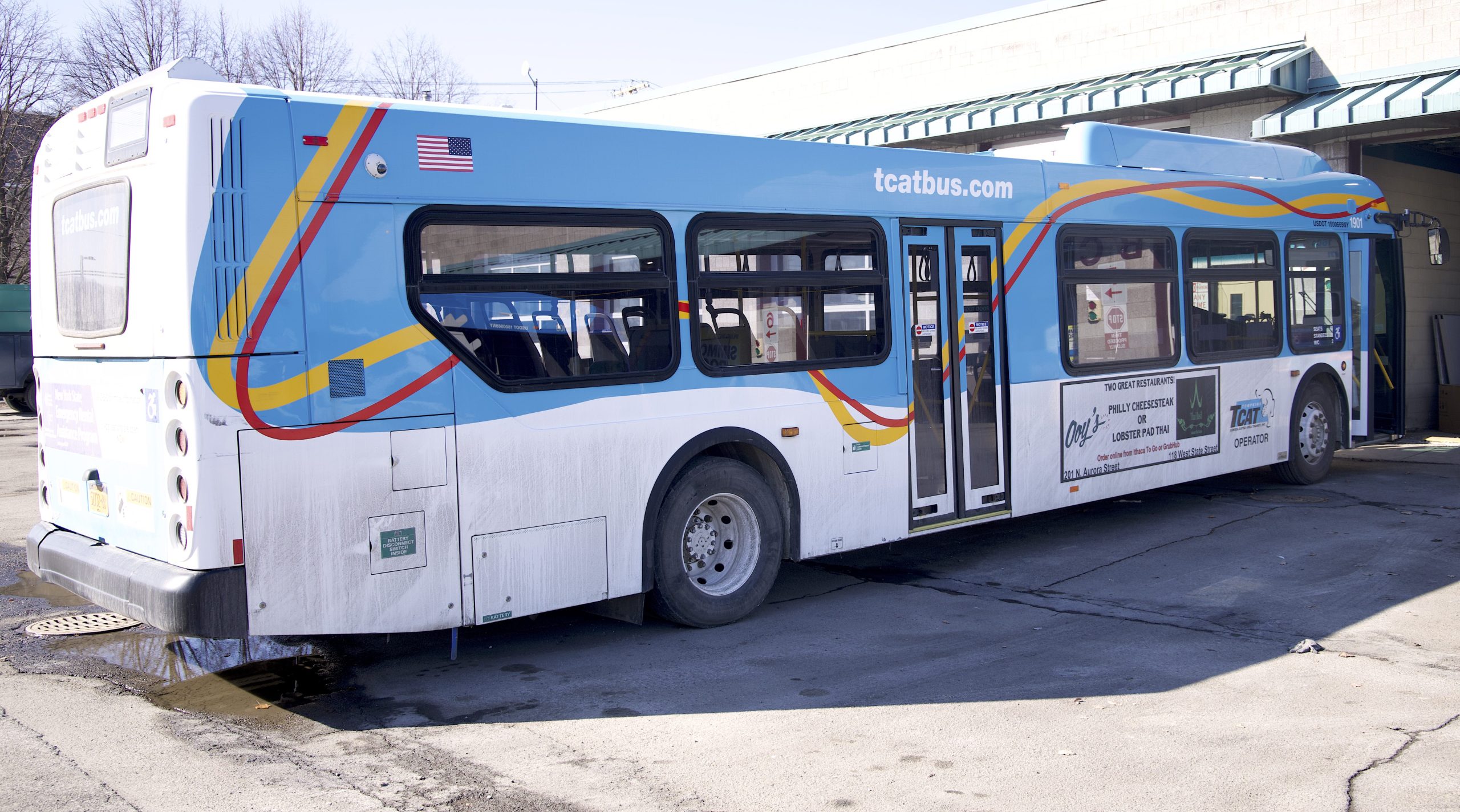
Tompkins Consolidated Area Transit’s (TCAT) union-represented drivers and maintenance staff recently voted 43-25 to ratify a two‑year contract with multi tiered pay increases. This is intended to help offset the higher cost of living, attract new hires and better compensate longtime employees.
The agreement, hashed out over the past several months between negotiators for the transit agency and United Auto Workers Local 2300, was officially adopted by the TCAT Board of Directors.
Negotiations started before the previous contract expired on June 30, 2022. Of the 83 union members eligible, 69 cast their ballots, with one ballot voided, during previous voting sessions.
One of the changes the new contract guarantees is wage increases. Currently, hourly wages are $22.79 for new drivers and $25.88 for new mechanics during their training. Upon completion, wages rise to $23.67 for drivers and to $26.75 for mechanics.
As of Jan. 1, wages were set to increase by various percentages linked to the employee’s years of service with TCAT.
Employees with at least one year of service will receive a 3.25% increase to $24.44 an hour for drivers and $27.62 an hour for mechanics; those with three to nine years of service will receive a 10.5% increase to $26.16 an hour for drivers and $29.56 an hour for mechanics; and those with 10-plus years of service will receive an increase of 14% to $26.98 an hour for drivers and $30.50 an hour for mechanics.
Employees can expect another pay increase effective Jan. 1, 2024. At that time, there will be a 2% increase for employees with less than one year of service; a 5%increase for employees with one to two years of service; a 5.5% increase for employees with three to nine years of service; and a 6% increase for employees with more than 10 years of service.
“Our drivers and maintenance crew are the heart of our organization. They have proven time and time again, especially during the pandemic, how dedicated they are to our riders,” said TCAT general manager, Scot Vanderpool.
“As with any other not-for-profit, publicly funded agency, we have limited resources, but it is essential that we make every effort to ensure that all of our employees are adequately compensated.’’
The contract also provided an immediate one-time bonus of $750 to all union employees, which was paid out in February.
Other contract-provided benefits include a higher reimbursement for protective shoes and tools required for mechanics and drivers and making Juneteenth (June 19) a TCAT-observed holiday.
As with Labor Day, TCAT will operate reduced service on Juneteenth, which was declared a federal holiday in 2021 to commemorate the delayed emancipation of enslaved people in Texas. As with Labor Day, those who work on Juneteenth will be eligible for extra pay or compensatory time off.
While the new labor contract has been good for employees and TCAT alike, there have been ongoing struggles. Vanderpool hopes that part of this labor contract, which is set to entice potential employees, pays off.
“We thought it was important to have something for the drivers that have been here one, maybe two years, that would encourage them to stay,” Vanderpool said. “Retention was key. Having a tiered system was really important then, because we want to attract and keep people but also show our longtime drivers and staff that we value and appreciate them too.”
Many are aware that there is a shortage of professional drivers in both the public service and private trucking sectors. This shortage has forced TCAT to roll back service to ease the workloads of existing drivers.
At the end of 2022, TCAT had 65 drivers on the payroll, of which 59 were full-time and six were part-time. Excluding leaves of absence and one driver in training, 51 full-time and five part-time drivers were available to work.
TCAT’s 2019 pre pandemic numbers recorded 84 full-time and five part-time drivers on the payroll. Excluding drivers out on leave and in training, 75 were available for work.
Outgoing mayor and TCAT board member, Laura Lewis, said that this newly approved contract will recognize staff and address their retention moving forward.
“TCAT very much wanted to address recruitment, retention and morale of staff, and I believe that is what the new contract does,” Lewis said. “I’m very pleased that the contract specifically allows for retention. TCAT, as with public transit services around the country, are experiencing staffing shortages.”
The low numbers have pushed TCAT to step up its recruitment efforts and, as a result, they recently expanded their new driver training program to accommodate more trainees. Depending on their level of experience and licensing, new drivers undergo four to eight weeks of both classroom and on-the-road training.
Part of their expanded training program included hiring a second trainer and a recruiter. This addition has allowed TCAT to offer classes to new employees every month instead of every few months, which is how they had previously operated.
TCAT manager of communications and marketing, Patty Poist, said that additional trainers are important for hiring new drivers.
“When people are hired, they want to start right away, you know,” Poist said. “When you’re seeking a job, you often don’t have time to wait, so this is what we are hoping to address to get more people ready for the road.”
Vanderpool added that, in addition to another trainer, TCAT’s human resources department has expanded in order to better support current and incoming employees. They are also working to involve drivers in the scheduling process so that everyone can understand each other better and work together at a deeper level.
“Imagine how difficult that is, scheduling all these drivers. Some are part-time, full-time, and there’s new people that have to complete ride time with one of our drivers who does road training,” Vanderpool said. “There’s 33 routes Monday through Friday at various times. Sometimes they change based on driver availability, construction, holidays ‒ you see how this adds up.”
The hope is that having a larger human resources department and more involvement from drivers on the scheduling side will fully support staff and improve overall morale. More drivers will also help with currently tight scheduling.
For 2023, TCAT has budgeted for an additional 20 full-time drivers and two part-time drivers, which would result in a total of 80 full-time and seven part-time drivers.
“We hope to retain the very talented staff that TCAT has,” Lewis said. “We experienced shortages of both drivers and mechanics and are now in better shape as we continue to recruit drivers.”
Related Articles


Holiday traditions bring community cheer
Tompkins County holiday traditions light up homes, farms, and schools with festive cheer and community spirit.

The gift of an experience: Local businesses offer hands-on holiday fun
Holiday experience gifts in Tompkins County include candle making, gourd crafts, and pottery workshops for creative seasonal fun.