The cost of closing
By Jamie Swinnerton
Tompkins Weekly
When the Enfield Food Distribution center was forced to close in early June for mandatory repairs and upgrades, hundreds of residents were forced to find another way to get the food they needed for close to a month. While other local pantries helped to take on the load, gaps were inevitable. Other pantries were farther away, had different hours, or took longer to distribute the food. The closing of one pantry, which has seen a significant rise in need over the last several years, upended the lives of hundreds of residents already struggling to get what they need.
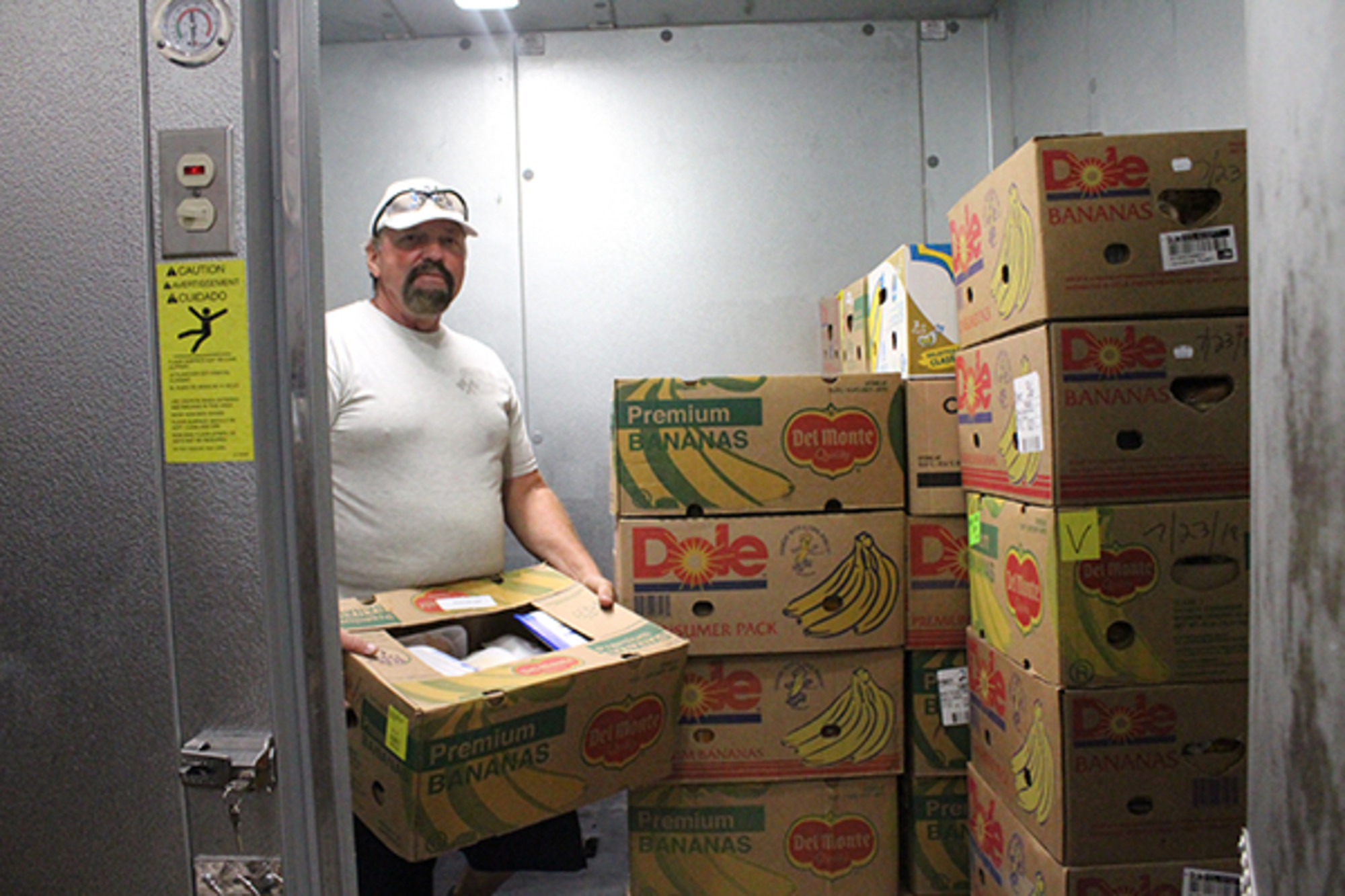
The Enfield pantry reopened on July 1, a little less than a month after closing when an inspection from the Food Bank of the Southern Tier found that the pantry needed to deal with a rodent infestation and make repairs to the building to be operating up to code. A critical need, thought not a requirement for re-opening, was a new $17,000 walk-in freezer to store the perishable food that the pantry used to keep on palettes. Without the freezer the pantry would have to accept less perishable food from the Food Bank of the Southern Tier, according to President and CEO of the food bank Natasha Thompson.
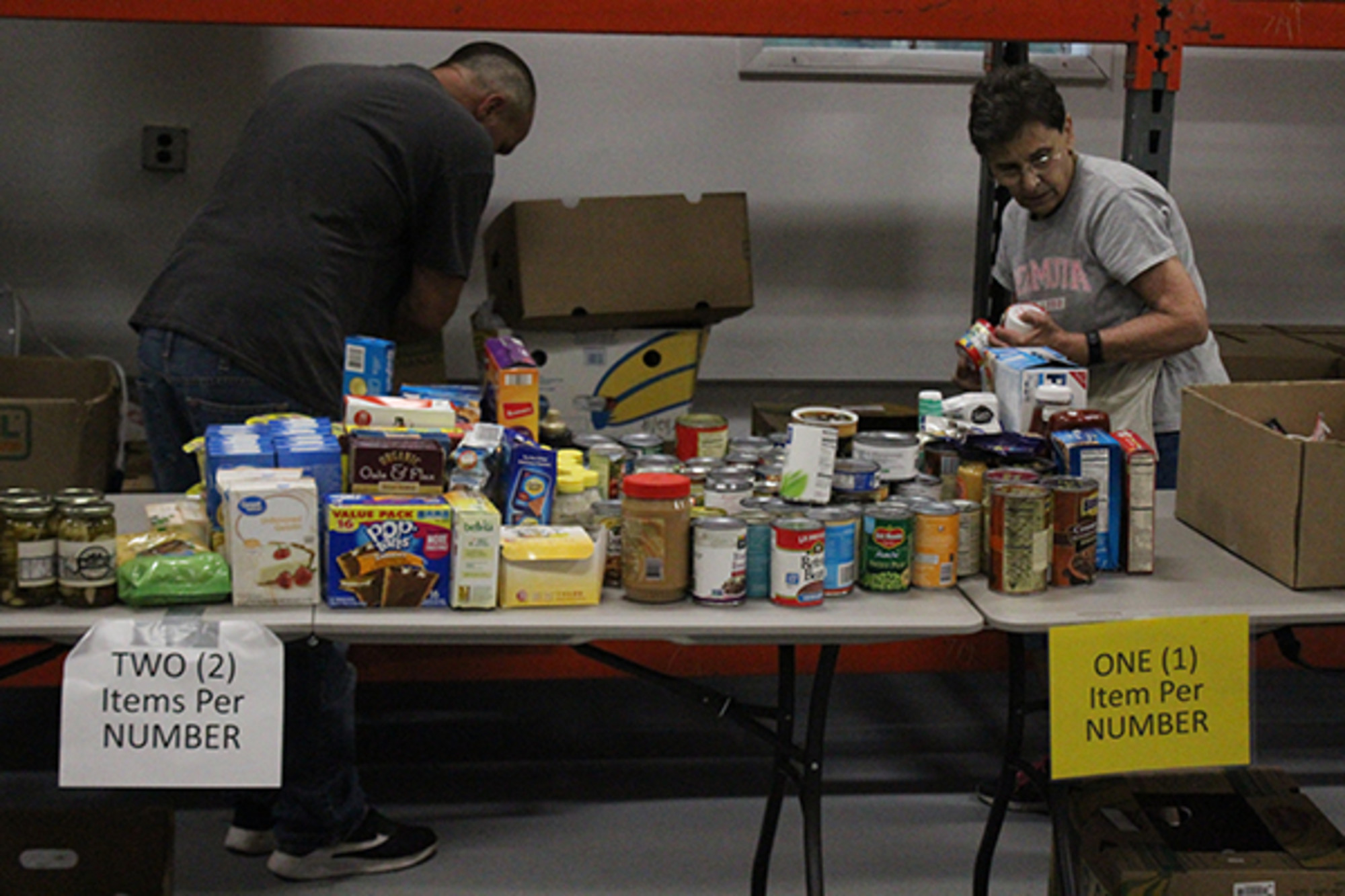
By Monday, July 23, the pantry was still adjusting to the changes they had to make during the closing. New shelves and the new freezer meant a new set up in the distribution room. Jean Owens, the pantry director, has plans to hold a training session for pantry volunteers to get everyone on the same page. But when the pantry opened at noon it was as busy as ever. As volunteers were still setting up the tables of food, residents were already lined up with shopping carts and boxes provided by the pantry.
“It’s a completely new setup and it’s going to take us a while to get things functional again,” Owens said as she checks people in at the pantry, handing them a slip of paper with a number on it based on how many people they are shopping for.
It’s a common practice for one resident to come to pick up food for multiple families in the area. The noon to 3:30 p.m. hours on a Monday aren’t accessible to everyone. For years Connie Pakkala-Lanning has been coming to the pantry on behalf of her elderly neighbors in the Sandy Creek mobile home park. She doesn’t have a car, so she has to arrange a ride each trip.
“I couldn’t do anything,” Pakkala- Lanning said when asked what she did when the pantry closed. “My freezer went bare.”
Margaret Slattery is a Family Support Worker for the Child Development Council. This past Monday she was at the pantry picking up food for some of her clients, something she does often. When the pantry closed she reached out to find more resources that were available to help her clients get food, including pantries she hadn’t been to before.
“I’ve never, in my 10 years of social work, seen such a food crisis as I’ve seen in the last year,” Slattery said. “I think that, in part, the cost of food is increasing, and the amount of food stamps are not increasing.”
She works with the families on her caseload to find as many options as possible to supplement their food resources, including going to local pantries. She appreciates that shopping for her clients doesn’t mean cutting through a lot of red tape at the Enfield food pantry. With the increase in food insecurity, Slattery said it’s hard for the council to keep up. More and more families need help, but the council only has one transport vehicle for seven workers.
This increase in need is a large part of why the pantry needed to close in the first place, Owens said. The pantry serves over 200 families each week.
“We were looking at 10,000 pounds of food a week,” Owens said. “We distribute over 500,000 pounds of food annually. So, that required a lot more organization in our facility which is a 23-foot by 63-foot room.”
Along with a new walk-in freezer the pantry needed to install shelving units to organize the food. With the addition of the shelves, the space for food has just about tripled. The pantry also had to seal up the building and deal with a rodent problem that Owens said is town-wide due to the number of empty houses in the area. With help from the Town of Enfield and a lot of volunteer labor, the pantry made all the necessary repairs and installed the fridge in just a month. All in all, Owens said they raised $22,000 for the renovations, mostly through fund appeals like GoFundMe, and private donations.
“It’s been an amazing thing to see how much support the food pantry had,” Owens said.
Because the pantry closed so suddenly it was hard to get the word out and let all the clients know. Many of them don’t have phones or internet, Owens said. The sudden change left some people stranded.
“It was extremely difficult to run into clients and just find that they didn’t have food,” Owen’s said. “Because there was no notice. We had two days’ notice, so our clients hadn’t expected that additional expense for that month, so they were going without food because it wasn’t budgeted.”
Many of the pantry clients plan their work schedules around when the pantry is open to be able to come get food. To help mitigate this issue, the Enfield food pantry opened Sunday hours after church about a year and a half ago. Through the Sunday pantry Owens said around 60 families collect food. The logistics and networking it takes for current clients to get to the Enfield pantry are already complicated. Those logistics crashed when the pantry closed, even as other organizations and local groups tried to step in to help.
Owens has been with the pantry for over 30 years. The increase, she said, has been gradual but steady. And the numbers continue to climb.
“Cost of living increase, wages don’t keep up, people can’t pay for their housing and their food at the same time,” she said of why she thinks more people are coming to the pantry. “It just doesn’t work.”
Her heart is in her mission, she can’t stand to see anyone go hungry. As she checks people in and hands them their numbers she smiles and chats with her clients about gardening, how their families are doing, and who they are picking up for. But when she talks about the closing things get emotional.
“To see people going without food was just… Can’t do that again. It was just terrible.”
CORRECTION: A new freezer for the pantry was not a requirement made by the Food Bank of the Southern Tier for the Enfield Food Distribution to re-open. The story has been updated so as to make this clear. We apologize for the error.
Related Articles

5 things to do in Tompkins County this weekend
Plan your visit and discover what’s happening this weekend.

TC3 reaches transfer agreement with Hobart and William Smith Colleges
TC3 transfer agreement guarantees acceptance and scholarships for graduates entering bachelor’s degree programs at Hobart and William Smith Colleges.