
The power of CCE internships
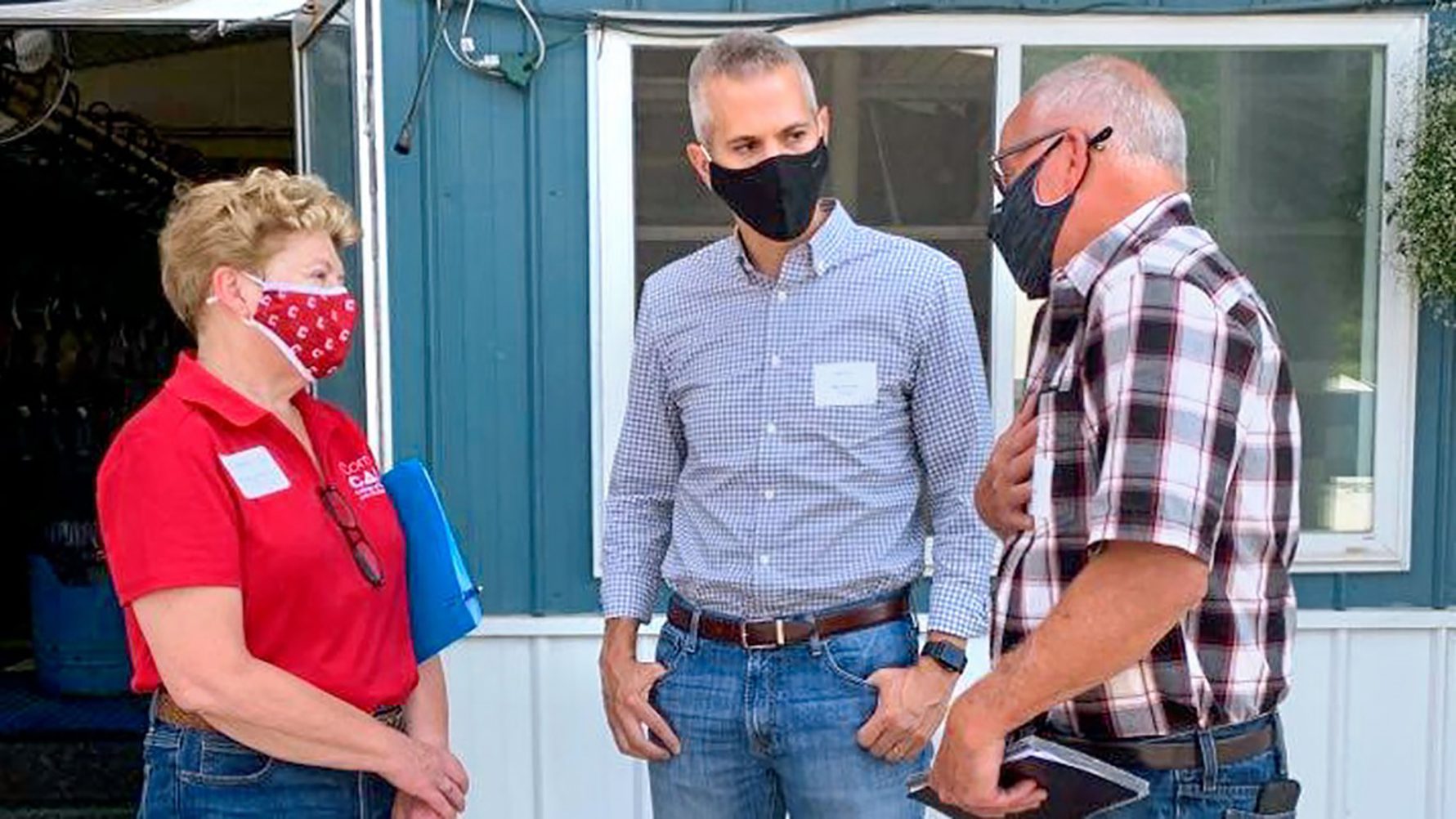
For Sammi Lin, ’24, who spent her summer in New York City working with urban farmers — including refugees from Myanmar, immigrants from East Africa and the Caribbean and seventh-generation Americans reconnecting with agriculture — the lessons went much deeper than the soil.
“I feel like I’ve grown so much as a person beyond just developing my technical farming skills,” said Lin, an international agriculture and rural development major in the Cornell University College of Agriculture and Life Sciences (CALS).
Lin was among 27 students who participated in the 2021 Cornell Cooperative Extension of Tompkins County (CCE-Tompkins) Summer Internship program, engaging in purpose-driven science with communities across New York state.
From June to August, CCE-Tompkins, county associations and regional agriculture programs across the state hosted students from CALS, the College of Human Ecology and the College of Arts and Sciences as they worked on projects that included enhancing soil management at community farms in New York City, co-locating solar and agricultural land use in the Southern Tier, facilitating and developing curriculum for a teen anti-racism group in the Hudson Valley and analyzing farmers markets in the Finger Lakes.
“Working collaboratively, the students, Cornell faculty and CCE educators share up-close, hands-on, personal experiences that are mutually beneficial to each other as well as communities across New York state,” CCE-Tompkins Director Christopher Watkins said at the 2021 CCE-Tompkins Summer Internship Reception, held Sept. 29 in the biotechnology building.
At the reception, students, faculty and CCE-Tompkins mentors joined together to celebrate and reflect on what many students described as life-changing experiences. The event also featured comments from Katherine McComas, vice provost for engagement and land-grant affairs; Rachel Dunifon, the Rebecca Q. and James C. Morgan dean of the College of Human Ecology; and Ben Houlton, the Ronald P. Lynch dean of CALS.
In New York City, Lin was joined on the urban agriculture project by fellow agriculture and rural development major Kendra Cooper-Smith. Their internship experience included two South Bronx farms located in the poorest congressional district in the United States.
“That’s where Sammi and Kendra tapped into the deep connection that exists between urban agriculture and community empowerment,” said faculty adviser Jenny Kao-Kniffin, associate professor in the School of Integrative Plant Science and an associate director of CCE-Tompkins. “They were hooked and have indicated they will be returning to join with these ambitious community partners next summer.”
In the Hudson Valley, Stephanie Jovel, a psychology major at CALS, developed and facilitated a curriculum for a teen anti-racism group made up of Cornell Cooperative Extension of Ulster County and Cornell Cooperative Extension of Orange County 4-H teens. The program was funded through a partnership with the David M. Einhorn Center for Community Engagement.
“It was my first time working with high-schoolers, so I didn’t know what to really expect going in,” Jovel said. “But it was great. We all had the same kind energy, and we were able to get intimate and deep with our conversations. I think it really pushed me to be a leader. And it helped illuminate a lot of things for me, especially what I’d like to do moving forward with my career.”
R.J. Anderson is a writer, photographer and communications team leader for Cornell Cooperative Extension of Tompkins County. East Hill Notes are published the first and third Wednesdays of each month in Tompkins Weekly.
Related Articles

Meinig Fieldhouse built to protect iconic red-tailed hawks
The Meinig Fieldhouse hawks project shows how Cornell protected Big Red and other red-tailed hawks during construction.
Town-Gown Awards honor housing, child care collaborations
Town-Gown Awards recognized Cornell and community partnerships supporting affordable housing and child care in Tompkins County.
Lorin Warnick to end term as Cornell Veterinary College dean
Warnick Cornell dean Lorin Warnick will step down in 2026 after leading the veterinary college through growth, innovation, and major public health milestones.