
Tick population, and danger of Lyme disease, continues to rise
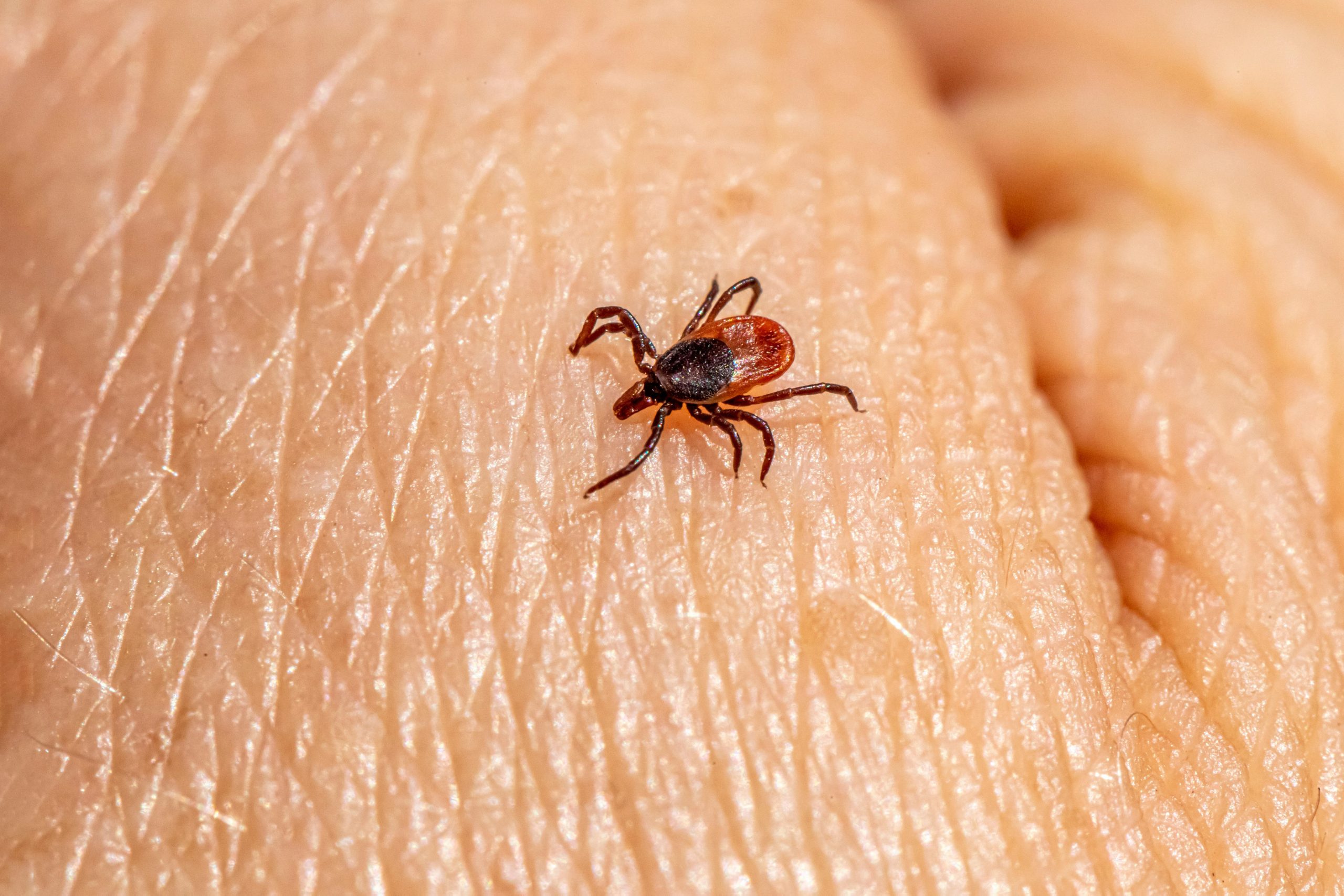
Local health officials are anticipating that the local tick population will remain steady or increase this summer compared to previous years. They are therefore reminding the public to check for ticks after spending time outside.
Tick-borne disease symptoms vary by type of infection and can include fever, fatigue, headache and rash. Lyme disease remains the most prevalent tick-borne illness in Tompkins County, according to Tompkins County Whole Health (TCWH).

Managing editor
Any time the air temperature is above 34 degrees Fahrenheit, ticks become active. “Climate change is a good thing for ticks,” Dr. William Klepack, Whole Health medical director, told Tompkins Weekly recently. “We get above that temperature more commonly now, so the tick population likes what’s going on.”
Though Whole Health does not receive reports of tick bites from physicians, “my perception, off the cuff, is that it’s certainly not going down,” Klepack said of the number of tick bite occurrences.
“And what we’re seeing is a growing number of Lyme disease cases over the last three years,” he added. “It has steadily increased.”
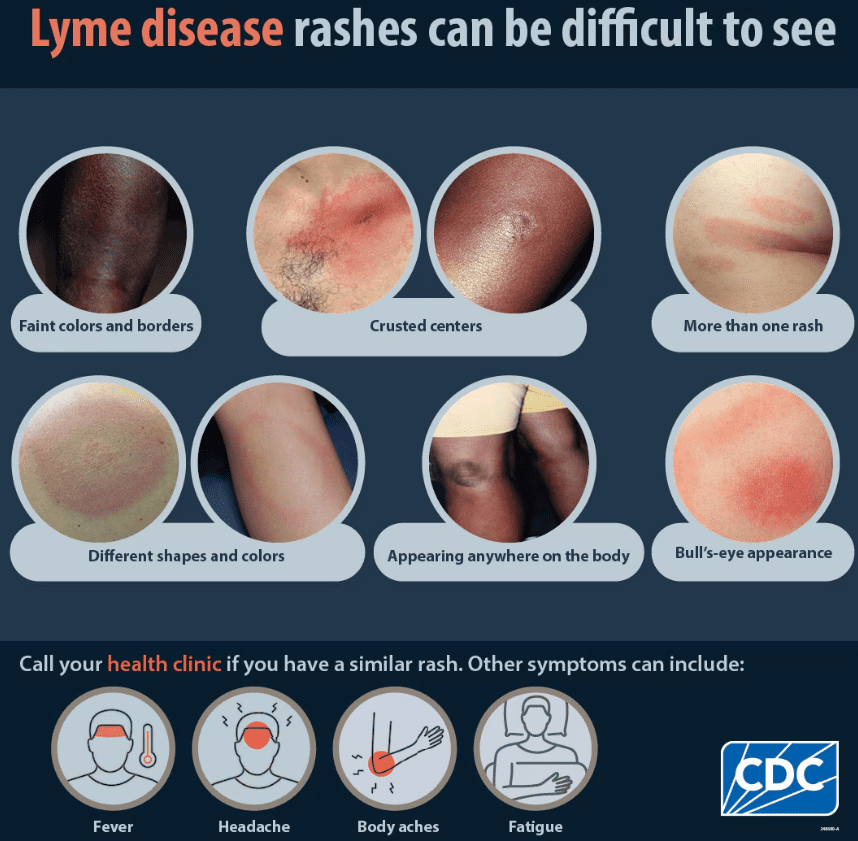
An often-publicized sign of Lyme disease is a “bullseye” rash (a red circle with a red ring around it), but rashes associated with Lyme disease come in all different shapes and sizes, Klepack said.
“It could be solidly red,” he said. “Characteristically, it’s not small. It’s not a quarter-sized rash you would see from a mosquito bite; it’s usually two or more inches in diameter, which is pretty big.”
A large red rash should be cause for a doctor visit, though it isn’t a medical emergency. “Certainly, the next morning you should be getting in touch with your doctor,” Klepack said.
Lyme disease can be treated with antibiotics at any time, but early intervention with medication can prevent the onset of more serious symptoms such as joint pain, which can sometimes linger long after the initial infection.
People who discover a Lyme disease rash do not always know they were bitten by a tick.
“Particularly in the spring or early summer, when the nymph ticks are more common, those are so tiny — about the size of a poppy seed,” Klepack said. “It’s easier to feel the tick than to see it sometimes. You can feel for them by running your hand over your body; they particularly like to hide in warm, moist places like the groin or genital areas — places where we’re not checking, but places you should check because that’s where ticks latch on.”
Not only is there the danger of Lyme disease, but there are now reported cases of seven more tick-borne illnesses in the Tompkins County area, including anaplasmosis, babesiosis and Rocky Mountain spotted fever.
“Rocky Mountain spotted fever shouldn’t really be named ‘Rocky Mountain’ because it is more prevalent in the east than in the Rocky Mountains,” Klepack said.
Unlike Lyme disease, which requires the tick to be attached for 36 hours for transmission of the disease to occur, some other diseases take just two hours to be passed from tick to host. This can make spotting and removing a tick in time a real challenge, especially for outdoor enthusiasts.
“You can’t possibly be checking yourself every two hours,” Klepack said. “You just have to do the best you can, and at least once a day check carefully for ticks, is what you need to do. You should check more often, but who’s going to do that? It’s not very practical.”
“If you do find a tick latched onto you, remembering that you had a tick is important,” he added.
And for those with pets that go outside, it is important to check them when they come indoors, as well.
“I have a cat that goes in and out, and fortunately she’s white and light gray, so the ticks would be easy to spot, but when she comes into the house I turn her on her back and look at her belly and her head, and that helps a bit,” Klepack said, adding that he also treats his cat with tick medicine that kills any ticks that latch on.
“But that only works on the ticks that latch onto her,” he pointed out. A tick crawling around on an animal could find its way to a human host when that animal jumps on a bed or into a lap. Klepac still recommends using preventative tick medicine on pets when possible.
No such medication exists for humans, so the best course of action to prevent a bite is to apply tick repellent on clothing and skin. Tompkins County Whole Health recommends using one that contains 20% to 30% DEET.
Apply as directed and avoid the eyes and mouth. Assist children with applying insect repellent. Treat clothing, tents and other camping gear with permethrin, and be sure to follow instructions from the manufacturer.
Whole Health also suggests wearing light-colored clothing so that ticks are easy to spot. Tuck shirts into pants and pants into socks.
The New York State Department of Health recommends following these steps for handling a tick bite:
- Grasp the mouthparts with tweezers as close as possible to the attachment (skin) site. Be careful not to squeeze, crush or puncture the body of the tick, which may contain infectious fluids.
- Pull firmly and steadily upward to remove the tick.
- After removing the tick, thoroughly disinfect the bite site and wash hands.
- See or call a doctor if there are concerns about incomplete tick removal.
- Do not attempt to remove ticks by using petroleum jelly, lit cigarettes or other home remedies because these may actually increase the chance of contracting a tick-borne disease.
- Monitor the site of the bite for the next 30 days for the appearance of a rash.
- If you experience symptoms such as a rash (especially in the area of a prior tick bite), fever, chills, body aches/pains, flu-like symptoms or fatigue, contact your healthcare provider immediately.
TCWH can assist with questions about ticks and tick-borne disease. Call community health nurses at 607-274-6604. Tick information kits can be requested by contacting the Healthy Neighborhoods program at 607-274-6702.
Visit tompkinscountyny.gov/health/vector/ticks to learn more about ticks, including helpful pictures for tick identification and videos on proper tick removal.
This summer, follow Cornell Communications Department’s Tick Awareness Campaign on Facebook: “TickAlert Tompkins: A Campaign Against Tick-Borne Diseases.” This campaign, developed in consultation with TCWH, aims to raise awareness among county residents about prevention, detection and treatment of tick bites.
Author

Related Articles


Street Beat: What are you looking forward to in the new year?
We asked five random people. Here’s what they had to say.

5 things to do in Tompkins County this weekend
Plan your visit and discover what’s happening this weekend.