
Town of Dryden discusses broadband with village officials
The Dryden Town Board discussed its municipal broadband project with officials in the villages of Dryden and Freeville at its Feb. 10 meeting.
According to town officials and third-party partners, the project is estimated to cost roughly $14.53 million.
It is an initiative by the town to provide fiber broadband internet to every resident in the town. The town will have two system connections in the area, one at the town hall on East Main Street and the other near Pinckney Road, which is the location of the project’s pilot program in the spring (article at tinyurl.com/ycjymbxl).
Dan Lamb, the town’s deputy supervisor, said he isn’t expecting total participation but noted, “We need strong support from the villages.”
“This project will only be as strong as its enrollment,” he said. “To make the project feasible, we need [people] pitching in and basically participating.”
Freeville Mayor David Fogel was curious how the town would be able to bring in potential customers for its municipal broadband service.
“Our goal is to pass the savings and value along to the customers,” said Ryan Garrison, an engineer at HUNT Engineers, Architects and Surveyors, who is partnering with the town on the project. “We intend to reduce the cost as much as we can.”
Garrison noted the goal of the project is to provide a steady balance of internet speed while also providing efficient software and functionality.
“We really want to put a great product out there,” he added.
Village of Dryden Mayor Mike Murphy lauded the town’s plan of “if you get more [of the] population, it reduces the cost.”
“You’ll [be a] not-[for]-profit, so you don’t have to keep raising it to make profit,” Murphy added.
Murphy noted village residents are “eager to receive access” to the service. According to the 2020 census, the village has around 2,000 residents.
“We want it in the village; we just have some considerations for it,” he said.
Murphy asked the Town Board if the intention is to “hit the rural areas” for service prior to offering it to village residents or “trying to do both at the same time.”
Town Supervisor Jason Leifer noted it is the goal of the town to accomplish the feat in rural areas first. He added that “one thing to help us build more quickly in the more rural areas is to get customers such as the villages and the hamlet because of the [population] density.”
In terms of reducing costs in the long run, Murphy asked when the town’s “break-even analysis” is predicted to arrive for the service. Lamb imagined it would arrive between “year nine and 10” of the service.
“If we get to 1,000 customers, we start to become very feasible,” Garrison said.
Lamb and Town Board member Loren Spurling expressed their struggles with internet service in the areas they live in.
Lamb, who lives on Peruville Road, currently has “radio broadband,” or fixed wireless internet, due to the inability to have fiber broadband at his residence. He added that service cuts in and out.
For Spurling, he and his partner live in a rural area of the town where “there’s no internet connection at all.” Spurling and his partner are part of a handful of town residents who don’t have access to the internet, according to Lamb.
“My partner and I are teachers, so virtual learning [when needed] isn’t possible for us,” Spurling said.
Leifer noted at the beginning of the pandemic, at least a quarter of the Dryden Central School District (DCSD) students “didn’t have access” to internet service.
“It wasn’t necessarily just because they didn’t have access to it; it’s because their families simply couldn’t afford it,” he added.
Leifer mentioned that the town will be participating in programs for residents “who have trouble affording internet service.”
Leifer mentioned the town is looking to “eventually provide service” to DCSD, Tompkins Cortland Community College and Southworth Library.
Fogel wondered if the service provided by the town will “pay for itself.” Lamb replied that it will “in the long run.”
The town has collected about $1.8 million in federal funds, Leifer said, between the funds they’ve received through the American Rescue Plan Act, the Appalachian Regional Commission and more.
“The federal funds we’ve received have assisted in covering costs,” Lamb said. “If more grants come in, it could hit that break-even analysis way before year 10. More importantly, it will reduce rates.”
Fogel said he would consider allowing the town to see how many village residents are interested in the service. He mentioned that there currently “about 400 residents” in Freeville.
“We usually don’t allow outside commercial pitches, but this is more for the community,” Fogel added.
Lamb noted aside from yard signs and direct mail that would market the town’s impending broadband service, town officials are planning to go “door to door” to see if there is any interest.
“When we get into marketing this, one of our major pieces is to find local stakeholders that will vouch for the product,” Garrison said. “We want to deliver to people and show how great the product is while also spreading the word about it.”
Garrison noted when it comes to infrastructure, local providers are more flexible.
“We’re going to be the same way,” he said, adding that the installation, pricing and other expenses will “even out.”
In terms of equipment for installation and technology hookups, Garrison said the town plans to have equipment on hand at the town hall on East Main Street, as well as “small cabinets” in Freeville and Etna.
“From these locations, we can serve the whole town because our location is 12 miles, but we want a good balance of equipment,” he added.
Fogel and Murphy both felt the discussion with the Town Board was informative, with Fogel noting it’s “a great project.”
“We’ve learned more about this project than before, so we definitely want to support it,” Murphy said.
Dryden Dispatch appears every Wednesday in Tompkins Weekly. Send story ideas to editorial@vizellamedia.com.
Author

Related Articles
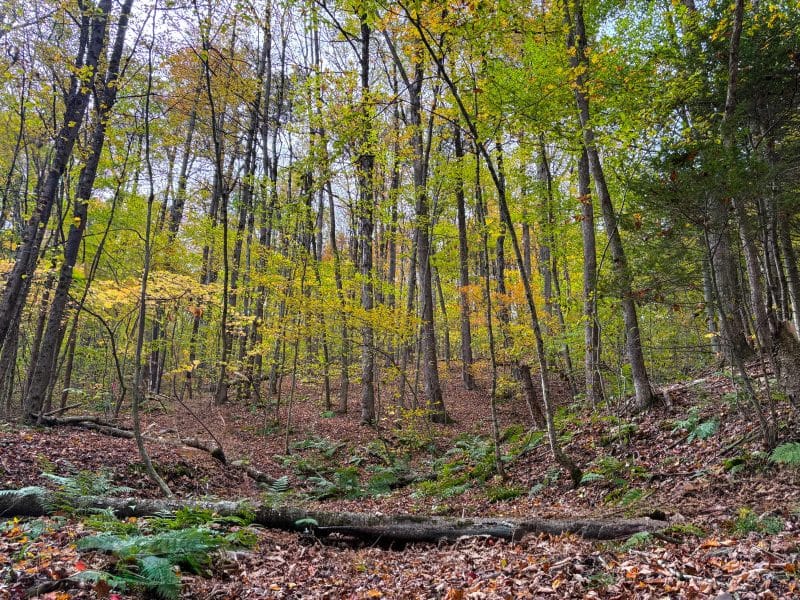
FLLT purchases over 100 acres in the town of Dryden
The FLLT Dryden land purchase protects 108 acres near Yellow Barn State Forest, expanding conservation and public access.

TC3 reaches transfer agreement with Hobart and William Smith Colleges
TC3 transfer agreement guarantees acceptance and scholarships for graduates entering bachelor’s degree programs at Hobart and William Smith Colleges.
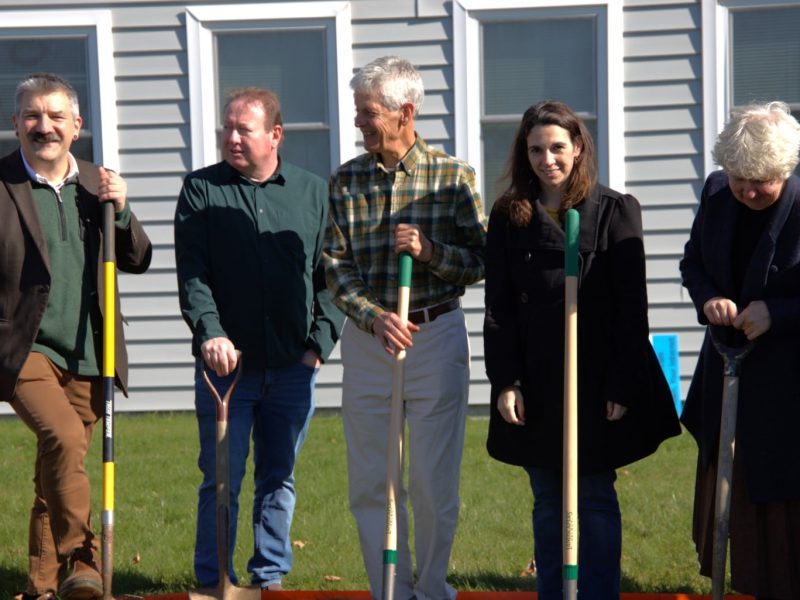
Dryden Fiber looks back on another year of service
Dryden Fiber reflects on a year of growth as the municipal internet provider expands service across Dryden and Caroline.