
Transportation sector makes positive strides, challenges remain

Last year, Tompkins Weekly heard from a wide variety of leaders within the transportation sector on how they were faring during the pandemic (tinyurl.com/2emmghul). Now, a year and a half later, most pandemic-related concerns have lessened, making way for strides like new programs and offerings. Still, plenty of challenges remain, especially related to staffing shortages, so we checked back in with local leaders to see what’s changed since last year.
Progress
One of the most recent developments on the transportation front came earlier this month when the Center for Community Transportation (CCT, the-cct.org) announced that it hired Jeff Goodmark as the inaugural director of micromobility (tinyurl.com/2mbytyjr).
Prior to his role at CCT, Goodmark was the operations manager at Lime, a company that provided citywide bikeshare in Ithaca from 2018 to 2020, according to a recent release. In his new role, he’s been tasked with heading the establishment of a new bikeshare system for Ithaca, this time under a nonprofit model.
Goodmark said that most of his current work centers around funding for the project, and he’s working to get stakeholders involved to address any service gaps in the community.
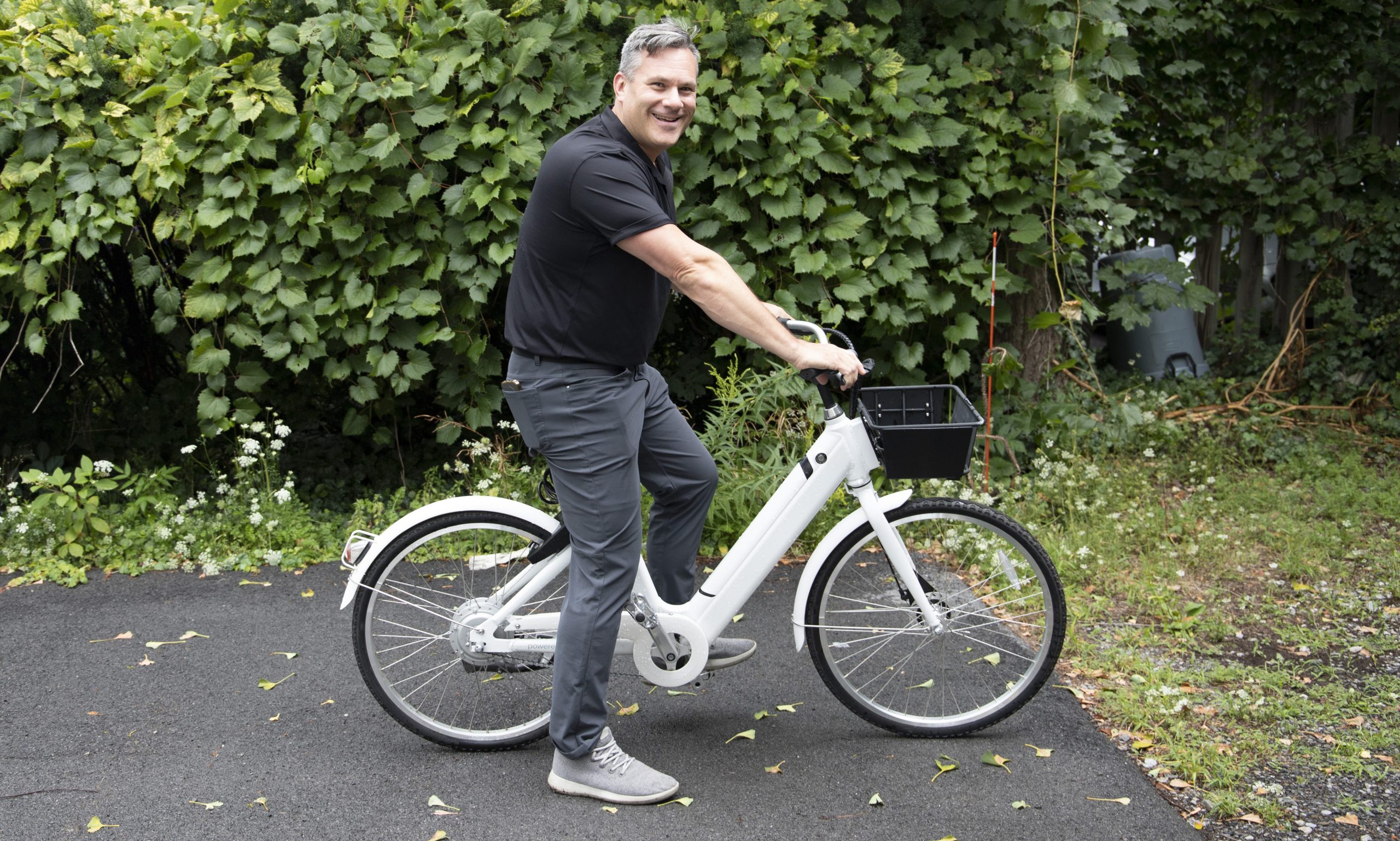
“I’m running the program from the community standpoint and for what’s best,” he said. “And that gives us a lot of ways that we can help people and [be] able to stage bikes where we have stakeholders in our community that have been supportive of the program. And there’s just so many ways that it can work for everybody. [It] can really be community based, where everyone’s giving input and we can learn together about how to serve the city.”
Another notable development comes from TCAT (tcatbus.com). On Aug. 17, Sen. Charles Schumer and Sen. Kirsten Gillibrand announced that the U.S. Department of Transportation will be awarding TCAT $8,740,975 from the department’s Low or No Emission Vehicle Program (transit.dot.gov/lowno). These new funds will allow TCAT “to purchase six, 40-foot electric buses as well as four electric micro-buses,” according to a recent press release.
TCAT General Manager Scot Vanderpool said he’s grateful for the additional funds, as the new buses will help TCAT reach its goal of an all-electric fleet.
“I know that people really support what we’re doing with our battery-electric program and trying to get to all battery-electric fleet by 2035, so I think this really helps us solidify TCAT’s movement toward clean energy,” he said. “And I think there’ll be more people that will see that message and see that we’re leading by example. And I think it’ll bring more people to it be interested in taking TCAT. So, I think it helps in that respect as well.”
Vanderpool clarified that, due to supply chain challenges, the new buses will likely take 18 months or so to finally be added to TCAT’s fleet, but he said, “I don’t think we’re in any hurry to get them.”
Elsewhere in the sector, local leaders providing and supporting transportation services generally reported great progress since last year. GO ITHACA (goithaca.org), for example, has seen a substantial increase in membership, said Jane Brady, GO ITHACA program director.
“This time last year, maybe we get 10 new members a week, and now, we’re at 30,” she said. “I think it’s been driven, in part, by a lot of changes in the transportation space, particularly the rising fuel costs that we’ve had over the past couple of months. That’s shone to actually have a huge impact on people’s behavior. And so, when gas is really expensive, people want to look for other ways to travel. And, once they do that, they learn about our program, and they go, ‘Oh, my goodness, I can get a free bus pass? Sign me up for that.’”
Brady added GO ITHACA has also been working to apply for grants to expand the program and keep up with the increasing demand.
“We applied for a Climate Smart Communities Grant this year to be able to expand our program boundaries to encompass anyone traveling to or from the urbanized area of Ithaca,” she said. “And so, we’re hoping we’ll hear about that grant by the end of the year — $1.1 million over three years, which is very, very exciting for us.”
At Bike Walk Tompkins (BWT, bikewalktompkins.org), Associate Director Niki Friske said they and others at BWT have welcomed the lessening of pandemic concerns, which has allowed the organization to greatly increase its offerings.
“Everyone has gotten a little bit more comfortable managing the virus and knowing when and when not to be around other people,” they said. “Our programming too has really opened up. So, we went from having more individual bike lessons to having group bike lessons or pairing a mentor with a person or two people, or being able to host larger group rides or group walks, … knowing that everyone’s sort of like managing their own comfort level.”
BWT Director Margaret Johnson said the organization has also seen increased demand for advocacy.
“There’s been a steady stream of folks contacting us this season in particular, saying, ‘This corridor of roadway’s really unsafe for biking,’ or, ‘This path, this crossing, is really unsafe for walking, can you help me advocate with local government to get an improvement to make things safer here?’” she said. “And so, we’ve had so many requests for involvement on different fronts, including not just infrastructure improvements, but other types of policy improvements, like lowering the speed limit and, most recently, decriminalizing jaywalking.”
Johnson added that there’s currently a large demand for individual-use bicycles, and BWT welcomes community donations. Email hello@bikewalktompkins.org for more information.
Challenges
On the challenges side, the most common hurdle across the spectrum is staffing shortages. TCAT is feeling this particularly hard, reflected in its recent decision to instate major service cuts (see tinyurl.com/2ewrycg8).
Vanderpool said the biggest reason for the cuts is a shortage of drivers, with some supply challenges also playing a part. He said that recently, TCAT’s drivers have been stretched too thin to keep up with service demand while being short-staffed, so he and others hope this service cut will help ease their workload.
“That’s a support for our drivers,” he said. “If we don’t have enough drivers to provide the work, we have supervisors drive and we have to force drivers to drive because we have to provide the service out there. And we don’t like having our drivers work overtime and work six days a week when they have family, so there’s that work-life balance piece. That’s one of the big reasons why we’re cutting service — for work-life balance. We want to give the drivers a break.”
TCAT is actively working to address the driver shortage through a variety of measures, including promoting TCAT’s part-time recruiter, Gina Lord, to a full-time position. Through increased recruitment efforts, TCAT now has a class of new drivers going through the training needed to drive TCAT’s buses, and Vanderpool said he expects much of TCAT’s staffing issues to subside as these efforts continue.
“I feel very positive that we’re heading in the right direction where we can bring some of the services back sooner — like January of 2023,” he said. “It’s going to take a little time, but I think some of the services will be able to come back if they feel positive about our recruiting efforts and what we’re doing.”
Staffing shortages are also impacting local airlines, as seen earlier this year when American Airlines announced it’d be pulling its services at the Ithaca Tompkins International Airport (see tinyurl.com/2htkzj7w). Airport Director Roxan Noble said that, despite the airport’s best efforts, it couldn’t convince American Airlines to stay due to a large pilot shortage, creating continued challenges in trying to fill the upcoming service gaps.
“[We’re] working with our current airline partners, trying to increase their service,” she said. “There’s still less service than we were pre-pandemic. And so, [we’re] working on that, getting additional flights. … But [other airlines are] struggling with the pilot shortages, the cost of fuel. And so, [we’re] just trying to work through that and build relationships with them, as well as looking into additional new service from other carriers, such as a low-cost carrier that would provide for our leisure market.”
Despite this, Noble said that she’s confident in the airport’s ability to meet demand and increase its offerings, mostly thanks to an outpouring of community support.
“I’m confident because I think we do have the community, we have the support, we have people that want to fly, we have backing from our educational institutions, we have backing from the county legislature, our Air Service Board,” she said. “Recovery’s taking longer, I think, than anybody anticipated for many airports across the nation. And mainly, it’s the regional airports. … But it’s coming back. And I think leisure market is going to be a big factor for Ithaca.”
Other challenges relate to demand for certain services and modes of transportation. Vanderpool said that TCAT’s ridership is generally down due to a series of small and large service cuts, and there’s also been more demand put on modes like single-passenger cars.
Fernando de Aragón, executive director of the Ithaca-Tompkins County Transportation Council (tompkinscountyny.gov/itctc), said even high gas prices haven’t made most people shift from individual-use vehicles to modes like public transportation, making it challenging for those trying to promote more sustainable means of travel.
“I think folks just became more careful and more conscious of their driving, but it did not result in a full shift of transit,” he said. “People are not carpooling as much because of the pandemic, and those got split into staying at home and driving their own cars, which is not a trend we want to see. … The one trend we hope for is less people driving alone because driving alone is sort of the worst scenario as far as planning, use of resources and emission production, etc.”
Looking ahead
Even with the challenges folks are facing, sources interviewed for this story reported an overall optimistic view of the coming months for their organizations and services. At CCT, for example, West Lalanne, administrative and communications coordinator, explained that there’s been a significant increase in demand for carshare services, so they and others at CCT are working to fill those gaps.
“[That is] part of the reason why we did need to increase the number of cars in our fleet,” they said. “And with some of our efforts, like increasing the number of members who have access to our easy-access and low-income programs, that means getting more cars over by West Hill. That means getting more cars in some of the just general hill areas. And folks are like, ‘Hey, can we have a carshare car around here?’ … So, there are definitely folks who are starting to see that, where we have the cars, it’s useful and beneficial and are wanting to be a part of the action.”
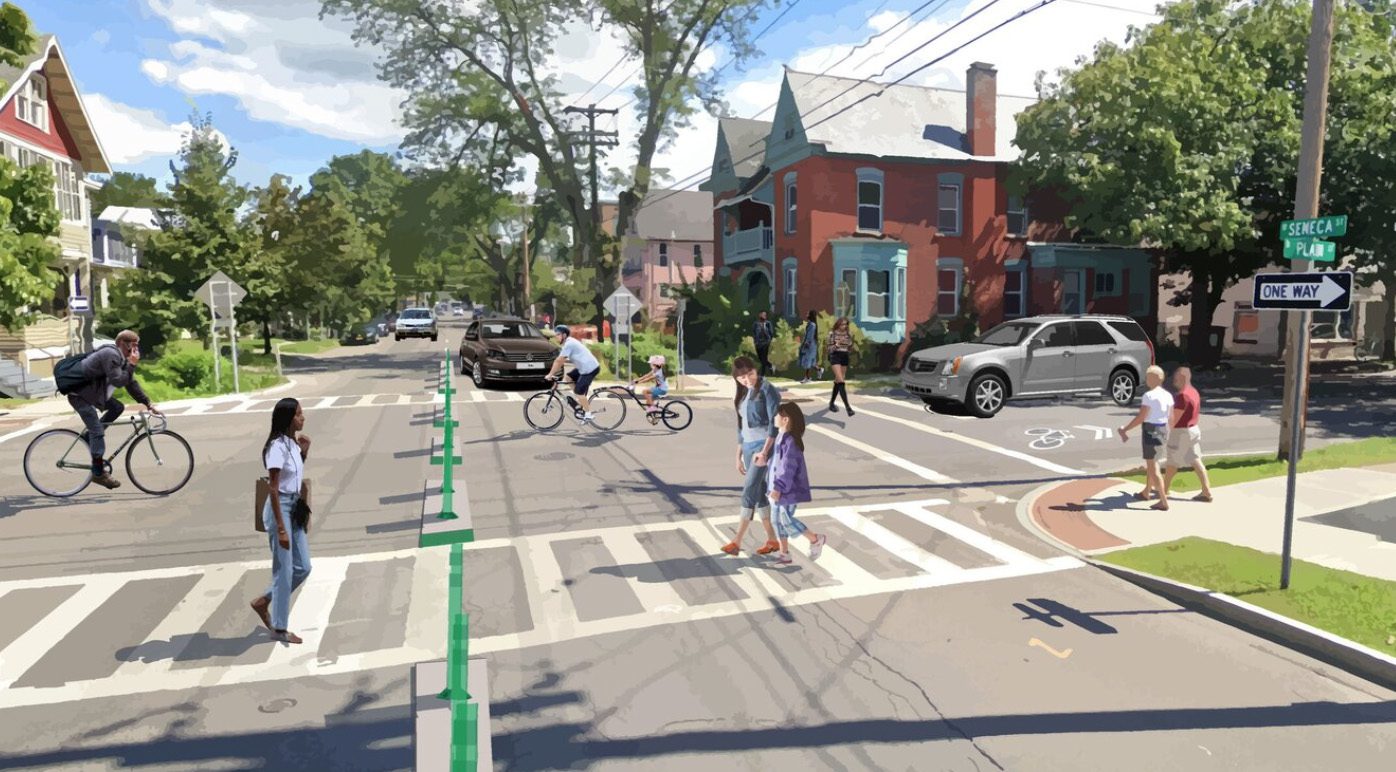
Darlene Wilber, outreach coordinator for GO ITHACA, added that GO ITHACA is working on similar expansion.
“A lot of folks are really looking to have different choices when it comes to transportation, and we’re just missing the mark a little bit here,” she said. “[We’re] wanting to bring back bikeshare. We’re really excited to hear the possibilities there. … So really, just trying to give more choice is what we’re seeing needs to happen if we’re going to continue on this path of trying to get people to leave their vehicles and take an alternative mode.”
Wilber said that she encourages the public to reach out to GO ITHACA to provide feedback on what needs they see.
Other upcoming developments include larger community projects, like BWT’s Bicycling for Everyone action plan (tinyurl.com/2fkppodk), which includes the Better Bike Network program to improve Ithaca’s bike friendliness (tinyurl.com/2z4rp2gz).
“Right now, we’re a League of American Bicyclists bronze bike-friendly city,” Johnson said. “And I would really love to see the city budget include enough changes and commitments [so] that we could hope to graduate to silver bike-friendly community.”
As for the upcoming bikeshare program from CCT, Goodmark said that his center is exploring an opportunity that could get the program up and running as soon as the next few months.
“Even if that falls through, though, we’re looking to launch a full-scale program in the spring or early summer of 2023,” Goodmark said.
For more information about the organizations mentioned in this story, visit their respective websites.
Jessica Wickham is the managing editor of Tompkins Weekly. Send story ideas to them at editorial@VizellaMedia.com.
Related Articles
Cayuga Medical Center nurses to rally, alleging anti-union tactics by hospital management
CMC nurses plan a rally, alleging unsafe staffing and illegal anti-union tactics as the hospital highlights recent patient-safety gains.
Dryden Fiber looks back on another year of service
Dryden Fiber reflects on a year of growth as the municipal internet provider expands service across Dryden and Caroline.
Cayuga Medical Center improves patient safety score
Cayuga Medical Center Leapfrog Grade rises to “B,” showing improved patient safety and nursing care quality.