
Trumansburg renews deer management program
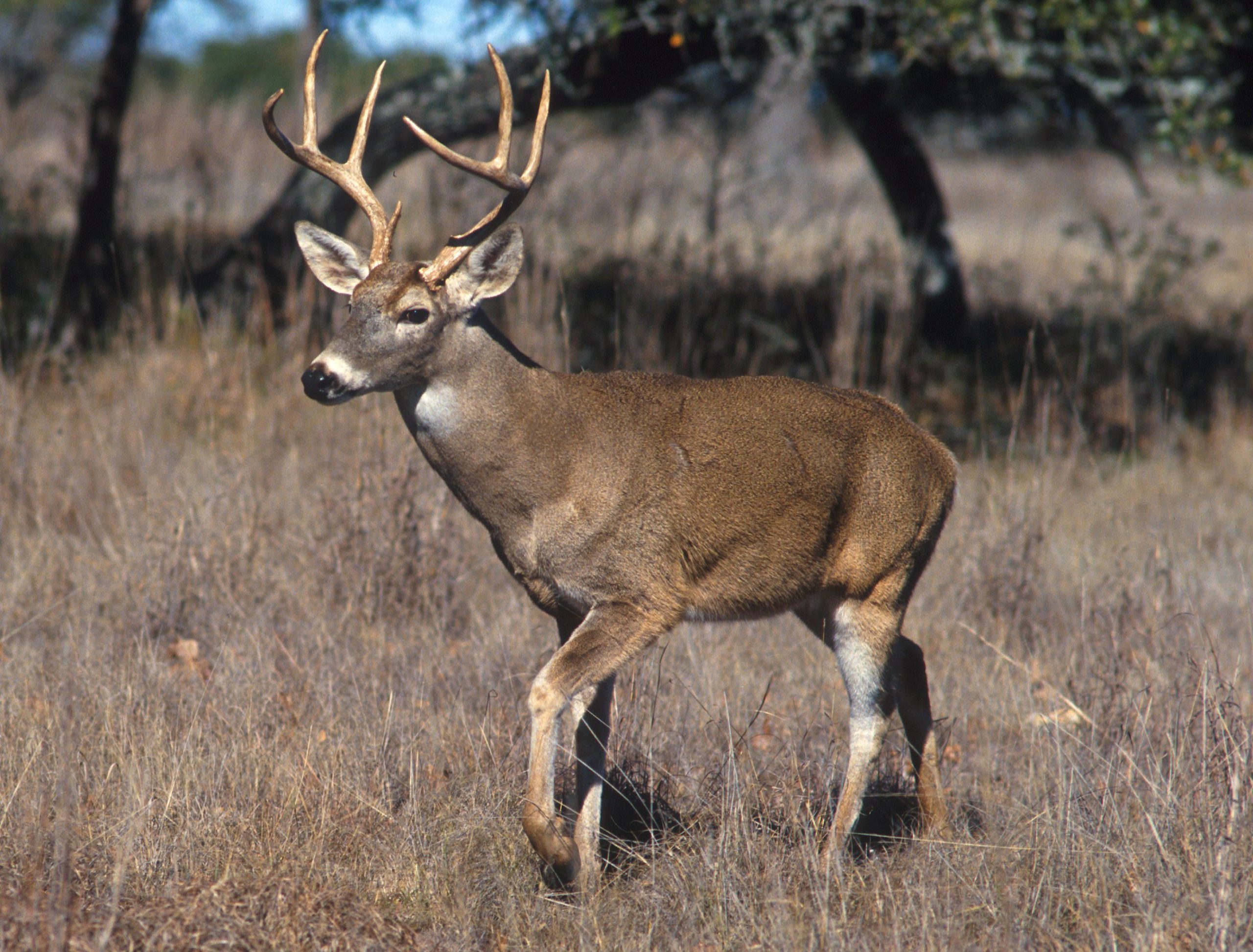
The village of Trumansburg is renewing its deer management program (DMP) for another year.
The program, meant to reduce the deer population in the village, was renewed at the village board of trustees meeting on Sept. 10.

The program, which started in 2014, has removed more than 400 deer from the area. Wildlife experts and village officials say that the removal of deer helps with overpopulation problems and thus can help with the preservation of local plant species, as well as mitigate the proliferation of Lyme disease and other illnesses carried by deer ticks.
The program was devised in conjunction with Cornell University’s Integrated Deer Research and Management program, as well as the village’s Nuisance Wildlife Committee and the village’s DMP Oversight Committee.
“[The program] is serving as a model for several other communities in New York state that have similar issues with excessive deer population,” according to a document submitted to the village board in support of the program.
As part of the program, local hunters use bows at baited locations. The village has designated 10 or more properties to conduct the cullings.
“This approach is not considered regular hunting,” the document states. “This preferred low-cost
method is using proficient bow hunters at baited locations.”
The program will run until March 31 of next year.
Once the final list of sites has been determined, a map showing the locations will be available at the village office and will be posted on the village’s website.
Corn bait will be placed 15 to 30 yards away from tree stands to attract deer to the locations. Trail monitoring cameras will also be set up to monitor deer activity. It is up to landowners to restrict the number of hunters on their property, as well as to set the times or dates individuals are allowed on their property.
All shot deer will be removed discretely from the properties. Samples of internal organs and blood may be submitted to the Animal Health Diagnostic Center at Cornell’s College of Veterinary Medicine, to assist in various research projects.
Participants can consume the harvested deer, or the deer can be donated, such as to local food banks and pantries or to families that can benefit from the meat.
Bernd Blossey, a professor at Cornell’s College of Agriculture and Life Sciences, explained the need for the program.
“If you don’t have [this program], the deer will basically, not directly but indirectly, kill the homes and habitats for other species and affect human health,” he said.
Natural methods of deer removal, Blossey said, are not sufficient for the number of deer in the village and beyond.
“We don’t have strong winters anymore that kill the majority of them, and hunting doesn’t do anything; neither do predators,” Blossey said.
The consequences of a deer overpopulation problem are severe, Blossey said. The proliferation of Lyme disease cases being one of them, he noted, as the disease is largely carried by ticks.
According to the Centers for Disease Control and Prevention, typical symptoms of Lyme disease include fever, headache, fatigue and a characteristic skin rash called erythema migrans. If left untreated, the infection can spread to joints, the heart and the nervous system.
“Ticks are affecting birds, salamanders, frogs, insects, plants and forest regeneration,” Blossey said. “So, if we are concerned about the well-being of those organisms around us, then it’s our responsibility to do something about it, because we messed it up to begin with.”
Blossey noted that the issues with deer population vastly extend beyond Trumansburg and other municipalities like Lansing, which has its own DMP.
“The issue with deer is that they are prey animals and their nature — they have the capability to repopulate areas and increase in numbers,” Blossey said. “The program in Trumansburg is effective. It has helped a little bit. But is it a long-term solution? No, because it’s like a doughnut hole. Everything around Trumansburg is donating their deer to the village.”
Ulysses Connection appears every week in Tompkins Weekly. Send story ideas to editorial@vizellamedia.com. Contact Eddie Velazquez at edvel37@gmail.com or on X (formerly Twitter) @ezvelazquez.
In brief:
“Transcribing & Mapping the Original Surveyors’ Journals for the ‘New Military Tract,’” a presentation by June Szabo & volunteers of the Backbone Ridge History Group (BRHG) in Ulysses, Ovid and Hector, will take place at Ulysses Historical Society, 39 South St. on Tuesday, Sept. 17 at 7 p.m.
The presentation will include information about the military tract, a look at what it was like to be a surveyor on Backbone Ridge (the area that runs between Seneca and Cayuga Lakes) in 1790, and an explanation of the online map and its creation.
The New Military Tract is a group of 28 towns in central New York that were laid out and then surveyed into 100 600-acre lots from 1789 to 1791. The military lots were used to compensate New York soldiers for their service during the Revolutionary War. The lots were awarded by random ballots: one lot for each private and multiple lots for officers. There were various set-asides and reservations. The towns of Ovid, Hector and Ulysses were a part of the military tract.
The surveyors’ journals for these lots have been transcribed, and their notes have been entered on a digital map by a group of volunteers. The BRHG received support from the Nelson B. Delavan Foundation for this project.
Author

Related Articles
Cayuga Medical Center nurses to rally, alleging anti-union tactics by hospital management
CMC nurses plan a rally, alleging unsafe staffing and illegal anti-union tactics as the hospital highlights recent patient-safety gains.

AmeriCU proudly connects students with annual scholarship opportunity
AmeriCU scholarship program awards $1,000 to students pursuing college or vocational education. Applications are open through March 15.
Street Beat: What’s one of the best holiday gifts you ever received?
We asked five random people. Here’s what they had to say.