
Two county startups become finalists in Grow-NY 2022
Late last month, Empire State Development and Cornell University’s Center for Regional Economic Advancement announced the 20 finalists for the fourth annual Grow-NY competition, which is focused on “enhancing the emerging food, beverage, and agriculture innovation cluster in Central New York, the Finger Lakes and the Southern Tier,” according to a recent press release.
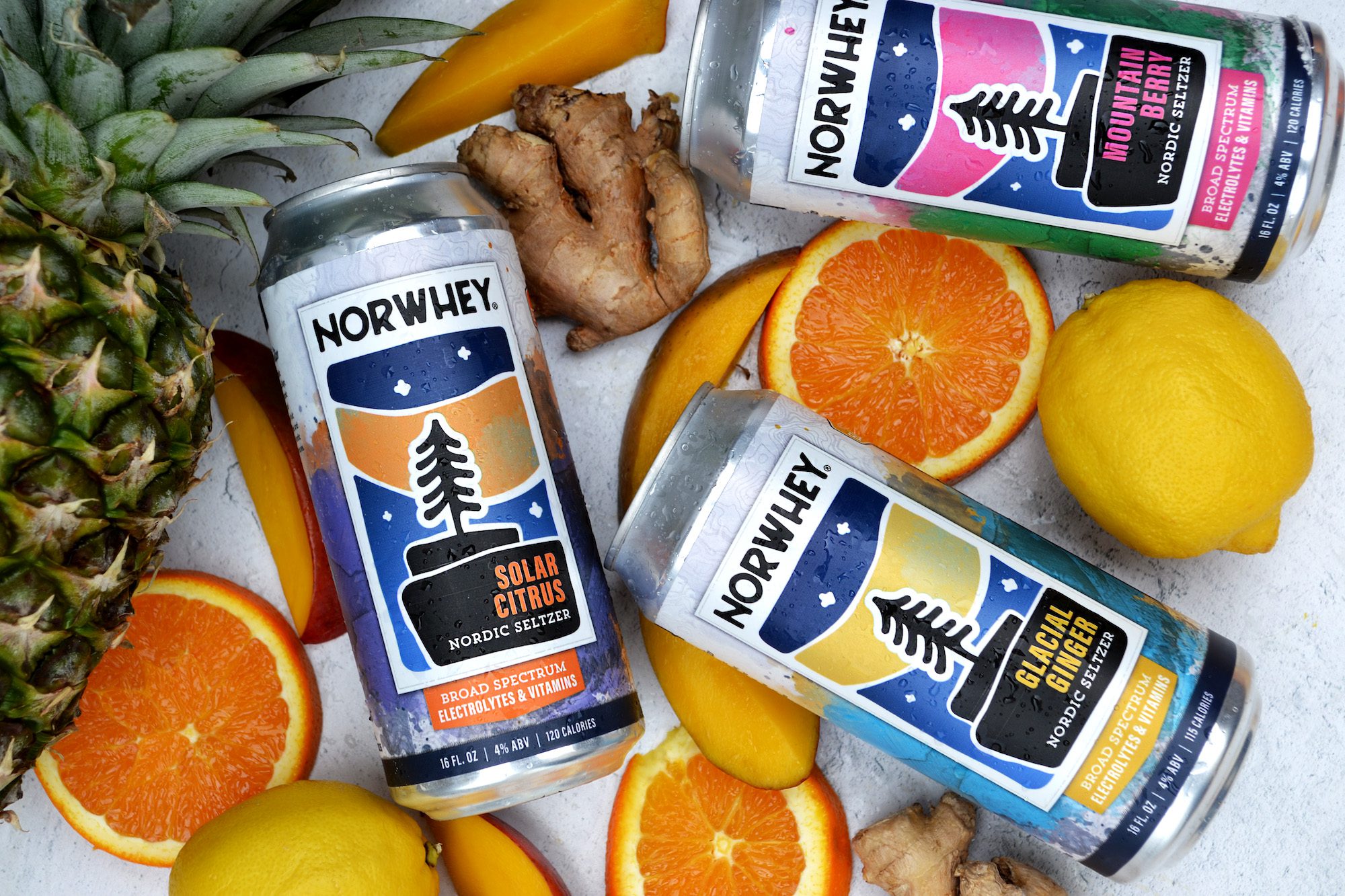
Tompkins County has two startups among the 20 finalists — Forte Protein (tinyurl.com/2g4mp38w) out of Trumansburg and Norwhey Brewing (norwhey.com) out of Ithaca. They, along with their fellow finalists, are busy preparing for the Grow-NY Food and Ag Summit in November, in which judges will award a total of $3 million in prize money to seven winners, including a $1 million top prize, two $500,000 prizes and four $250,000 prizes.
While the two startups work out of different towns and with different products, both share an overwhelming passion for their field and are eager to put their hard work on full display in just a couple of months.
As Forte Protein founder and CEO Kathleen Hefferon explained, Forte Protein as a concept got its start years ago, when Hefferon spent one year at Cornell’s Food Science department under a Fulbright scholarship researching food security and biotechnology.
“[I] started to develop a technology that I thought could be very useful for different purposes,” she said. “I didn’t really think about Forte Protein in those days and alternative proteins, but I thought that the technology itself could be used in many ways. So, I had the freedom to explore that with this particular scholarship for a year.”
Around the same time, the W.E. Cornell program (crea.cornell.edu/project/w-e-cornell/) was in its infancy, and seeing an opportunity, Hefferon decided to join the new group. Later, she participated in a program through the U.S. National Science Foundation called Innovation Corps (I-Corps, beta.nsf.gov/funding/initiatives/i-corps), and her experience there “really consolidated for me that yes, I’ve got something that could be very useful.”
Hefferon’s startup can produce “a complete spectrum of plant-based proteins that are identical to animal proteins” in a faster, more affordable way than traditional animal protein, according to its website.
“Some folks probably would be quite happy to find alternative ways of being provided nutritious proteins, and I think some folks would really be interested in the sustainability issue, the fact that we’re reducing greenhouse gases, and we’re not using animals,” Hefferon said. “There’s people around who would prefer, for animal welfare purposes, not to eat animal, and we’re managing to avoid that as well. So, I think we’re hitting multiple nails on the head.”
Norwhey Brewing founders Sam Alcaine and Trystan Sandvoss are just as proud of their journey as Hefferon. As they explained, the concept behind Norwhey Brewing started around six years ago, when Alcaine first started his associate professor role at Cornell.
“When I started up here at Cornell, kind of serendipitously, New York state’s Department of Environmental Conservation came to the university and said, ‘We are the leading producer of yogurt in the country — New York state is a leader of this. A lot of this is Greek yogurt. And we have this byproduct from there, this acid, yogurt whey, that nobody knows what to do with. There’s issues with the environmental disposal and this kind of stuff. What can you researchers come up with at the university on different ways to utilize this?’” Alcaine said.
Prior to Cornell, Alcaine had considerable history in the brewing industry, so he approached the Department of Environmental Conservation’s challenge from that angle.
“[Whey is] really naturally high in electrolytes, like calcium, magnesium, potassium,” Alcaine said. “But it also had a lot of sugar. … So I was like, ‘Alright, let’s research the types of fermentations that we can do to convert that lactose, that milk sugar, into alcohol, and what type of flavors we can get out of the yeast that are new and different that might be interesting for people to actually drink because then we can make a value-added product out of this, instead of a waste product.’”
Sandvoss got involved years later, when he came to one of Alcaine’s food safety workshops that he was teaching at Cornell.
“I knew that what we had, what Sam had created, was something that was not just solving an environmental issue, but creating a uniquely better alternative to other hard seltzers on the market,” Sandvoss said. “Truly, White Claw, these hard seltzers that have exploded in popularity in recent years [are] all pretty much very similar. This was something that offered something that was really better. And we say it’s a better-for-you hard seltzer because of what is naturally in that whey.”
The startup was officially created in 2020, but it wasn’t until this April that the company finally launched its first line of products available for consumer purchase. As Alcaine explained, while he and Sandvoss view Norwhey as a tastier hard seltzer, the benefits go well beyond individual consumers.
“By demonstrating that producers, big and small, can take this byproduct and actually turn it into something that consumers will pay for enjoy and drink, we’re hopefully showing the way on how we can build a whey-based economy here in upstate New York and hopefully then drive more value from dairy, drive more jobs and a better community, all while being more sustainable and better for the planet,” he said.

Looking ahead, both Norwhey and Forte shared that they’re excited for the Grow-NY competition. While it’s Forte’s first, this year will be Norwhey’s second year in the competition, though it will be its first as a finalists.
“We finished just outside of the money and then got a bunch of feedback from those judges,” Sandvoss said. “All of it has been implemented since 2020. So, we’re coming back to Grow-NY armed with all that we learned in 2020 with Grow-NY’s help.”
While Hefferon is new to Grow-NY, she sees her startup as a natural fit, she said.
“We just really had a lot of things going for us,” she said. “I think the ideas are novel and very interesting and very timely. The reason I chose to move into the alternative food protein space is just that it seems to be exploding. And there’s so much to do and there’s lots of ways we can contribute as a company too either regionally or globally. … There’s a lot of really interesting research and questions that can be answered, and we can be part of the nexus of all of that, which I think will be fun and exciting.”
Forte and Norwhey, along with all the other finalists, will be judged based on five criteria: viability of commercialization and business model; customer value; food and agriculture innovation; regional job creation; and team. All founders interviewed for this story attested that they meet all these criteria and are excited for the opportunities Grow-NY will open for them.
In the meantime, both startups will be plenty busy preparing their pitch for the competition.
“We’re thrilled to be a part of it,” Alcaine said. “And it’s going to be an intense couple months coming up to the pitch competition, but we’re really excited to do it.”
To learn more about the Grow-NY competition, visit grow-ny.com. To read our coverage of last year’s Grow-NY competition, visit tinyurl.com/yj6qdk6g.
Jessica Wickham is the managing editor of Tompkins Weekly. Send story ideas to them at editorial@VizellaMedia.com.
Related Articles
Cayuga Medical Center nurses to rally, alleging anti-union tactics by hospital management
CMC nurses plan a rally, alleging unsafe staffing and illegal anti-union tactics as the hospital highlights recent patient-safety gains.
Dryden Fiber looks back on another year of service
Dryden Fiber reflects on a year of growth as the municipal internet provider expands service across Dryden and Caroline.
Cayuga Medical Center improves patient safety score
Cayuga Medical Center Leapfrog Grade rises to “B,” showing improved patient safety and nursing care quality.