
Ulysses Historical Society celebrates 50th anniversary
The Ulysses Historical Society celebrates 50 years with 50 artifacts, preserving Trumansburg’s heritage and community history.
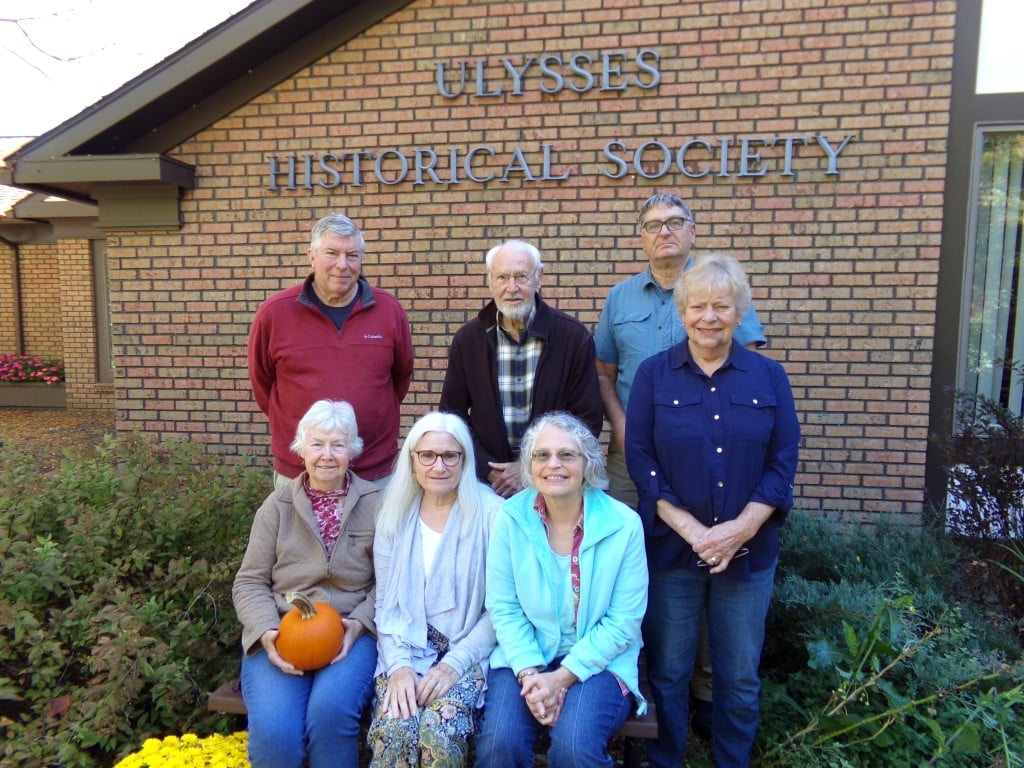
Back row from left: Ulysses Historical Society President Rodney Bent with volunteers Charlie Schlough, Dan Brown and Sally Hubbard. Front row from left: Volunteers Paula Austic, Joan Garner and Barb Coleman. The Ulysses Historical Society is celebrating its 50th anniversary by promoting 50 artifacts that have been donated over the years.
In April 1975, a group of about 10 women in the town of Ulysses banded together with a mission: to find a way to preserve and share local history for generations to come.
After a year of organizing, they were able to secure a room in the basement of the Masonic Temple on Main Street in the village of Trumansburg before getting an absolute charter as an educational institution from the state Board of Regents in 1979.
The women began growing their collection of items donated by the community and sought a new space to house their expanding museum. As fate would have it, one of the women’s husbands worked for Adrian Pearsall, one of the area’s most prominent furniture designers.
Pearsall and his brother, Richard, would eventually help fund construction of a building dedicated to their father, also named Adrian, who operated a lumber business and served as a school board president in Trumansburg before his death in 1953.
After the building’s construction, the Pearsalls welcomed the historical society into what would become their permanent home at 39 South St. in Trumansburg.
“It was a group of maybe 10 or 12 women who had lots of energy and made it all happen,” said Paula Austic, who’s been volunteering for the museum for the past eight years.
50 objects for 50 years
Instead of holding one celebration to mark the 50-year milestone, museum leaders chose to celebrate all year round by promoting 50 items, each of which sheds light on an aspect of Ulysses’s history.
“I wanted to show the diversity and the breadth of our collection to cover as many aspects of life as possible,” said volunteer Karen Laun, who selected all of the items and has been sharing information about them on the museum’s social media throughout the year. “I was trying to pick objects that had stories to send the message that we’re not just a museum with a collection of objects. These objects have stories that relate to the people of this town and events that happened and businesses that were founded here.”
Laun, who also serves on the museum’s board of trustees, said that she chose some of the artifacts by asking other volunteers what their favorite items were. The museum has hundreds of artifacts on display, with many more in its archives, including more than 2,500 pieces of clothing and accessories dating back to the early 19th century, 3,000 photographs, hundreds of diaries and journals, 1,000 family genealogy records, 150 oral histories and, most recently, written time capsules of residents’ experiences during the COVID-19 pandemic.
One of the objects Laun chose to spotlight was a quilt displaying the names of 1,000 area residents that served as the museum’s contribution to the 1993 village bicentennial celebration. The quilt was also a fundraiser for the museum, as residents paid $1 each to have their names featured alongside drawings of local landmarks. Museum founding member Ruth Wolverton carefully penned the names onto each square for the project, which was completed with the help of other museum members and friends.
The museum’s photography collection includes images of the Trumansburg Street Dances, a popular summer Saturday night event hosted by the local Chamber of Commerce that began in 1934 and ended around the time of World War II. Parts of Union and Main Streets were closed down, and people from across the state would travel to Trumansburg to dance to music from a live orchestra.
“People were telling me on Facebook that they remembered those dances or that their mother told them about it,” Laun said. “Why don’t we bring those back?” she added, “Because it seems like a really great community thing.”
Laun said her personal favorite item is a wreath made of human hair. During the Victorian era, she said it was common for women to create art with hair, including brooches, bracelets and earrings. These items were originally viewed as mourning jewelry but their purpose expanded so that some women gathered locks of hair from friends and family as keepsakes.
“People make fun of me for liking it but it was a Victorian art form and a way to mourn and remember people,” Laun said. “It’s this weird combination of a beautiful piece of art that’s also kind of creepy.”
Community impact
Along with preserving its extensive collection of artifacts, the museum, which is open on Mondays, Saturdays and Sundays, hosts seasonal luncheons and historical presentations for the community, including an upcoming book talk on Oct. 21 that will explore a resident’s personal journal.
“It’s a fantastic milestone,” said Trumansburg Mayor Rordan Hart. “You see a lot of old, small communities unfortunately don’t have much left, so when we live in a place like Trumansburg, which is so vibrant, that’s bucking a trend. That’s surviving a condition in New York state that many communities aren’t surviving and an organization like the historical society helps add flavor to that by being able to see a multi-decade or century-long perspective of what has happened and celebrate the fact that we’re still here.”
Hart noted that the village put on a play in tandem with the local Encore Players Community Theatre in 2022 to celebrate the village’s 150th anniversary.
Instead of paid staff, the museum has about 20 active volunteers and all of their items are donated by the community. While the museum receives some funding from the town of Ulysses and village of Trumansburg, its annual budget of about $21,000 primarily comes from community donations, according to president Rodney Bent.
“When you know the history of a place, it makes you feel like you belong there,” Bent said.
Laun added, “Everything we have was given to us by the community, so without them there is no historical society. We are the guardians of the history that the community gives us.”
Author

Related Articles
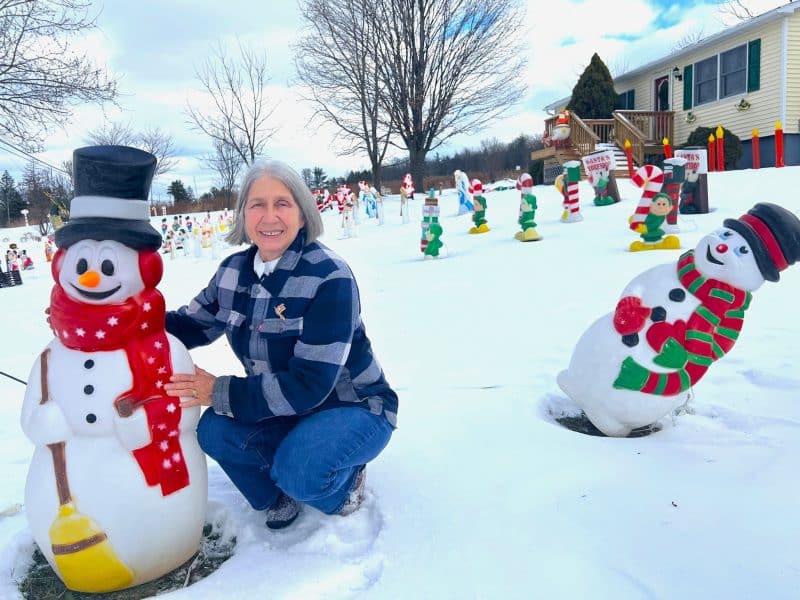
Holiday traditions bring community cheer
Tompkins County holiday traditions light up homes, farms, and schools with festive cheer and community spirit.
Trumansburg schools consider regionalization as TST BOCES plan advances
Trumansburg school regionalization remains undecided as TST BOCES outlines goals for shared services and student learning.
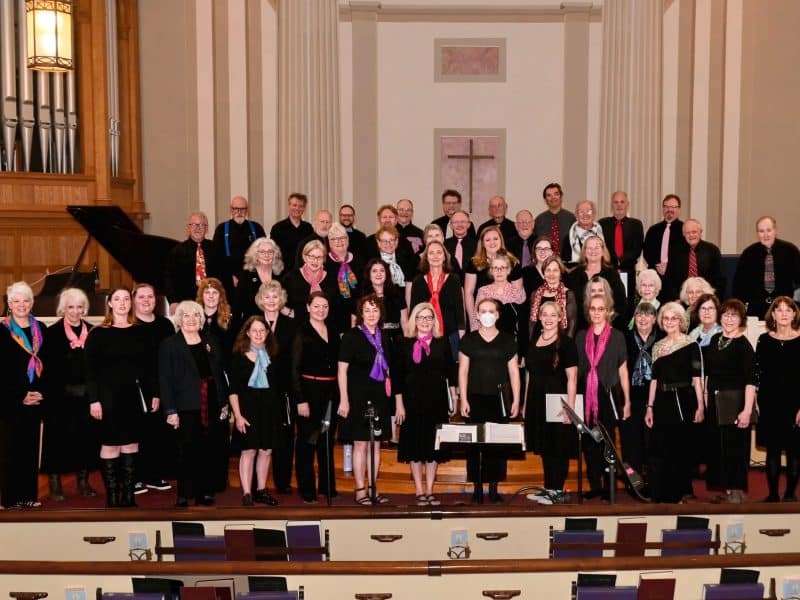
Trumansburg Community Chorus readies inspiring winter concerts
The Trumansburg Community Chorus performs “I Dream A World” this December, celebrating hope, reflection, and community in inspiring winter concerts.