
Uncertainty continues at colleges as students return
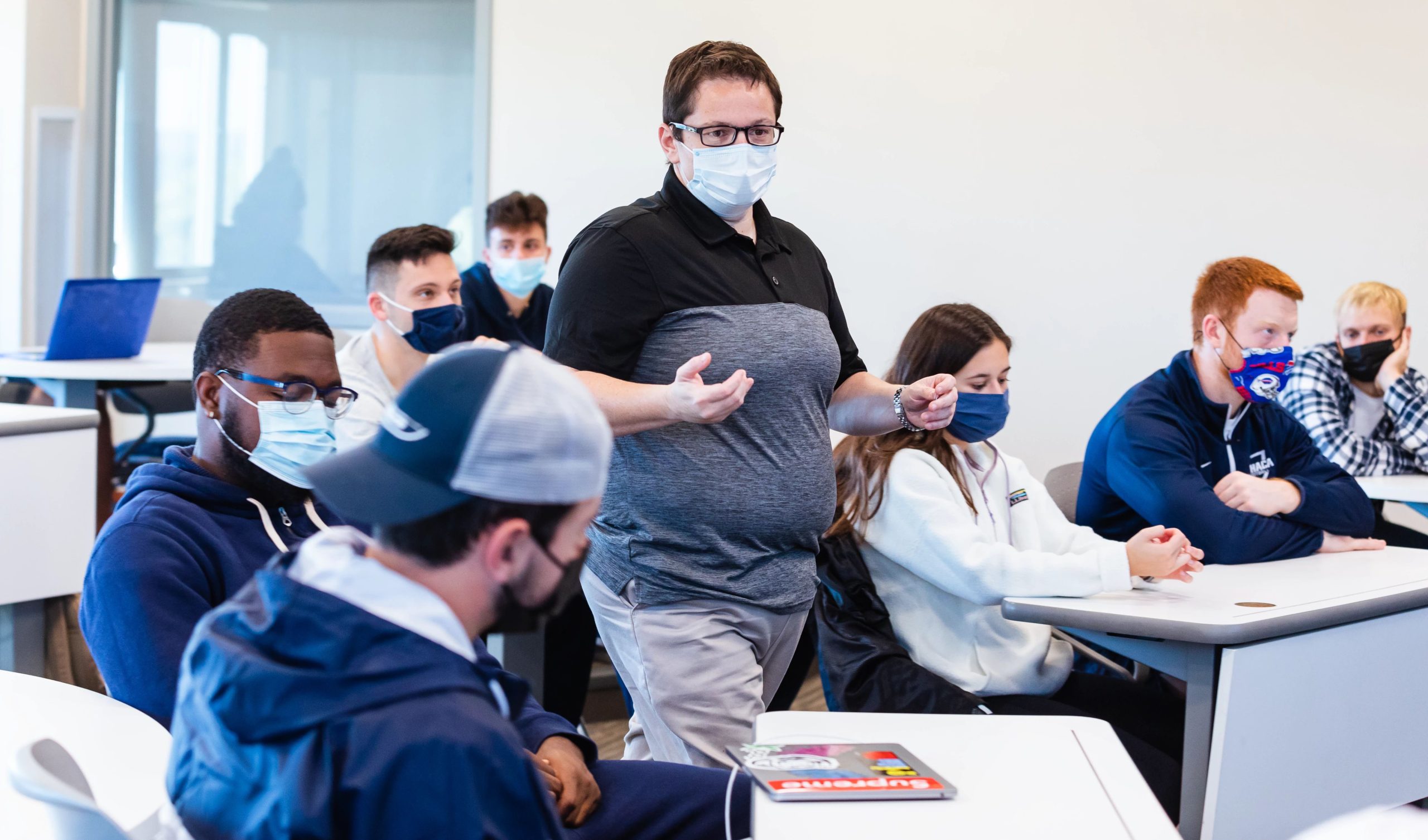
This week, thousands of college students are headed back to classes, with some learning from the comfort of their dorm and others in a classroom. With the omicron variant leading to a significant spike in COVID-19 cases in the past couple of months, planning for this semester was no easy task, but administrators are hopeful this semester comes with fewer surprises than last fall.
At the start of the fall 2021 semester, college administrators around the county were hopeful for semester that was practically back to normal, but all that changed in December.
“We were great until the last week,” said Deborah Mohlenhoff, associate vice president of college relations at Tompkins Cortland Community College. “That’s pretty much how it went at every single college and university all across the country. I think it went pretty much as everybody expected — a bunch of family gatherings over Thanksgiving sort of popped up some problems for people. We did not end up having anything really significantly disrupt any of our normal operations. We didn’t have to make a big major change. But it certainly was concerning for us there at the end of the semester.”
Because the spike in cases happened so close to the end of the semester, administrators didn’t have much time to react and change policies. But they took full advantage of the following weeks to be better prepared for students’ return in the spring.
While their specific protocols vary, all three area colleges — Tompkins Cortland, Cornell University and Ithaca College (IC) — have instituted policies for the start of the semester to help keep their students healthy and safe. A common change among the three institutions is an enhanced arrival COVID-19 testing plan.
Cornell, for example, asked its students to test for COVID-19 prior to departing for Ithaca and to stay home if they test positive. The campus also instituted arrival testing and has isolated those students who tested positive. This is on top of the COVID-19 testing expected to take place once in-person instruction begins.
“We hope it won’t be as many as we had in December, but our modeling predicts … about couple thousand positive cases are possible,” said Joel Malina, vice president for university relations at Cornell. “There is an optimistic number, which is lower, and a pessimistic number, which is higher. But we are confident that through this pre-departure and enhanced arrival testing, we’ll be able to manage the isolation.”
IC and Cornell both decided to have an all-remote instruction period at the start of their spring semesters, with IC opting for one week and Cornell opting for two weeks. As David Maley, director of public relations at IC, explained, the extra week is mainly to accommodate the extended move-in protocols IC has put in place.
“It’s not out of concern over classroom spread of COVID for that first week, but primarily to ensure some fairness since students are moving in over a two-week period,” he said. “We didn’t want there to be some students who were not able to be on campus yet because they’re moving while others were able to be on campus and in the classroom already. So, for that reason, we made the decision to be remote for the first week of the semester, and the two-week time period for campus move-in is allowing us to do arrival testing for all students.”
Tompkins Cortland, in contrast, opted not to have an all-remote period, which Mohlenhoff said mostly came down to the college’s high number of commuter students making remote learning unnecessary.
Specific vaccination requirements at the three colleges, like when paperwork is due, vary considerably, but all three are united in requiring full vaccination, including the first one or two shots (depending on the type) and the booster shot. However, Mohlenhoff and others pointed out that some students may have gotten the first one or two shots rather late, meaning they won’t be eligible for the booster until later in the semester.
“We have some education to do with each student throughout the semester to assist with them figuring out when they are eligible,” Mohlenhoff said in an email.
Notably absent from colleges’ plans this spring is the sort of advanced contact tracing methods that were put in place early in the pandemic. With the Tompkins County Health Department’s announcement that it has suspended contact tracing operations — leaving case investigations to the state — area colleges have decided to follow suit.
“Not doing the contact tracing is fine with us because [before,] we would do all this contact tracing, everybody would quarantine, and literally no other positives would emerge from that situation,” Mohlenhoff said. “And it’s very hard when you’re migrating to more of a self-responsibility model because that does put the onus on individuals to take responsibility for their own symptoms and their own risk factors and all those other things. But it would have been practically impossible for us to continue the level of contact tracing that we had been doing in the past. It’s just not worth it anymore.”
Thankfully, area colleges’ efforts to keep students safe and inform the community along the way have been generally well received by students and their families, sources said.
“For the most part, we’ve been pleased to see how [students] have cooperated and how there’s peer pressure to follow the policy,” Maley said. “It’s not just the college telling our students what to do; it’s their peers who really want to have this experience in as positive a way as possible. And so, they’re telling each other, ‘Hey, please, let’s see this through in the right way so we can get through the entirety of the spring semester.’”
While generally, students and their families have been supportive of the policies the colleges have put in place, there has been some opposition. A petition that began circulating earlier this month (available at tinyurl.com/yayzhx4k) includes over 1,000 signatures from Cornell staff and students asking the college to reconsider its booster shot requirement. Malina said that the campus is aware of the petition but has chosen not to rescind its vaccination requirements.
“We considered and still very much consider vaccination and boosters to be a critical part of our focus on minimizing serious illness,” he said. “Granted, the omicron variant is highly transmissible. So, we are seeing around the globe vaccinated individuals still getting the virus, but the scientific evidence is clear that the severity of those cases in vaccinated and boosted individuals is less significant. So, we are sticking with our science-focused approach — vaccination and boosters are required of all members of our community. But importantly, there are medical and religious exemptions available, and certainly those who have concerns are encouraged to pursue those exemptions.”
With the omicron variant still prevalent in Tompkins County, uncertainty is once again a common theme at area colleges going forward. Still, all sources said they’re happy to have students back and can rely on their policies should the unexpected happen.
“Confidence, I think, is a risky proposition when it comes to COVID,” Malina said. “But I’ll say that I feel very proud and confident in the level of thought and the planning in our protocols. Now, do I know that there won’t be any hiccups? No. But I am confident that whatever may come our way, we’ll make adjustments that will be needed to, again, ensure those critical priorities, which is minimize serious illness and ensure as vibrant an in-person instructional semester as possible.”
For more information about opening and spring semester protocols at Cornell, IC and Tompkins Cortland, visit covid.cornell.edu, ithaca.edu/covid-health-safety and tompkinscortland.edu/college-info/covid-19-policies-and-updates, respectively.
Jessica Wickham is the managing editor of Tompkins Weekly. Send story ideas to them at editorial@vizellamedia.com.
Related Articles
Holiday traditions bring community cheer
Tompkins County holiday traditions light up homes, farms, and schools with festive cheer and community spirit.
The gift of an experience: Local businesses offer hands-on holiday fun
Holiday experience gifts in Tompkins County include candle making, gourd crafts, and pottery workshops for creative seasonal fun.
Code Blue shelter opens amid praise, concerns and ongoing debate
Ithaca’s Code Blue shelter opens with larger space, showers, and case management to help residents during cold weather.