Upcoming solar project set to support Lansing’s energy needs
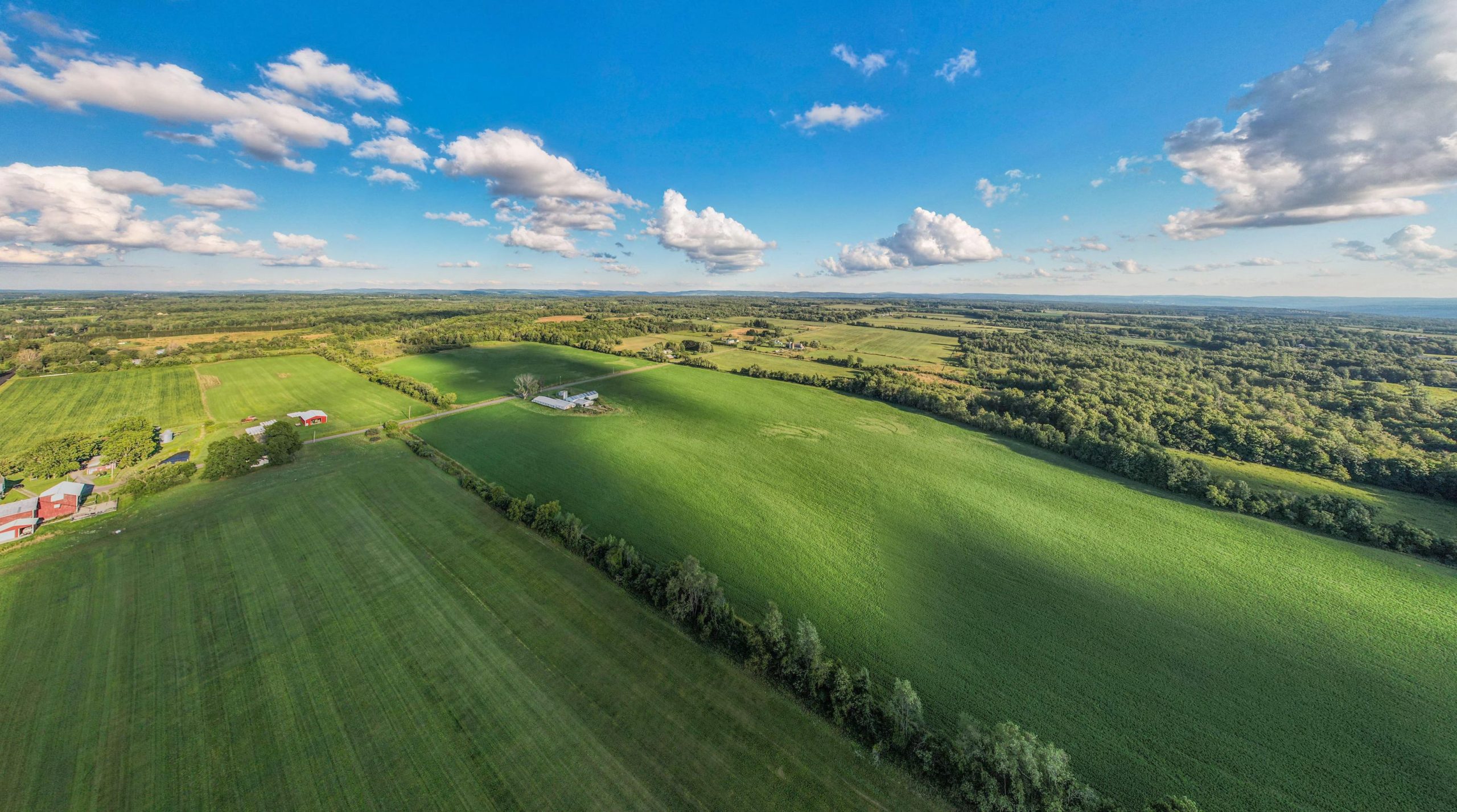
An upcoming large-scale solar project is set to supply energy for the town of Lansing and beyond by 2026.
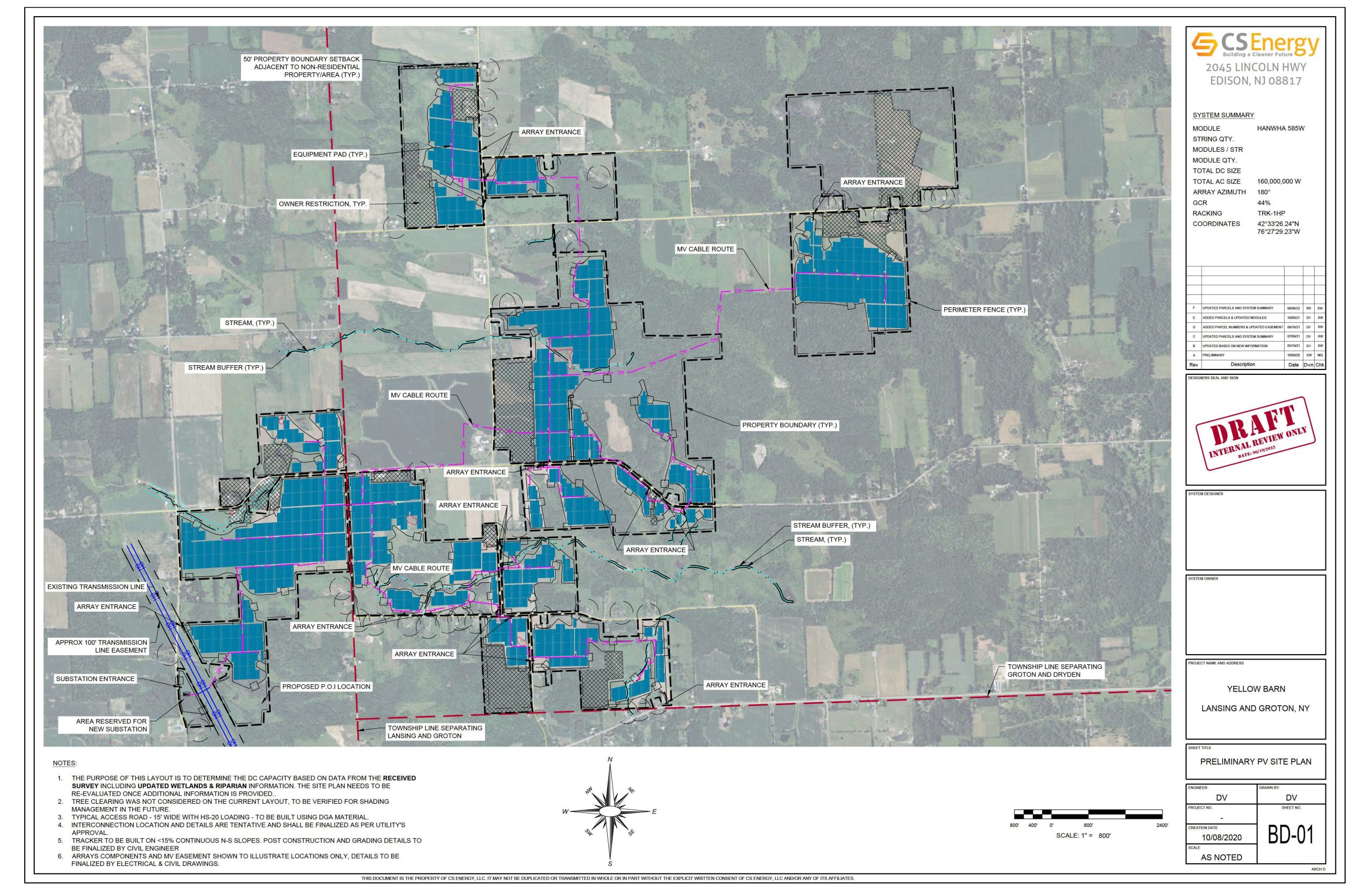
Yellow Barn Solar, currently managed by CS Energy, is a planned “160 MW-ac solar power generation project, located on approximately 1,100 acres across the towns of Groton and Lansing,” according to the project’s website (yellowbarn-solar.com).

The project is expected to begin construction in 2024 and be ready for commercial operation by 2026. After that, it’s expected to generate “enough clean renewable electricity each year to power approximately 32,000 New York households” for up to 40 years, the website describes.
Yellow Barn Solar will interconnect to the state power grid in Lansing, tapping into the transmission line currently connecting the Etna and Cayuga substations, and will be sold via the local utility. While it’s expected to provide energy throughout the state, the majority of the energy will be used to power the Ithaca area, “operating as a replacement source of energy for the retired Cayuga coal plant,” according to the website.
The project will have approximately 25% of its infrastructure in Lansing and 75% in Groton, mostly spread across a mix of farmland, scrubland and forested areas.
Those in Groton and Lansing are expected to see a small reduction in their electric utility bills as a result of the project, according to the website, and there are many other benefits the project is set to bring to the surrounding communities, explained Mitch Quine, director of project development for CS Energy.
“With a project like this, it’s a long-term budget; it’s very bankable, and it’s going to be there for at least that 25 years, if not out to 35 or 40,” he said. “And then obviously, locally, we’re going to be hiring a lot of local labor for construction. We’ll be hiring, hopefully, local on-site maintenance contractors as well. And then there’s also lease payments that we’re making to landowners, etc. So, there’s a lot of community benefits that sort of come along with that. And our goal is to try to flesh out as many of those local community benefits as we can.”
Quine added that the project will also contribute toward the region’s and state’s efforts to put more emphasis on renewable forms of energy.
“People think about solar and wind in kind of abstract terms, and they don’t realize, when it comes to town, what it really means,” he said. “Projects like this one — large-scale, renewable projects, utility-scale renewable projects — are a really key part of the mix of types of projects that are necessary for the state and for the country to transition off of carbon-based fuels.”
As Quine explained, Yellow Barn Solar got its start around the summer of 2019, when CS Energy got in touch with a landowner who was interested in solar energy opportunities. Not long after, CS Energy negotiated a land use deal with them as well as several other landowners in the area.
The next major milestone came in 2021, when CS Energy submitted its RFP (request for proposals) bid to NYSERDA. And this June, that bid was accepted.
While it’s been fairly smooth sailing with the project so far, Quine said that plans have changed over the past several years.
“When we were originally negotiating with landowners, we expected a much larger portion of the project to be in the town of Lansing versus town of Groton,” he said. “But as those landowner outreach and negotiation processes went along, we ended up where we’re currently at. … So, that was definitely a shift when we first reached out to the town of Lansing back in, I think 2020 was when I first got in touch with them.”
Since CS Energy started getting in touch with landowners and town leaders, Quine said that the overall feedback has been positive.
“With any project of this scale, the feedback is going to be mixed,” he said. “There’s folks at the town level that are interested in and hopeful for the … tax revenues and the host community benefit revenues that are going to come from the project. … The leaders that we’re working with and others are favorable towards solar, and they’re viewing it as a great revenue opportunity.”
Still, there have been plenty of residents who’ve raised legitimate concerns over the years like visibility, effect on local wildlife and more, which Quine and others have done their best to address.
“There’s a lot that we can do to mitigate the visual impact and reduce the visual impact, but there’s always going to be someplace you can see it from, and some folks are going to be able to see it,” he said. “Outside of that, I think a lot of the sort of standard questions are ones that are about the process — What’s going to happen when we go to construction? We have to clear trees, [so] what happens to the wildlife? What happens when the system is no longer operational? Do we decommission it? And those are things that are, I think, very common questions that we have very stable answers for.”
Quine encouraged readers to check out the project’s website for more information, as there is a section dedicated to commonly asked questions.
The next step in the process is to submit an application to the state Office of Renewable Energy Siting (ORES), and after that, construction will begin. While plenty of construction projects across the county currently face an array of challenges like supply and workforce shortages (see tinyurl.com/2mpggnx8), Quine is hopeful that those challenges will dissipate by the time Yellow Barn Solar’s construction starts.
“Obviously, if things continue the way they are, and the supply chain continues to struggle the way it is currently, that could definitely cause problems at the time of construction,” he said. “But I think everybody’s hope is that there’s going to be some leveling out or stabilization of that here before we get that far.”
What’s more so on Quine and CS Energy’s minds for the coming months and years is to work continually with the towns of Groton and Lansing to mitigate the previously mentioned concerns, Quine said.
“We’re going to be working with the towns really closely, working with ORES really closely to, like I said, mitigate as many of those impacts as possible,” he said. “I don’t necessarily see that that’s going to be particularly challenging. I think we’ve got great partners that we’re working with locally. And I don’t see that that’s going to be a struggle, but it will be a hurdle that we need to cover.”
Quine said these efforts are important to help communities fully realize the benefit of the project for them and the region as a whole.
“I think that a lot of folks, they see the impact from a large project like this — which it is a real impact and not trivial — but I think it’s important to always reflect on the fact that there are a lot of benefits that come out of a project like this,” he said. “And our work is to make sure that those benefits outweigh the outweigh the impacts that we have. So, [we] definitely want people to hopefully focus on the positives, and we’ll be able to work our way through the mitigation of any negative.”
Lansing at Large appears every Wednesday in Tompkins Weekly. Send story ideas to editorial@VizellaMedia.com.
In brief:
Lansing Lighthouse 5K and Fun Run
The Lighthouse 5K and Fun Run will take place on the scenic shores of Cayuga Lake Aug. 27. The flat, fast course follows paved and dirt roads around Myers Park and Salt Point. The race starts and finishes in Myers Park and benefits the Lansing High School Cross Country program. The 1-mile Fun Run starts at 8:30 a.m., and the 5K starts at 9 a.m.
For more information, visit lansinglighthouse5k.weebly.com.