
Varna EMS wins Innovation Award for Just Culture efforts
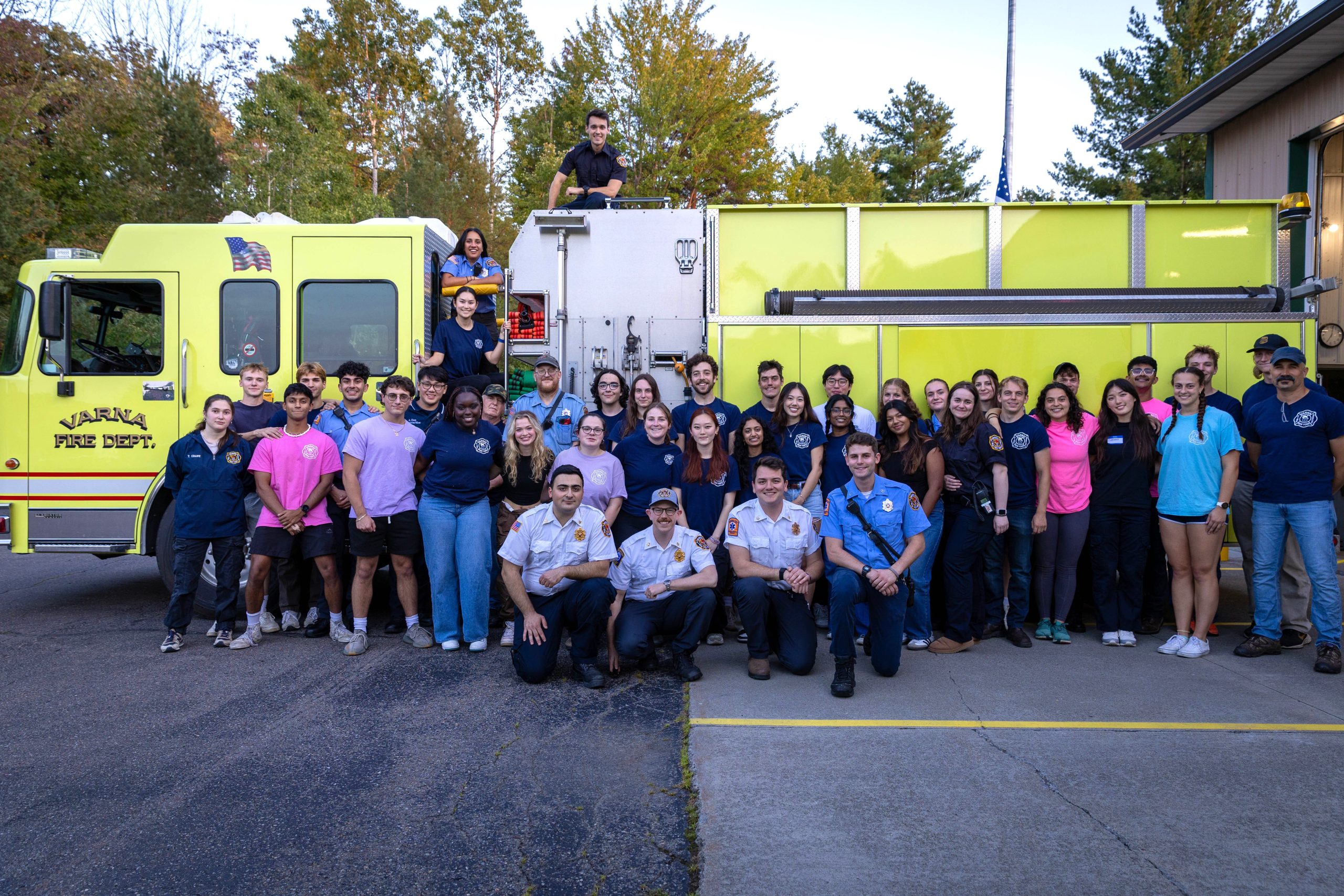
Varna Volunteer Fire Company was recently selected as a recipient of the 2024 New York State Innovation Award for Organizational Innovation in the field of Emergency Medical Services (EMS). This award, presented by the New York State Department of Health, will be bestowed during the closing session of the 2024 Vital Signs Conference in Rochester on Oct. 20.

Managing Editor
The award was for adopting “Just Culture,” which was endorsed by the National Association of Emergency Medical Technicians as an effective way to reduce the frequency of errors by identifying mistakes.
“The National Association of EMTs wrote a statement supporting [Just Culture], but the overall execution is up to the departments themselves,” said Varna Fire Department Assistant Chief Erik Kirakosyan, who is chief of Varna EMS, a division of the fire department. He implemented the Just Culture policy when he became chief in January.
In its statement in support of Just Culture in EMS, the association said, “The term ‘Just Culture’ refers to a values-supportive system of shared accountability where health care organizations are accountable for the systems they have designed and for responding to the behaviors of their staff in a fair and just manner. Staff, in turn, are accountable for the quality of their choices and for reporting both their errors and system vulnerabilities.”
“Just Culture — overall it means to create an environment where people can self-report any errors,” Kirakosyan explained. “It was born out of the fact that EMS service really has providers being terminated for fears of legal repercussions.”
Kirakosyan said that over the last few years, many practitioners in the hospital setting have recognized the value of identifying sources of error and correcting them, “because they recognize that physicians are prone to human error.”
“When a mistake or some sort of near-mistake happens, Just Culture discourages repercussion, which it’s been shown doesn’t work and allows that error to happen again and again,” he explained.
Just Culture calls for the EMS team to investigate system factors that contributed to the mistake. Whether it is policies for how things are done or the methods used to teach EMTs, Just Culture means examining the situation to determine what set up the worker to make that error.
Encouraging people to report [an error] or to speak up themselves without any fear of retaliation is essential to making the method work. “We’re all prone to making the same mistakes, and this reduces the likelihood of making that mistake in the future,” Kirakosyan said.
There have been 10 self-reported mistakes brought to the chief’s attention since January.
“One of the biggest ones is that every week we have a truck check, and we noticed that when people are supposed to be checking expiration dates, some were missing them — they couldn’t find the date or were confused,” Kirakosyan said. “Luckily, providers were double-checking before administration, like they were supposed to, but we made a policy change, and now with everything that has an expiration date we take a big Sharpie and, somewhere very visible, we write what the expiration date is.”
“It’s such a simple change,” Kirakosyan said, “but it reduces the frequency of errors exponentially.”
Not only that, but in a high-pressure situation where seconds matter, such as administering epinephrine to a patient in anaphylaxis, an EMT can glance at the large date and be confident that the medication has not expired without first having to search for the smaller date written on the label.
The change came about because the EMS team does weekly truck checks, during which the first responders are required to check all of the medications on the truck to make sure they have not expired. One person doing a truck check noticed that from one week to the next, an expired medication had been missed.
“With one medication in particular, it’s very hard to see the expiration date,” Kirakosyan explained. “One simple solution was to write the date really large on top.” This protocol was not adapted from another department but came about as a common-sense solution devised by the Varna EMS staff.
Two other examples of changes to protocol that happened due to Just Culture reporting: emergency responders are now directed not to use Waze when responding to an emergency because it was found that the Waze GPS system is not reliable in this area.
Also, all first responders at the scene of a call are now required to put on gloves, even if they are called to the scene to be a scribe. Though scribes usually do not come in direct physical contact with patients, there was a situation wherein a scribe was asked to jump in and help with a medical procedure. A report was generated by a member of the EMS team, and now gloves are mandatory for everyone, including scribes.
“Really, the credit goes to the EMTs and all our providers who are so willing to report,” Kirakosyan said. “We couldn’t have made this policy if they didn’t have faith they wouldn’t be punished for mistakes. It would have gone nowhere. The fact we received reports proves the fact that they can be heard without fear of retribution or judgment. Once the brave first people put in their reports and they saw the exact outcome and how it was organizational change and nothing to do with the providers themselves, that’s when we saw more reports come in.”
He estimated that 90% of mistakes at the department fall under the category of human error. “Reckless” mistakes are the only ones that are punishable, and in between there is a third classification of “unintentional” mistakes.
Just Culture is not an easy transition to make within EMS culture, he said. The Varna Volunteer Fire Department is unique in that it has more than 80 members, 30 of whom are EMTs, and roughly 90% of those EMTs are associated with Cornell University outside of their role in the department, Kirakosyan said.
“They are receptive because they are young and they haven’t heard the traditional way of doing things … but that’s not to say it couldn’t work at other departments,” Kirakosyan said.
In fact, he hopes the award will expose more local departments to the idea of Just Culture.
“It’s a huge honor,” Kirakosyan said. “The Vital Signs Conference is the biggest conference of the year, and the award comes from the Department of Health directly, and it’s a state-level award. It’s excellent to see our efforts be recognized, and the fire company, for me and all our members, is one of the most important things we have ever done with our lives and just seeing that change is being recognized is good. It allows agencies that attend to look into why we got the award and maybe adopt a similar policy of their own. It is a good opportunity to spread Just Culture; not a lot of people would normally hear about a small volunteer fire department in Tompkins County trying something, but now this is kind of a platform.”
He extended his assistance to other departments that want to implement the strategy.
“If anyone wants to adopt Just Culture, I would love to help them,” he said. “I would love to see this being adopted around the state. There is the problem in EMS of punishment and fear of discipline, where the job is so high stress and critical decisions have to be made.”
Author

Related Articles

Meinig Fieldhouse built to protect iconic red-tailed hawks
The Meinig Fieldhouse hawks project shows how Cornell protected Big Red and other red-tailed hawks during construction.
Quantera’s new tech promises faster, safer chemical testing
Quantera Analytical is developing faster, safer chemical testing technology in Ithaca with roots at Cornell University.

FLLT purchases over 100 acres in the town of Dryden
The FLLT Dryden land purchase protects 108 acres near Yellow Barn State Forest, expanding conservation and public access.