
Women business owners celebrate pandemic progress
In honor of Women’s History Month, we’ve asked several women business owners to share their stories, including ways to address the difficulties they and other women in business face.
Editor’s Note: Last week’s cover story had the headline “Business leaders of colors see continued challenges, success.” This has since been changed to “BIPOC business owners see continued challenges, success” online to clear up confusion involving Business Leaders of Colors, a business founded by Gladys Brangman. While a good community resource, Business Leaders of Colors was not interviewed for last week’s cover story.
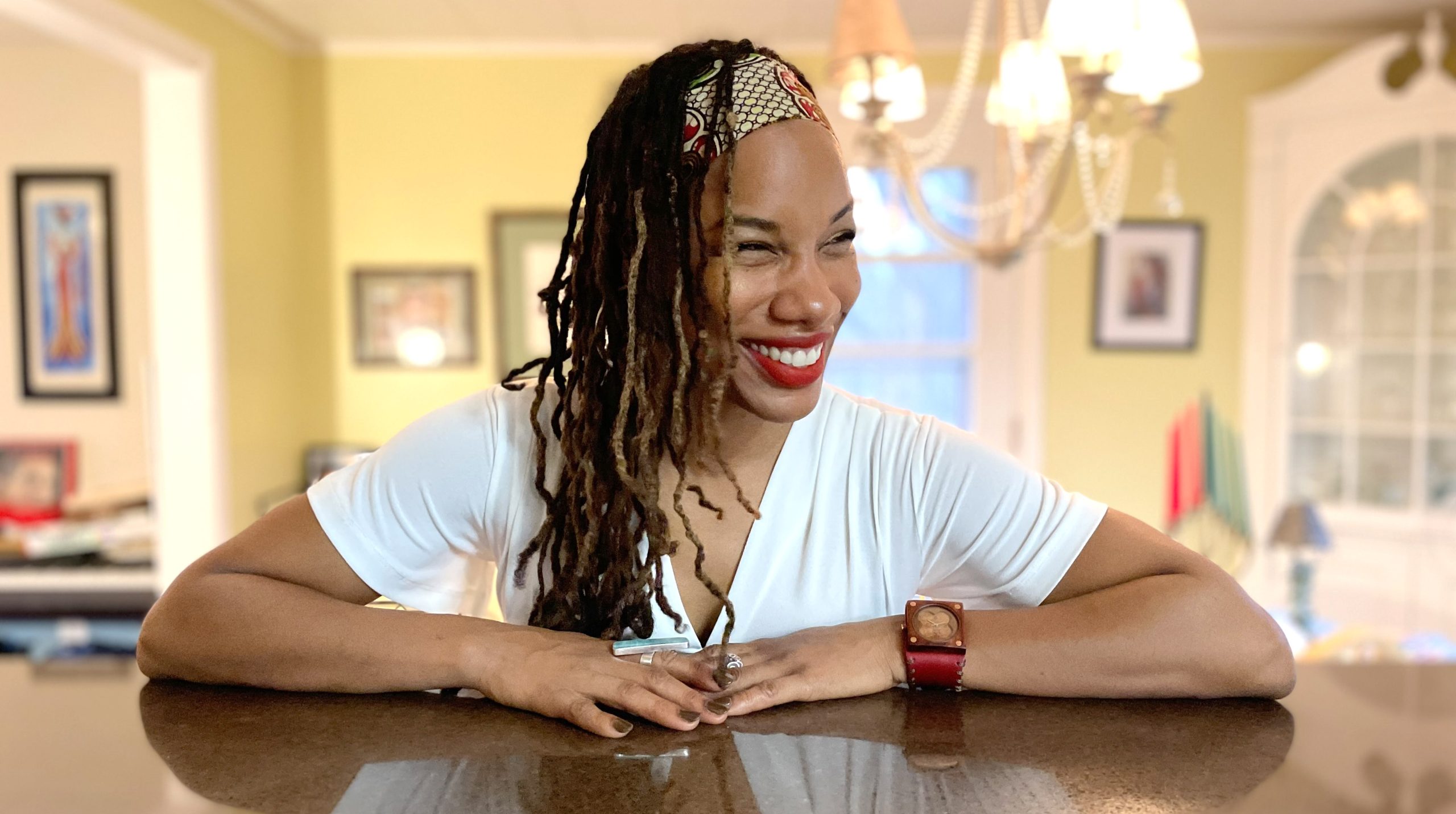
Nia Nunn, Ph.D., is well known locally for wearing “multiple headwraps,” as she puts it. She works at Southside Community Center as the president of its Board of Directors, and recently, she turned her passion for education into a business. She now sells a variety of offerings from workshops to lectures to consults, centered around a Black Consciousness Curricular framework (drnianunn.com).
“Bottom line, I’m just out here trying to bring joy,” she said. “At first I was like, ‘Look, I’m trying to get paid like a white man. That’s where it is.’ And then I started discovering and learning what women, and particularly Black women, are doing out here in the world — sharing their craft. … Our craft, our genius, our brilliance is always tapped into, but how often do we explicitly profit, benefit or receive recognition for the work that we do and create?”
Despite the challenges the pandemic has created, many local women like Nunn have managed to find success either starting or continuing their own businesses. So, in honor of Women’s History Month, we’ve asked several women business owners to share their stories, including ways to address the difficulties they and other women in business face.
Successes
Some of the business owners Tompkins Weekly interviewed for this story only recently started their own business, like Nunn. Kyi Gyaw, for example, started her business, Kyi Gyaw Interiors (kyigyawinteriors.com), during the pandemic.
After she worked to the point of burnout at a New York City design firm, a two-week-long vacation to visit her mom mid-pandemic soon turned to months, and it was during that stay that she was encouraged to start her own interior design business. So, she went for it, and she said she couldn’t be happier with her decision.
“Collaborating with local architects, everyone’s so nice and friendly, and I have not faced any sexism or racism or any of that stuff that I think I’m used to in New York City,” she said. “It’s been really nice to work with architects who respect my input, and they’re grateful for my insights and my vision. And typically, when I was working in the city, there was always a clash between the architects and interior designers. … Here, everything is so clearly defined, and we collaborate so seamlessly that it’s just been a really good experience for me.”

For more established businesswomen, most said that they did experience some struggles at the start of the pandemic but have since seen significant improvement. Jessica Eggleston, audiologist and owner of Wild Rose Ranch in Lansing (leadmare.org/boarding), for example, has received positive feedback on both her equine and audiology services during the pandemic.
“I facilitate meditations with people and horses, called Horse Church,” she said. “It is a way for people to find peace and connection with nature, through sharing sacred space with horses. People express that sharing this presence with horses is deeply connecting and meaningful to them, especially after disconnection through the pandemic. I am also an audiologist and was working in health care for much of the pandemic. My patients with hearing loss were very grateful to receive services, especially since the need to wear a mask has made communication difficult for many who rely on lipreading to understand conversations.”
Like Eggleston, Rachel Philipson, owner of Rachel Philipson Photography and Design (rachelphilipson.com), got her start before the pandemic. COVID-19 caused a wave of cancellations in 2020, but as things have eased up in the county, so has her work.
“Now, it’s totally better,” she said. “Weddings [have] really picked up. I’m not sure why, but there’s Friday weddings, and I think people are dying to see each other, especially family. So, that’s doing well. Graphic design, … I don’t see anything missing from that right now. So, it’s a little busier because I took [on] different projects than I usually do.”
For some businesswomen, the pandemic has led to a significant shift in how they do business, as was the case for Tori Brown. Brown co-owns The Pilates Room and Antigravity Studio in Ithaca (nypilates.info), which started in 2001. Prior to the pandemic, her business largely offered in-person exercise classes, but the pandemic required a shift to virtual.
Brown said that clients were hesitant at first but have since warmed up to the idea, so much so that some prefer virtual even now that the business is once again holding in-person classes.
“In some cases, it works better because as an instructor, we can sit back and see the whole body at a distance and get a better view, whereas when we’re working one on one, we’re sort of right on top of them and missing things that you can see from a distance,” she said. “So, once they discovered that that was a viable option and that they could get as much benefit out of virtual training, they stayed. … Our classes now, we may have four in the studio and 10 online.”
Challenges
Though many businesswomen have plenty of reasons to celebrate in recent months, sources acknowledged that there are still lingering challenges they and other women in business are facing. For example, several sources mentioned issues with supply chains, which Tompkins Weekly has covered before (tinyurl.com/y9tbubcg).
“In the past few months, I have faced the challenge of rising costs of the essential supplies for caring for horses, which makes it necessary for me to raise prices in order to cover my expenses,” Eggleston said. “This places stress on my clients. I’ve also experienced a loss of community connection due to social distancing, which has taken an emotional toll. “
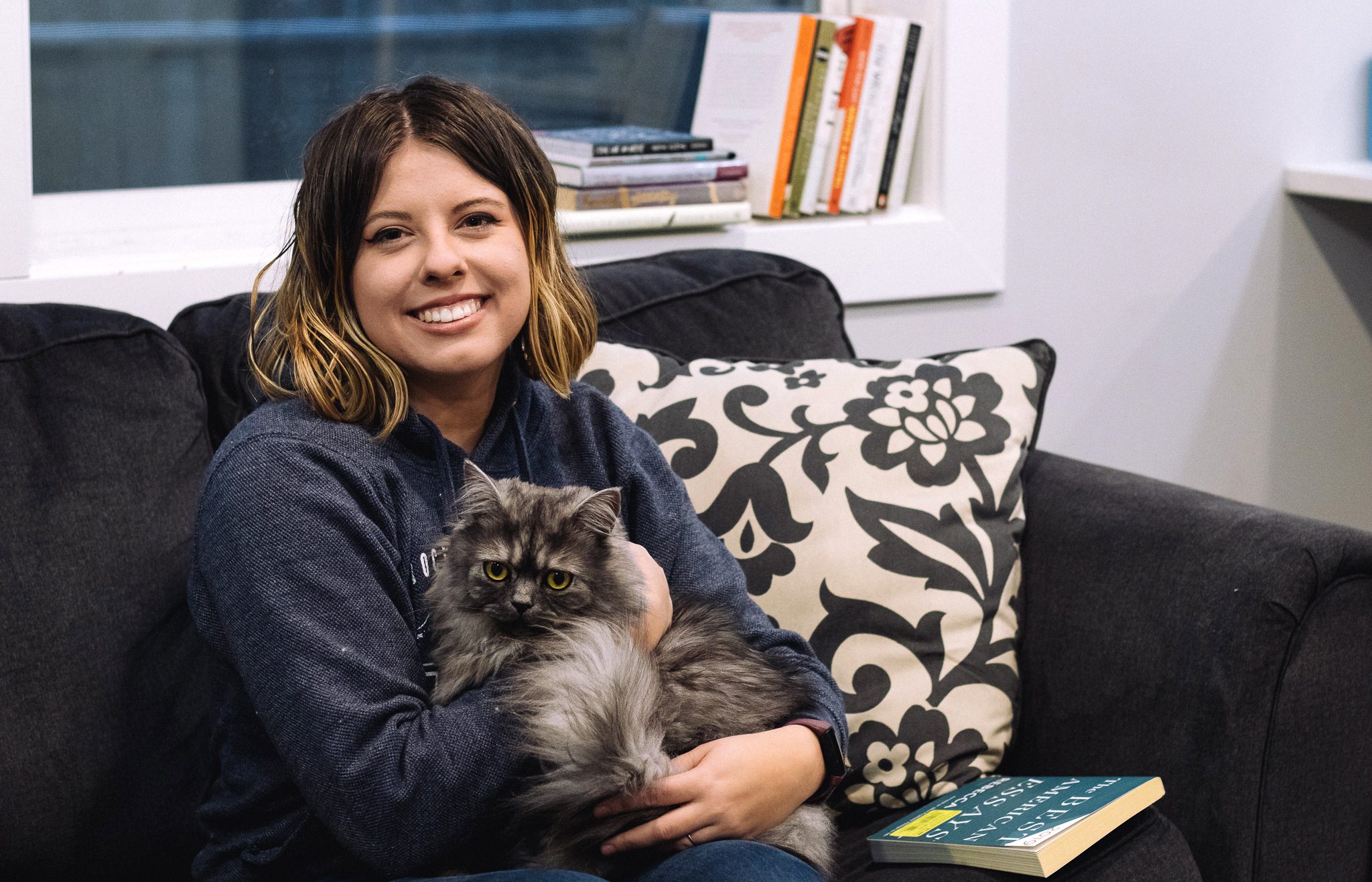
That loss of connection is another common challenge, as Mariya Delano explained. Delano started offering professional services like writing, editing, research and marketing late last year (mariyadelano.com).
“When you get on an online event, it’s more goal oriented,” she said. “Even though you can still chit chat, it doesn’t quite feel the same as grabbing a meal with somebody or just sitting around in a room and doing a networking mixer. And I do think a lot of people have felt that. And a lot of the women I’ve talked to have felt that it’s more transactional when everything’s online.”
Another common issue is staffing, which has persisted throughout the past year. Some, like Greta Perl, owner of Alphabet Soup on The Commons (alphabetsoupithaca.com), have managed to get by without a problem, but Perl said she’s seen others struggle considerably.
“I think hiring is definitely a challenge for a lot of people,” she said. “Right now, I’m very fortunate to have a really nice staff through the Christmas season and all, but I know other people have really been juggling with that. I’ve seen other businesses have to cut back hours just because, literally, they don’t have staff to staff the full hours they’d like to be open and that kind of thing.”
Brown can speak to that challenge personally.
“We had several instructors that were working with us for years who were taking a break when the pandemic hit, and they decided that they’re not coming back,” she said. “So, we went from about 10 instructors to five now, and everybody’s working a lot more hours and teaching a lot more classes. And I’m working about 80 hours a week to try and make things move ahead.”
A challenge more common among women in business compared to men relates to child care, as entrepreneur Romy Fain, founder of Heat Inverse (heatinverse.com), pointed out.
“Before the pandemic, women were already handling more of the domestic and care-giver work in the home than their male counterparts,” Fain said in an email. “During COVID, I know this disproportionate workload got worse for a lot of women with their other support systems collapsing like schools, daycare, etc., and they were, as a result, more frequently needing to reduce their work hours or having to quit their jobs entirely.”
Fain added that for some, the work from home model the pandemic has necessitated has provided a lot of relief from these challenges.
What’s needed

In light of these and other challenges, sources offered ways policymakers and residents alike can help women in business succeed. Gyaw, for example, said that while she’s enjoyed the supportive community in Tompkins County, there’s still a significant lack of women in her field, and creating a welcoming business environment is crucial to addressing that shortage.
“I just think that more male-oriented professions or businesses should do the same, like where they treat everyone with kindness and respect and don’t discourage a woman from speaking up because that’s happened to me,” she said. “I don’t think there’s shame in promoting women to speak their mind and their intelligence. I think there is a lot that we can offer as female business owners and professionals.”
Delano shared that, when she was recently out sick for two weeks with COVID-19, she was often scrambling on how to keep her business going until she got better. She knows she’s not the only one who’s experienced this, so she’d like to see more information and education on how to cope with longer breaks.
“A lot of people are basically ending up disabled for months, at least, after getting sick,” she said. “How do you live with that? How do you adjust to that if you don’t have the same energy levels? How do you keep doing business? How do you not go out of business or give up? I’m sure there’s a lot that could be done in terms of figuring out advice and maybe mentorship for people. I’m sure there’s disability communities that would have great advice to share with people that have experienced chronic fatigue and chronic symptoms like this.”
Since child care challenges disproportionally hold back women in business, Fain said that addressing those issues will subsequently make it easier for women to become entrepreneurs.
“We need to do a better job of taking care of people — with health care, family leave, daycare, elder care, psychological support, etc.,” she said. “This will have a huge impact on women business leaders by freeing time and resources to spend on solving the big problems with their business ventures and in the world and less on the fundamental needs of their families and communities. We need these minds in the workplace!”
On a more personal level, Perl said that even if you’re not a politician, there are small things you can do to make a big difference for women business owners.
“One of the things that is really great is the power of the grassroots marketing of social media,” she said. “So, I think if people can really give us a share, give a like, … leave a review on somebody’s Google listing, those kinds of things get us pushed up on those search engines and get us more visibility. So, it takes you 5 minutes, and it’s free. So, if you can give a little digital love to your businesses, that really does make a difference to get those things boosted up.”
Looking Ahead
Overall, sources interviewed for this story are optimistic for the road ahead.
“I am excited to continue establishing myself as a resource for educators, a resource for parents, a resource for student leaders,” Nunn said. “And not just college students — I’m talking fourth-graders that want to transform the world. And the heartbeat of it is it aligns directly with my craft as a teacher educator, to enrolling and empowering people to see themselves as leaders and as teachers. And so, I’m excited about what’s possible.”
Several sources also encourage women like them to take the plunge and start a business, as there are many support systems in the county to help their business succeed.
“This is a great time for women to be stepping into leadership roles,” Fain said. “My support network encourages me every day, and my hope is that our success provides some inspiration to other women entrepreneurs and innovators. Start today. Do not quit. The world needs you!”
Jessica Wickham is the managing editor of Tompkins Weekly. Send story ideas to them at editorial@vizellamedia.com.
Related Articles

AmeriCU proudly connects students with annual scholarship opportunity
AmeriCU scholarship program awards $1,000 to students pursuing college or vocational education. Applications are open through March 15.
Street Beat: What’s one of the best holiday gifts you ever received?
We asked five random people. Here’s what they had to say.

5 things to do in Tompkins County this weekend
Plan your visit and discover what’s happening this weekend.